CACI Joins JIATF-401 Counter-Drone Project
CACI International announced that it has signed a three-year contract with the U.S. Joint Task Force 401 on July 30, 2026, for a maximum value of $500,000,000 for a large unmanned aerial vehicle system. The first task involves deploying CACI’s long-range drone defense system, SkyValor, to key facilities.
This contract is an Indefinite Delivery, Indefinite Quantity (IDIQ) arrangement, where the necessary equipment and services are ordered through individual task orders. The $500,000,000 represents the maximum amount that can be ordered during the contract period, and the full amount is not guaranteed as confirmed revenue or expenditure upon contract signing.
First selected task: SkyValor large drone system
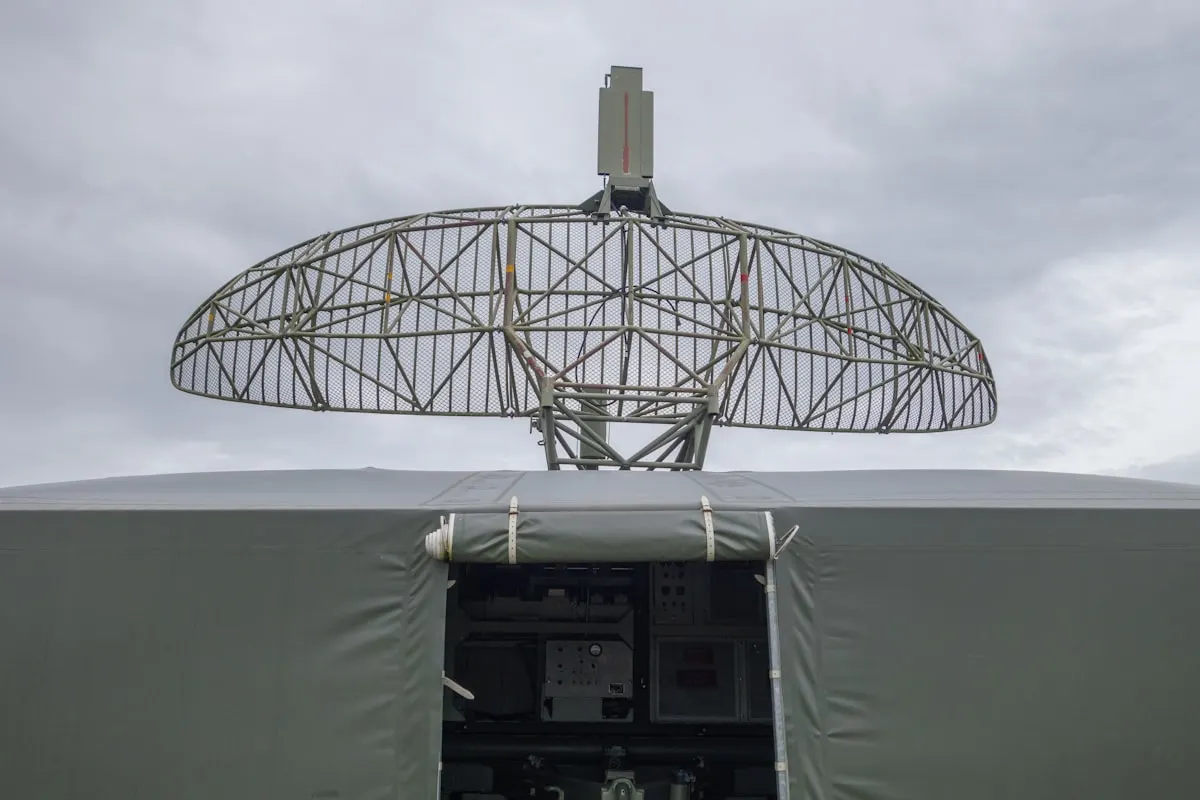
According to CACI’s announcement, SkyValor is an integrated counter-UAS (c-UAS) solution that detects, tracks, identifies, and responds to hostile drones. It is designed to provide operators with more time for decision-making by combining long-range radio frequency detection with automated response capabilities.
SkyValor supports countermeasures against non-kinetic energy weapons, and also targets drones that use mobile communication networks for detection and neutralization. Therefore, it is more accurate to view this project not simply as a “development contract for unmanned aerial vehicles,” but as a contract for acquiring a comprehensive anti-drone system that includes capabilities to counter non-kinetic energy weapons.
CACI plans to transition the SkyValor system to full-scale production based on the initial contract. However, the specific amount of the contract, the delivery quantity, and the deployment facilities have not been disclosed.
Yuma Test: Operational Suitability Assessment
The JIATF-401 conducted a two-day SkyValor operational evaluation at the U.S. Marine Corps Air Station Yuma in Arizona in May 2026. According to reports from CACI and DefenseScoop, the tests assessed the detection and response capabilities against small unmanned aircraft operating at various distances, altitudes, and flight paths.
Following the evaluation, SkyValor was approved as a system capable of forming a tiered anti-drone defense for the U.S. Joint Forces. CACI stated that subsequent tests demonstrated an expanded detection range, automated response to non-kinetic energy threats, and early warning capabilities against threats beyond line of sight.
JIATF-401 and Domestic Shield: Roles
JIATF-401 is a joint, all-government organization that the United States established in August 2025 to address the growing threat of small drones. It expands the functions of the existing U.S. Army Joint Small Unmanned Aircraft Systems Project Office to integrate anti-drone research and development, testing and evaluation, procurement, and operational deployment.
Domestic Shield is a project led by JIATF-401 that aims to strengthen the defense of U.S. military facilities and critical assets against drone threats. It focuses on building a multi-layered defense network by integrating sensors, command and control systems, and countermeasures that address both non-kinetic and kinetic energy threats, rather than relying on a single piece of equipment.
The JIATF-401 also operates a c-UAS electronic procurement platform to rapidly introduce proven equipment. Through this platform, the military and related agencies can compare test evaluation data and technical specifications, and utilize existing IDIQ contracts to order the necessary systems.
AeroVironment also secured a separate $500,000,000 IDIQ
Prior to the CACI contract, on July 5, 2026, JIATF-401 selected AeroVironment as a separate contractor for the Domestic Shield program. This contract, also an IDIQ (Indefinite Delivery, Indefinite Quantity) agreement, has a duration of 3 years and a ceiling of $500,000,000, and aims to provide both fixed and mobile c-UAS (counter-Unmanned Aircraft System) equipment.
The first task under the AeroVironment contract, valued at $80,500,000, involves deploying the AI-based Titan multi-sensor counter-drone system to defend U.S. Air Force facilities. The system combines radio frequency sensors, radar, and electro-optical/infrared equipment to detect and counter small drones.
CACI and AeroVironment have each secured contracts with upper limits of $500,000,000, representing different Indefinite Delivery/Indefinite Quantity (IDIQ) contracts. These amounts should not be combined to represent a fixed procurement amount of $1,000,000,000 that is immediately executed. The actual scope of work will be determined by subsequent task orders that are issued.
Impact on U.S. large drone procurement
This agreement demonstrates that JIATF-401 is rapidly deploying commercially available drone technology that has passed rigorous testing, through a long-term contract and individual task orders. Specifically, SkyValor and Titan enhance layered defense networks by adding response capabilities with a relatively low risk of collateral damage, such as countering radio interference and multi-sensor detection.
The key factors for the future success of the project include the actual scale of the tasks to be assigned, the deployment areas, and the interoperability with other sensor and command-and-control systems. Given the rapid advancements in drone communication methods and autonomy, repeated testing and evaluation of software updates and new threat types will also significantly impact the project’s performance.
Frequently Asked Questions (FAQ)
What is JIATF-401?
This is a joint and interagency task force that integrates efforts to counter the threat posed by small drones in the United States. It is responsible for rapidly advancing the research and development, testing and evaluation, procurement, and field deployment of anti-drone technologies.
Is the $500,000,000 contract from CACI a fixed-price contract?
No. 500,000,000 US dollars is the maximum ordering limit for the 3-year IDIQ contract. The actual contract amount will vary depending on individual task orders issued by JIATF-401 and budget execution.
How does SkyValor respond to drones?
This system is designed to detect, track, and identify drones using long-range radio frequency sensors, and to neutralize threats using automated, non-kinetic energy means, such as electromagnetic interference.
Does c-UAS refer to lethal unmanned aerial vehicles?
No. c-UAS refers to a counter-unmanned aerial system designed to detect and counter hostile or illegal unmanned aerial vehicles. The non-kinetic energy method is one of the various countermeasures that a c-UAS can employ.
Are the AeroVironment contract and the CACI contract the same contract?
Both contracts support the Domestic Shield program, but they are separate 3-year Indefinite Delivery/Indefinite Quantity (IDIQ) contracts. The first task awarded to AeroVironment is valued at $80,500,000, while the amount for CACI’s first task has not been disclosed.