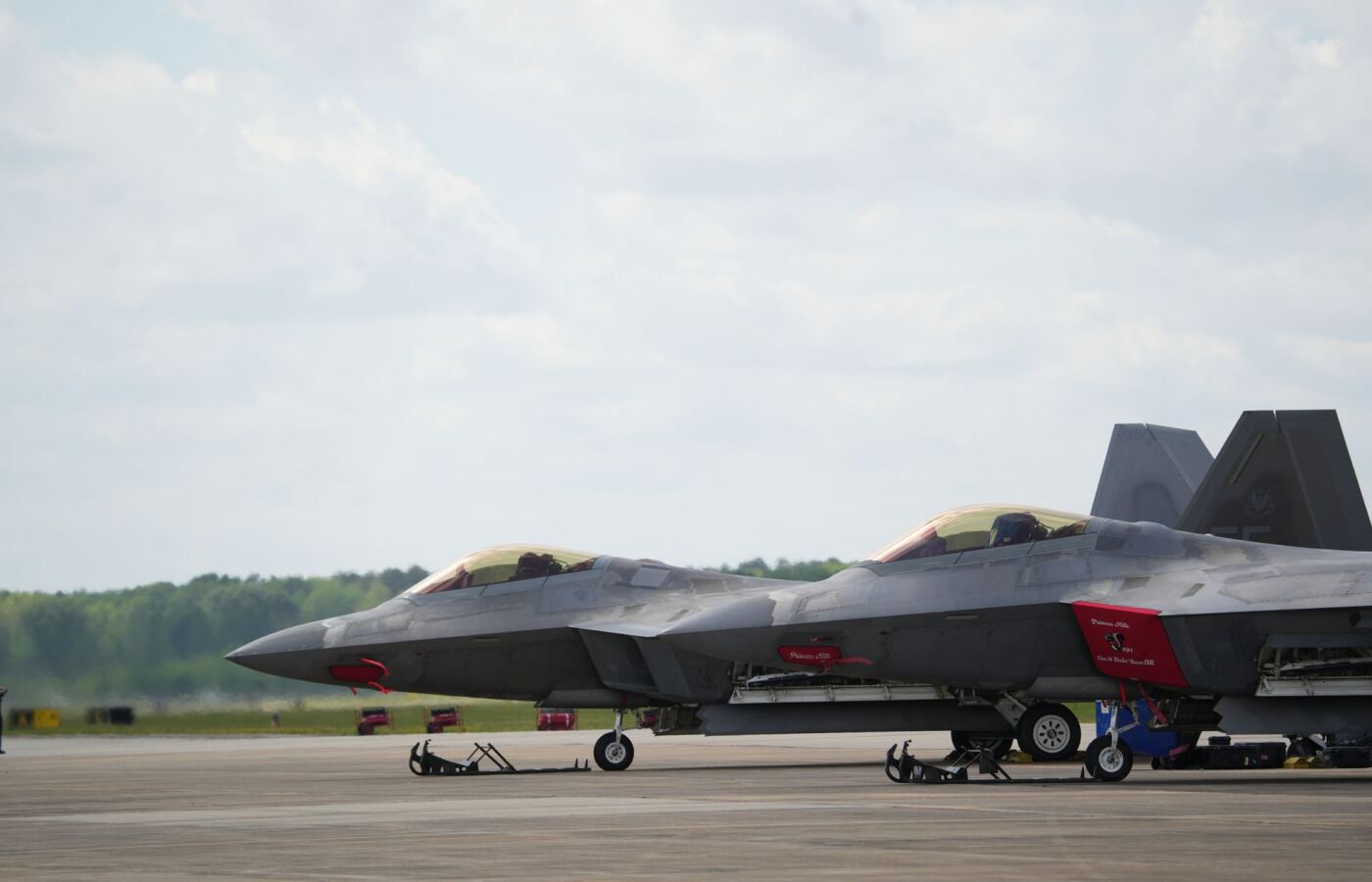
Is the F-22 Raptor still one of the world’s premier air-superiority fighters now that the J-20 and F-35 have entered the picture? And does its recent test commanding an unmanned aircraft mean the Raptor has been transformed into an entirely new kind of fighter?
The answer cannot be reduced to a simple first-place ranking. The F-22 remains the fighter most focused on air combat and air dominance, but the description “the world’s only operational fifth-generation fighter” now needs to be revised.
- What the F-22 Was Built to Do Best
- Why the F-22 Is Back in the Spotlight
- So, Is the F-22 Still at the Top?
- Its Strength Comes from Four Capabilities Working Together
- But “Unquestionably the Most Powerful” Goes Too Far
- The F-22’s Position Becomes Clear When the Mission Is Defined
- Frequently Asked Questions
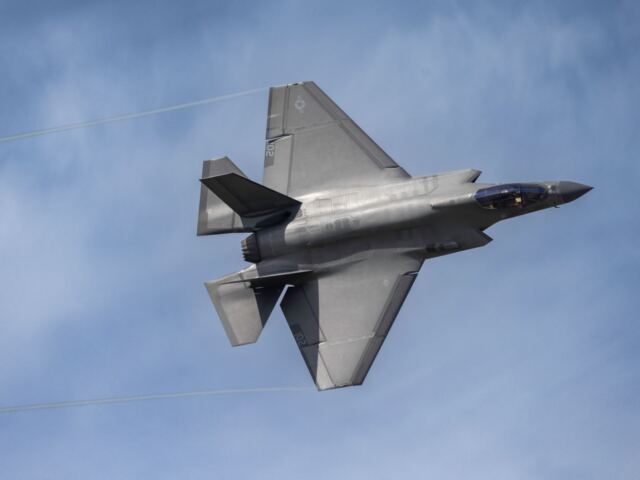
The F-22 is not a multirole fighter designed to handle a broad range of missions. It is a high-performance American fifth-generation aircraft built primarily to find and defeat enemy fighters before they can do the same.
It first flew on September 7, 1997, and achieved initial operational capability in December 2005. The U.S. Air Force describes the aircraft’s core strengths as the combination of low observability, supercruise, maneuverability, integrated avionics and situational awareness.
Low observability means the aircraft is designed to be difficult for radar to detect. Supercruise means it can fly faster than Mach 1.5 without continuously using its afterburners.
Its top speed is generally given as around Mach 2. But speed alone is not the point. What matters is the ability to close on an opponent before being detected and rapidly reposition when necessary.
Its weapons are also carried internally. Air-to-air missiles are stored in internal weapons bays, reducing the radar signature that external weapons would create.
Put simply, the F-22 is not merely a fast, agile fighter. It brings together the entire sequence of staying hidden, seeing first, deciding first and attacking first in a single aircraft.
What the F-22 Was Built to Do Best
The F-22 is back in the spotlight not because an old fighter has suddenly reappeared, but because it is being tested as a command platform capable of directing unmanned aircraft.
On February 23, 2026, General Atomics and the U.S. Air Force announced that they had conducted a manned-unmanned teaming test involving an F-22 and an MQ-20 Avenger at Edwards Air Force Base.
During the test, the F-22 pilot sent tactical commands to the MQ-20 through an interface in the cockpit. The MQ-20 carried out tasks including tactical maneuvering, patrol operations and responses to airborne threats.
The significance of the demonstration is not simply that the unmanned aircraft flew behind the fighter. It showed that a pilot engaged in one fight may also be able to direct unmanned assets at the same time.
At the same time, China’s J-20 cannot be left out of any discussion of the F-22’s uniqueness. A 2024 report on China’s military power assessed that the Chinese air force had operationally deployed the J-20 stealth fighter.
It is therefore difficult to call the F-22 “the only operational fifth-generation fighter.” At least in terms of operational deployment, the F-22 can no longer stand alone.
Why the F-22 Is Back in the Spotlight
The F-22’s strength does not lie in its status as the “only fifth-generation fighter.” A more accurate assessment is that it remains the operational platform most heavily focused on achieving air superiority.
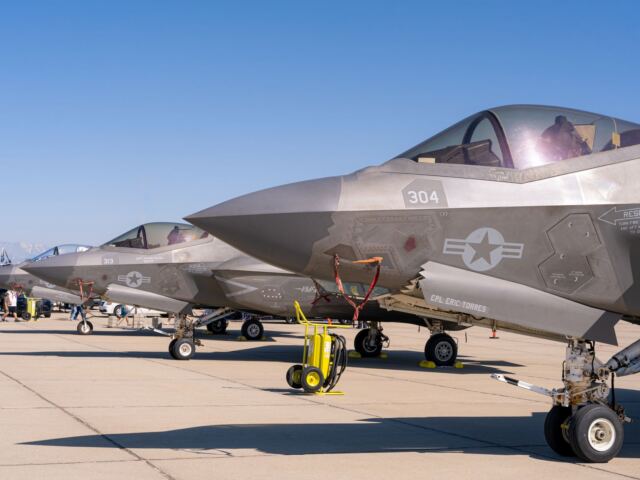
The F-35A is also a fifth-generation fighter, but it was designed with a different emphasis. Built around stealth and sensor fusion, the F-35A is a multirole aircraft capable of strike operations, intelligence gathering and networked warfare.
U.S. Air Force materials list the F-35A’s top speed as Mach 1.6. Speed alone cannot determine which aircraft is superior, but the distinction is clear: the F-22 places a much stronger emphasis on air dominance and air-to-air combat.
The J-20’s operational deployment has been confirmed, but publicly available information does not allow for a detailed, direct ranking of its air-combat performance against the F-22. That makes both claims—that the F-22 is unquestionably the world’s most powerful fighter and that the J-20 has made it obsolete—overstatements.
The key is the mission. For precision strike, intelligence sharing and operations involving interconnected forces, the F-35 is the more relevant comparison. But when the focus is pure air superiority, the F-22 remains one of the strongest benchmarks available.
The F-22’s distinctiveness comes not from a single number, but from its concentration on a specific mission. It was designed to answer the central question of air-superiority combat as directly as possible: who can defeat the enemy’s air force first?
So, Is the F-22 Still at the Top?
The F-22 is highly regarded not because one particular capability overwhelms all others, but because its ability to approach undetected, move quickly and engage first using integrated information works as a single process.
First is low observability. The use of internal weapons bays, which avoids increasing the radar signature with external weapons, is closely tied to this goal.
Second is supercruise. The aircraft is configured to sustain supersonic flight for longer than would be possible by relying continuously on afterburners.
Third is maneuverability. Thrust-vectoring nozzles and a high thrust-to-weight ratio improve the aircraft’s ability to change direction.
In combat, the ability to change position quickly is often more important than maximum speed alone.
Fourth is information processing. Air Force materials say the F-22 is designed to give its pilot an integrated picture of the battlespace after detecting and identifying threats and before engaging them.
That reduces the burden of reading multiple instruments separately and mentally piecing together a map. In a fight to find an enemy who cannot be seen, connecting that information is as important as the aircraft’s speed.
Ultimately, the F-22’s real threat cannot be captured by the phrase “a fast fighter.” Its value as an air-superiority aircraft rises when its ability to hide, move and make decisions operates in concert.
Its Strength Comes from Four Capabilities Working Together
The first limitation is fleet size. Official Air Force data listed the F-22 inventory at 183 aircraft as of August 2022.
A fleet of 183 means the F-22 is not the kind of fighter that can absorb losses through mass deployment. Even a highly capable aircraft offers fewer operational options when the number of available airframes and the force that can be sustained are limited.
The second is the maintenance burden. The Government Accountability Office has warned of continuing risks across U.S. Air Force and Navy aircraft, including maintenance delays, parts shortages and declining mission-capable rates, with the F-22 among the affected platforms.
No matter how impressive a fighter’s performance figures are, its operational power is reduced if it spends too much time in the maintenance hangar. The F-22 must therefore be judged not only by how it flies, but also by how consistently it can generate sorties.
The third limitation concerns the maturity of the unmanned-aircraft control test. The demonstration showed manned-unmanned teaming and the transmission of autonomous commands; it did not prove that one pilot could reliably control multiple combat-capable unmanned aircraft in a complex battlefield.
The ability to direct unmanned aircraft does not necessarily reduce the pilot’s role. It may instead increase the burden of deciding what commands to send and when to send them.
The test should therefore not be read as a sign that the F-22 has transformed into a new fighter. It is more accurately understood as an effort to expand the aircraft’s existing air-superiority role into command of manned and unmanned forces.
But “Unquestionably the Most Powerful” Goes Too Far
If the question is pure air dominance, penetration of high-threat airspace and air-combat performance, the F-22 remains a top-tier benchmark. Its combination of low observability, supercruise and maneuverability was built for precisely these missions.
By contrast, the F-35 is the more suitable comparison for precision strike, reconnaissance, information sharing and networked operations with allies. In that context, the ability to connect a wider range of missions matters more than it does with the F-22.
If long-range operations and a large weapons load are the priority, large weapons platforms such as the F-15EX also deserve consideration. The refined performance of a single air-superiority fighter and the value of a platform carrying a heavy weapons load serve different purposes.
Assessing unmanned-aircraft control capabilities also requires separating the present from the future. The 2026 test was not evidence that the F-22’s current operational mission had changed. It showed the potential to expand a manned fighter into a command node for a manned-unmanned formation.
The conclusion can be stated this way: the F-22 remains a top benchmark for air-superiority fighters, but it is more accurate to describe it not as the “world’s only” fifth-generation fighter, but as one of the leading operational fifth-generation fighters specialized for air dominance.
The F-22’s Position Becomes Clear When the Mission Is Defined
Q. Is the F-22 still the world’s best fighter?
A. It remains a top-tier benchmark when the focus is air dominance and air combat.
But rather than calling it the unquestioned number one across every mission, it should be compared by role, taking the F-35 and J-20 into account.
Q. What is the biggest difference between the F-22 and F-35?
A. The F-22 is more focused on air dominance and air combat, while the F-35 is stronger in multirole missions that include strike operations, intelligence gathering and networked warfare.
Although both are fifth-generation fighters, they were designed around different objectives.
Q. Has the J-20 reduced the F-22’s value?
A. The J-20’s operational deployment makes it difficult to describe the F-22 as the only fifth-generation fighter.
However, publicly available information does not allow the two aircraft to be ranked directly on detailed air-combat performance, so the F-22 retains its value as an air-superiority fighter.
Q. Will the F-22 directly control unmanned combat aircraft?
A. In the test, the F-22 pilot sent tactical commands to the MQ-20, which then carried out several tasks.
That demonstrated the potential to command manned and unmanned forces; it did not mean that multiple combat-capable unmanned aircraft could always be controlled reliably.
Frequently Asked Questions