SpaceX signs a launch contract with the U.S. Space Force for $1,600,000,000
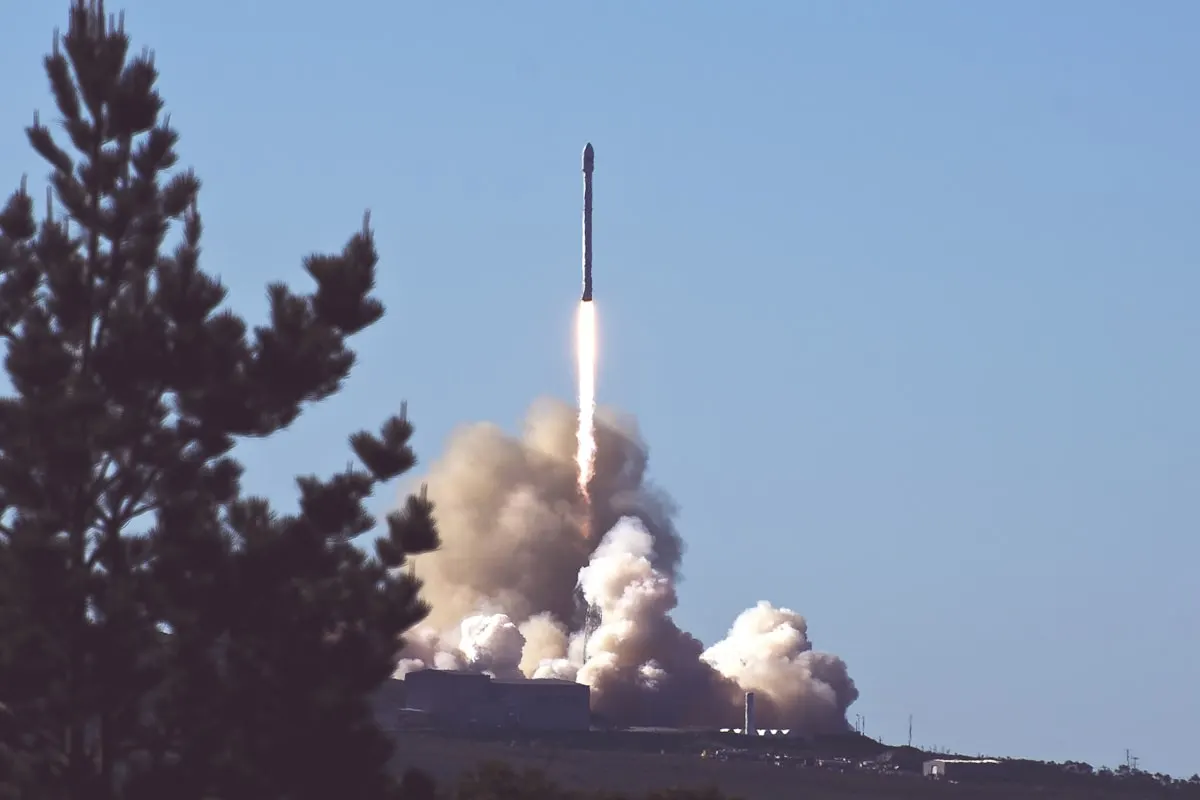
The U.S. Space Force’s Space Systems Command announced on July 29, 2026, that it has awarded SpaceX two National Security Space Launch (NSSL) Phase 3 Lane 1 task orders, totaling $1,600,000,000. The contract covers a total of 18 launches using the Falcon 9 rocket.
All missions will be launched from the Vandenberg Space Force Base in California, USA, and are scheduled to be completed by the end of 2027. This contract is not for the manufacture of satellites themselves, but for launch services to deploy the Space Force’s space-based detection and targeting capabilities into orbit.
1,600,000,000 USD: Key details of the SpaceX contract
- Contracting entity: United States Space Force, Space Systems Command.
- Contractor: SpaceX.
- Contract amount: Total of 1,600,000,000 US dollars for two work orders.
- Number of launches: Falcon 9, a total of 18 times.
- Launch site: Vandenberg Space Force Base.
- Completion target: End of 2027.
According to the Space Systems Command, the period from requirements identification to contract signing was approximately 2 months. This includes the approximately 1 month that the launch service provider spent preparing the proposal.
However, the launch dates for individual missions, the number of satellites to be carried, and the specific missions for each satellite have not been announced. Detailed launch schedules are expected to be released based on the progress of preparations for future missions.
Space-based detection and targeting capabilities
The Falcon 9 launch supports the U.S. Space Force’s space-based detection and targeting portfolio. The Space Systems Command stated that the ability to detect and target airborne objects in space and provide near real-time communication to joint forces is critical for national defense.
This portfolio project aims to integrate space-based sensors, communication networks, and ground-based data processing systems to continuously monitor the battlefield situation. The primary goal is to rapidly transmit detection information to commanders and operational units, thereby reducing response time.
Differences from the SB-AMTI project
The U.S. Space Force awarded SpaceX a separate contract with a maximum value of $4,160,000,000 in May 2026 for the development of the Space-Based Air-Moving Target Identification System, SB-AMTI. SB-AMTI is a system for tracking and targeting airborne targets, such as aircraft, from orbit.
This $1,600,000,000 contract pertains to launch services that support this sensing and targeting portfolio. The acquisition of satellites and related systems, as well as the Falcon 9 launch contract, are separate in terms of purpose and budget.
NSSL Phase 3, Lane 1 Contract Structure
The NSSL Phase 3 is a national security launch procurement system used to transport U.S. military and intelligence satellites into space. Lane 1 operates as a multiple-supplier system, where multiple launch providers compete for individual task orders, and the warranty procedures can be adjusted to match the specific mission requirements.
The United States government increased the total limit of the Lane 1 basic contract from the previous 5,600,000,000 US dollars to 17,000,000,000 US dollars on July 17, 2026. The increase of 11,400,000,000 US dollars is not the amount paid to SpaceX alone, but rather the increase in the total contract limit, which involves multiple participating companies competing.
The current Lane 1 contract includes companies such as SpaceX, ULA, Blue Origin, Rocket Lab, Stoke Space, Impulse Space, and Relativity Federal. The actual budget is allocated and executed on a mission-by-mission basis when individual work orders are issued to each company.
This contract is not the first work order
The first work order for Phase 3, Lane 1 of the NSSL project was issued to SpaceX in October 2024. At that time, the Space Systems Command awarded two work orders to SpaceX, totaling approximately $733,570,000, for missions related to the Space Development Agency and the National Reconnaissance Office.
Therefore, the $1,600,000,000 contract announced in July 2026 was not the first order for Lane 1, but rather a large-scale work order added to meet the increased demand for launches.
Impact on SpaceX and the U.S. Space Force
SpaceX is scheduled to conduct 18 Falcon 9 national security missions at the Vandenberg Space Force Base by the end of 2027. Given the need to concentrate a large number of launches at a specific base, the stable operation of the rockets, launch pads, and satellite processing facilities will be crucial.
This means that the U.S. Space Force has secured the capability to rapidly deploy a distributed satellite system. As the trend of using multiple satellites instead of a single, large satellite expands, the role of commercial rockets that can be launched repeatedly is also increasing.
Future points of interest include the launch schedules for individual missions and the configuration of the satellites being deployed. When this information is released, the deployment speed of the Space Force’s detection and targeting systems, as well as the operational plans for the Falcon 9, are likely to become more concrete.
Frequently Asked Questions (FAQ)
How many launches are included in SpaceX’s $1,600,000,000 contract?
The plan includes a total of 18 launches using the Falcon 9 rocket. All missions are scheduled to take place at the Vandenberg Space Force Base.
When will the 18th Falcon 9 launch be completed?
The U.S. Space Force plans to complete all launches by the end of 2027. Specific dates for individual missions have not yet been announced.
1,600,000,000 US dollars: Is this the cost of satellite production?
No. This amount is the total for two launch service work orders related to NSSL Phase 3 Lane 1. Contracts for the development and production of the satellite and related systems will be concluded separately.
What mission will the satellite launched by SpaceX perform?
This supports the U.S. Space Force’s space-based detection and targeting portfolio. This portfolio aims to build the capability to detect and track airborne objects in space and rapidly transmit related information to the joint forces.
Is the $11,400,000,000 increase in Lane 1 a SpaceX contract?
No. The $11,400,000,000 represents an increase in the overall basic contract limit for NSSL Phase 3 Lane 1, raising it from $5,600,000,000 to $17,000,000,000. Several participating companies compete for individual work orders.
Is this contract the first work order for NSSL Phase 3, Lane 1?
No. The initial work order was issued to SpaceX in October 2024. This contract involves two additional work orders that were placed in July 2026.