GCAP: Possibility of operational deployment by 2033
A forecast suggests that the first operational deployment of the GCAP, a next-generation fighter being jointly developed by the United Kingdom, Italy, and Japan, could be advanced by approximately 2 years from the official target of 2035. However, 2033 is not a confirmed date, but rather a conditional scenario that could be possible if the required performance of the initial model is adjusted.
According to a report by the defense industry publication Breaking Defense on July 31, 2026, Lorenzo Mariani, CEO of Leonardo, stated at an investor presentation that there is a strong demand to accelerate the initial operational deployment of the GCAP program by several years.
GCAP’s official target remains 2035
The official name of GCAP is Global Combat AirProgramme. The United Kingdom, Italy, and Japan announced the launch of the program in December 2022, and are maintaining a schedule to operate the next-generation fighter aircraft from 2035.
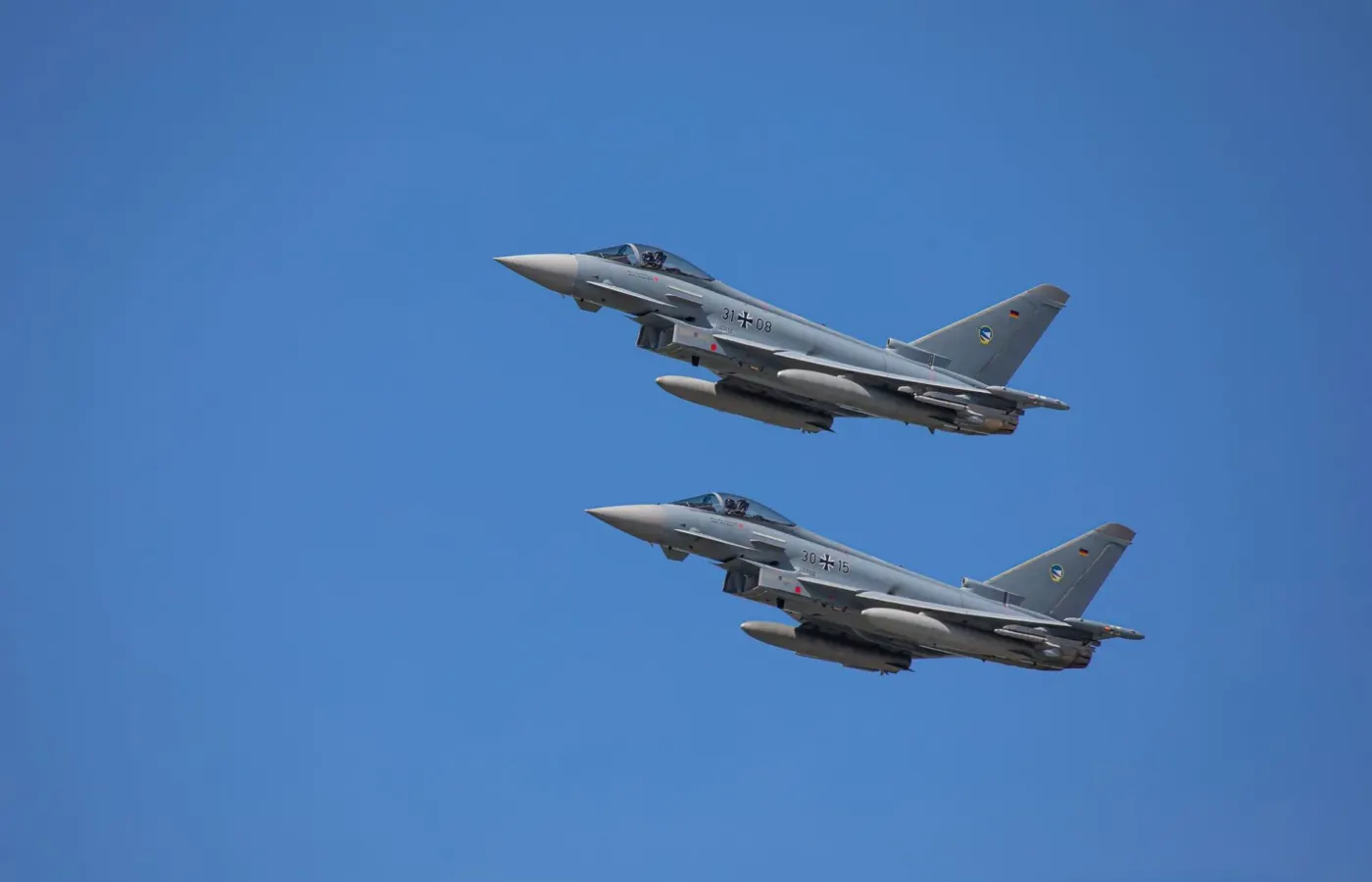
GCAP is not limited to the development of a single fighter jet; it aims for a future air combat system that integrates advanced sensors, data systems, weapons, and autonomous systems. The aircraft being developed is expected to eventually replace key assets such as the Eurofighter Typhoon of the United Kingdom and Italy, and the Mitsubishi F-2 of Japan.
The GCAP International Governmental Organization Establishment Agreement, signed by the three countries, came into effect on December 10, 2024. Accordingly, a structure has been established where GIGO, the government-side project management organization, will comprehensively manage common requirements and key development schedules.
2033: Conditions for early deployment are subject to adjustments in initial requirements
Mariani, CEO of the company, explained that in order for the plan to advance the initial operational deployment by approximately 2 years, the requirements for the initial version must be adjusted. The approach is to initially deploy aircraft with core capabilities and then gradually expand functionality in subsequent phases, rather than implementing all final performance features at once.
He emphasized that in complex development projects, an approach of gradually meeting the final required performance can be utilized. However, he did not disclose the specific functions of the sensors, weapons, communications, and electronic warfare systems that may be subject to modification.
Therefore, the commencement of operations in 2033 does not simply mean a 2-year reduction in the overall GCAP development schedule. It is interpreted as an option that requires limiting the performance range of the initial model and restructuring the testing, production, and subsequent improvement plans.
4,000,060,000,000 Pound Design Contract Signed
According to a statement from the British Ministry of Defence, the GCAP Agency, under GIGO, awarded a joint contract worth 4,600,000,000 pounds to the joint venture company Edgewing on July 3, 2026. This contract, which is jointly funded by the United Kingdom, Italy, and Japan, supports the next design phase, including the confirmation of key aircraft requirements and testing.
EdgeWing is a development joint venture jointly owned by British BAE Systems, Italian Leonardo, and the Japanese JAIEC, an aerospace industry promotion corporation. The structure involves GIGO, an intergovernmental organization, and the industrial side of EdgeWing, each responsible for project management and aircraft design, respectively.
EdgeWing CEO Marco Zoff stated in an interview with Reuters that the company’s schedule for 2035 will not be changed, even if new countries join. The current official timeline remains 2035, while the proposal for 2033 is being considered as a separate acceleration plan.
Challenges and prospects of shortening the GCAP schedule
For the early operation of the GCAP, the governments of the three countries must agree on the common performance requirements, certification standards, and testing scope for the initial version. Reducing core functions can shorten the development period, but the potential for increased costs for subsequent improvements and a larger performance gap between the initial production phase and later versions must also be considered.
It is also a burden that the schedules for supply chain management, engine production, flight testing, and software integration must all be accelerated simultaneously. In particular, the process of integrating sensor, communication, electronic warfare, and weapon systems into a single aircraft platform could be a major factor affecting the overall schedule.
Ultimately, the commencement of GCAP operations in 2033 is not a confirmed new goal, but rather a possibility presented under the premise of gradually expanding initial capabilities. How the three countries define the requirements for the initial version will be a key indicator that will determine the extent of any potential acceleration.
Frequently Asked Questions (FAQ)
What is the official operational deployment date for the GCAP fighter aircraft?
The official goal agreed upon by the United Kingdom, Italy, and Japan is to operate next-generation fighter aircraft starting in 2035. The year 2033 represents a possible, conditional timeline that may be adjusted based on initial requirements.
Is there a possibility that the GCAP will be deployed for actual combat in 2033?
Leonardo’s CEO mentioned the possibility of accelerating the initial operational deployment by approximately 2 years. However, this requires prior decisions from the governments of the three countries, as well as adjustments to the initial performance, and a reduction in testing and production schedules.
What is the exact name and list of participating countries in the GCAP?
GCAP is an abbreviation for the Global Combat Air Programme. The core participating countries are the United Kingdom, Italy, and Japan.
What does it mean to adjust the requirements of the initial version?
The plan is not to incorporate all of the initially planned functions into the first production model, but rather to prioritize securing core combat capabilities, and then gradually expand performance through software and equipment improvements.
Which company is responsible for the development of GCAP?
EdgeWing, a joint venture company co-owned by BAE Systems, Leonardo, and JAIEC, leads the aircraft design. On the government side, the international organization GIGO and its subsidiary GCAP Agency manage the project.