U.S. Army Begins Rapid Testing of M1E3 and XM30 Prototypes
The U.S. Army’s 1st Armored Division Combat Team (Iron Horse Brigade) is currently conducting prototype testing of the next-generation tank, the M1E3, and the next-generation infantry fighting vehicle, the XM30. Following initial training at Fort Hood, Texas, the unit plans to conduct full-scale field evaluations at the National Training Center in Fort Irwin, California, in the spring of 2027.
M1E3: A fundamental redesign of the Abrams tank
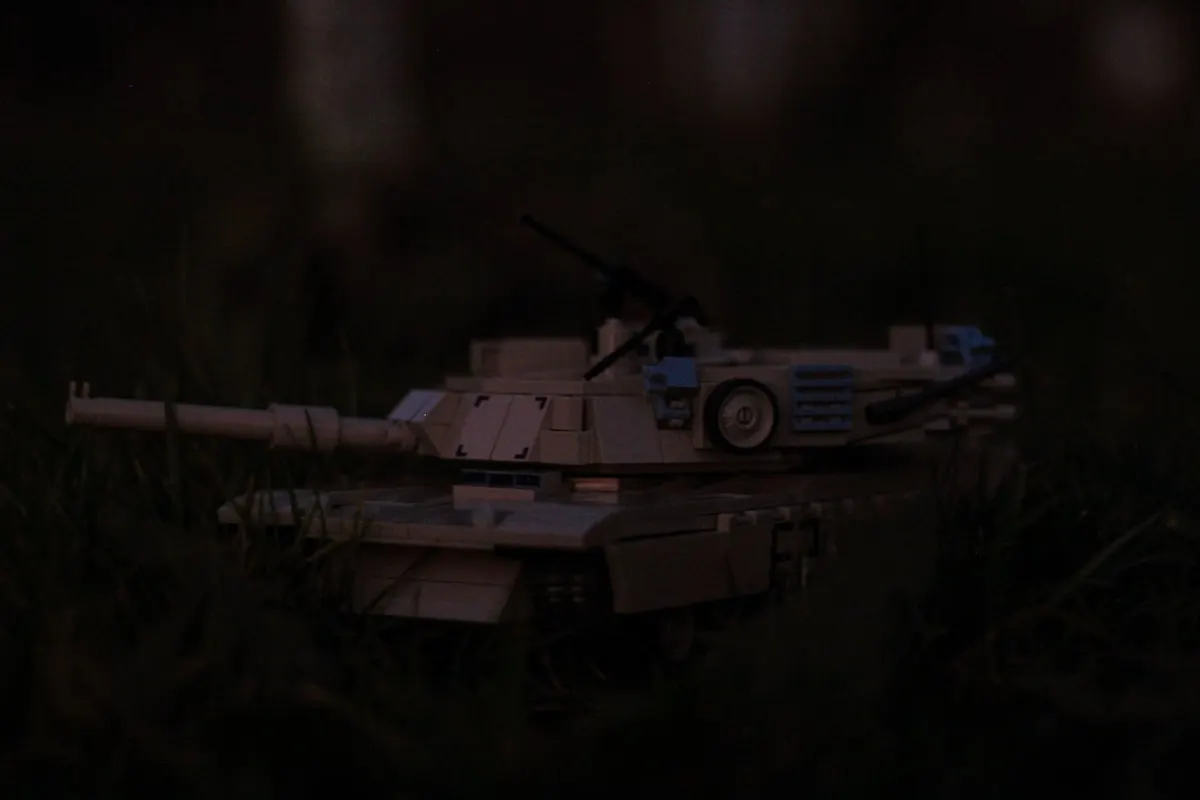
The M1E3 is not a simple upgrade of the existing M1 Abrams, but a fundamentally redesigned main battle tank. It was developed to reduce weight and fuel consumption, introduce an open digital architecture, increase automation, and incorporate future protection technologies from the ground up.
The M1E3 features a hybrid power system, replacing the existing Honeywell AGT-1500 turbine engine. It also includes an unmanned turret and an automatic loading system, and reduces the crew to 3 members, who are housed within the armored capsule. According to sources within the Army, the M1E3 will boast a fuel consumption rate that is 40% to 50% more efficient than previous versions.
XM30: Successor model to the M2 Bradley fighting vehicle
The XM30 was developed by U.S. companies Rheinmetall and Raytheon. It is intended to replace the M2 Bradley and features the replacement of the long-used M242 Bushmaster with the new XM913 50mm chain gun. Both platforms are designed to address the drone-centric battlefield environment seen in the Ukraine war.
Role of the Iron Horse Brigade in field assessments
Soldiers of the 1st Armored Division Combat Team, stationed in Fort Hood, Texas, are scheduled to begin training this fall using the new XM30 mechanized infantry combat vehicle and the M1E3 Abrams tank prototype. One company will test the M1E3, while two companies will evaluate two different versions of the XM30.
Unlike development tests led by engineers, the operational evaluation with the 1st Armored Brigade Combat Team will demonstrate the performance of the new tanks in terms of mobility, maintenance, fuel supply, ammunition supply, tactical networking, and joint operations.
2027 Spring National Training Center Final Evaluation
After several months of field training, the 1st Armored Division Combat Team plans to conduct a full rotation at the National Training Center in Fort Irwin, California, in the spring of 2027, using both vehicles. The Army anticipates that it will be able to determine the winner between the M1E3 and the XM30 sometime in late spring, after the Iron Horse Division’s rotation at the National Training Center.
Major General Thomas Felte, commander of the 1st Armored Division, emphasized that these platforms represent “a technological leap forward” rather than “a simple incremental improvement.”
Preparing for warfare in the age of drones
The tests will provide important feedback for the development of both vehicles, and will also help to determine the new role of armored vehicles in a drone-centric era of warfare. Drones have now become a dominant force, and Western armored vehicles are also facing a significant threat.
Frequently Asked Questions (FAQ)
Q: What are the main differences between the M1E3 and the XM30?
A: The M1E3 is a next-generation main battle tank that fundamentally redesigns the existing Abrams tank, featuring weight reduction, improved fuel efficiency, and an unmanned turret. In contrast, the XM30 is a next-generation infantry fighting vehicle developed to completely replace the M2 Bradley, and it is equipped with a new 50mm main gun and an unmanned turret design.
Q: What kind of unit is the Iron Horse Brigade?
A: The Iron Horse Brigade, officially designated as the 1st Armored Brigade Combat Team, 1st Cavalry Division, is a U.S. Army armored unit stationed at Fort Hood, Texas. It plays a crucial role in evaluating the performance of new tanks and infantry fighting vehicles under realistic battlefield conditions.
Q: When and where will the tests be conducted?
The prototype vehicles are scheduled to arrive at Fort Hood in the fall of 2026, where basic training will be conducted. In the spring of 2027, they will undergo comprehensive field evaluations at the National Training Center (NTC) in Fort Irwin, California.
Q: Is the Army planning to select either the M1E3 or the XM30?
A: The Army currently plans to maintain both companies for as long as possible. However, it is expected that a final decision regarding the M1E3 will be made in late spring, after the national training center rotation. It is important to note that the timing of the final decision may be subject to change due to budget constraints.
Q: What are the main technical features of the M1E3?
The M1E3 utilizes a diesel-electric hybrid propulsion system, offering a fuel efficiency improvement of 40-50%. It features an unmanned turret and an automatic loading system, reducing the crew size from 4 to 3. It is also equipped with a 360-degree situational awareness system and an artificial intelligence threat detection system.
Q: What is the impact of this test on the United States Army?
A: The results of this evaluation will be a crucial benchmark for determining the future direction of armored vehicle replacement within the U.S. Army and for developing tactics to prepare for warfare in the age of drones. In particular, it is expected to directly impact the enhancement of the Army’s combat capabilities in the changed battlefield environment following the war in Ukraine.