Boeing records $280,000,000 loss in the Air Force One replacement project
Boeing recorded an additional loss of $280,000,000 in the second quarter of 2026 for the U.S. Air Force’s new Air Force One (VC-25B) replacement program. This increased the cumulative losses since the start of the project in 2018 to approximately $3,100,000,000. Boeing’s management stated that this loss is the result of additional investments made to recognize the importance of adhering to the customer’s schedule, and that they plan to significantly expand production and certification resources to deliver the first aircraft in 2028.
Background and complexity of the Air Force One replacement project
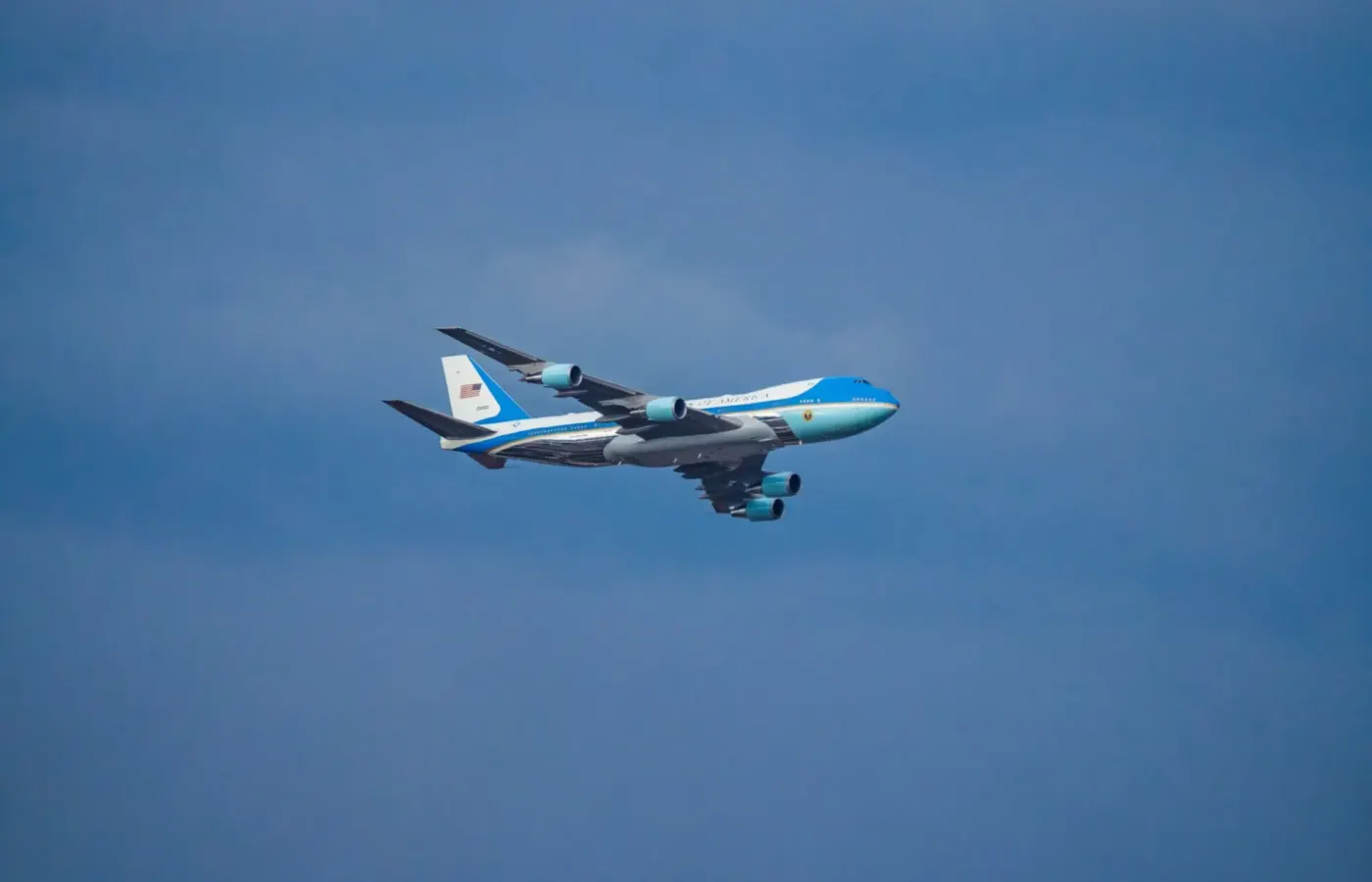
The Air Force One replacement project involves replacing two aging VC-25A aircraft, which have been in service since 1990, with the latest technology Boeing 747-8 aircraft. The U.S. Air Force plans to designate the two modified 747-8 aircraft as VC-25B and operate them as the next-generation Air Force One, responsible for the President’s transportation and national defense command functions.
Each aircraft requires extensive modifications, including advanced secure communication systems, interior renovations, and self-defense equipment. Boeing CEO Kelly Ortberg described these aircraft as “the most complex twin-aisle aircraft we have ever built,” highlighting the significant technical complexity of the project.
Repeated delays and cost overruns: the reality
In the fixed-price contract worth $3,900,000,000, signed in 2018 during the presidency of Donald Trump, the original aircraft delivery was scheduled for December 2024, but it has now been postponed by more than 4 years to 2028. Due to the structural characteristics of the fixed-price contract, Boeing is responsible for all cost overruns.
During the second quarter earnings announcement, Boeing reported an additional loss of $280,000,000, which was attributed to investment costs in production and certification resources. The total project cost is currently estimated to be approximately $6,900,000,000, and Boeing’s cumulative losses have exceeded $3,100,000,000.
Management’s response and future investment plans
Boeing CEO Kelly Ortberg stated during the announcement of the second-quarter results, “Although this loss is disappointing, we recognize how important it is to adhere to the schedule of our customer, the United States government, and we are investing accordingly.” In an internal email to employees, the CEO announced plans to allocate “significant resources” for aircraft deliveries.
Boeing stated that the additional expenditure is a strategic investment to meet the delivery target of 2028. At the same time, the management emphasized that ensuring the safety of the aircraft and compliance with technical specifications are the top priorities.
Policy Context: Conflict with the Trump Administration
In 2016, immediately after his election, President Trump criticized the high costs of the Air Force One project and threatened to cancel the contract. Subsequently, a new contract was signed in 2018, but cost overruns and delays have continued to be the subject of the President’s criticism. Recently, Trump expressed his dissatisfaction, stating that “we may need to explore other options.”
In the immediate aftermath of Trump’s return to office in 2025, there was an attempt to use a Boeing 747-8 donated by Qatar as a temporary Air Force One. However, due to security and technical limitations, the existing, aging aircraft continued to be used alongside the new one.
Impact on the entire defense industry
Boeing’s losses on the Air Force One project serve as an example of the risks associated with fixed-price government contracts, stemming from the company’s excessive pricing. Other Boeing defense industry projects, such as the KC-46 tanker, the MQ-25 unmanned aircraft, and the T-7 trainer, are also facing cost overruns under similar fixed-price contract structures.
During the second-quarter earnings announcement, the CEO of Ortenberg stated that most other fixed-price projects were assessed as being at a “normal risk” level. However, the financial impact of the Air Force One project on the entire defense sector was so significant that it resulted in a negative operating profit margin for the defense sector in the second quarter.
Frequently Asked Questions (FAQ)
Q. What is the Boeing Air Force One replacement project?
This project involves replacing two aging VC-25A aircraft, which the U.S. government has been using since 1990, with two new VC-25B aircraft based on the latest Boeing 747-8 technology. These aircraft will not only serve as the official transportation for the President but also incorporate advanced communication and security systems to support national defense command functions.
Q. Why did Boeing incur such significant losses?
A. The primary cause is the fixed-price contract structure signed in 2018, valued at $3,900,000,000. This type of contract requires the contractor (Boeing) to bear all cost overruns. Consequently, cost overruns resulting from technical complexity, inflation, and modifications that exceeded initial estimates directly translated into losses for Boeing.
Q. Will the KF-21 fighter jet, designated “Air Force No. 1,” truly be completed in 2028?
Boeing has promised the first aircraft delivery in 2028 and is significantly increasing production and certification resources to achieve this. However, the delivery target has already been delayed by 4 years from the original goal of 2024, so the possibility of further delays cannot be ruled out.
Q. What is the total accumulated loss of Boeing?
As of the second quarter of 2026, Boeing’s cumulative losses exceeded approximately $3.1 billion. This figure represents the sum of all cost overruns recorded since 2018. The original contract was for $3.9 billion, but the actual project costs are now expected to reach approximately $6.9 billion.
Q. Do U.S. taxpayers bear this loss?
A. No. Because of the fixed-price contract structure, Boeing bears all cost overruns, so there is no direct tax burden on the taxpayer. However, it is known that the U.S. government spent several hundred million dollars on the modification of the temporary Air Force One (a Qatar-donated aircraft).
Q. Will this project delay affect U.S. defense capabilities?
Currently, the VC-25A aircraft has been in service for over 30 years and is aging, but it is being used as a temporary measure to support the President’s transportation. It is expected that the delivery of the VC-25B in 2028 will modernize the nation’s command and control capabilities.