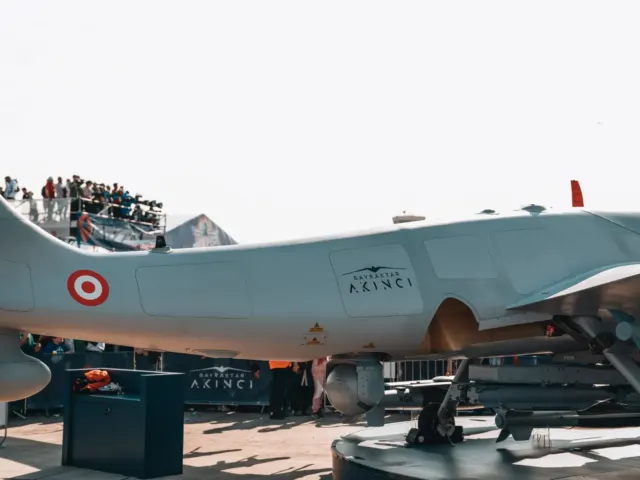
Eastern Europe: Strengthening integrated air defense centered on the Raider system
Air defense strategies in Eastern Europe are expanding from a focus on fighter jets and interceptor missiles to encompass an integrated system that includes detection, tracking, and command-and-control networks. This is a response to the ongoing Russian-Ukrainian war, which has seen a continuation of airspace violations along the Eastern front, including the incursion of Russian drones into Polish airspace in September 2025.
NATO launched “Eastern Sentinel” in September 2025, a multi-domain operation to strengthen surveillance and response capabilities along the eastern front. The core objective is to early identify threats by connecting radar systems, airborne early warning and control aircraft, fighter aircraft, and ground-based air defense systems, thereby increasing the speed of response between nations.
Raider: The starting point of air defense
Air defense radar systems are surveillance assets that determine the location, altitude, and speed of airborne objects such as aircraft, cruise missiles, and drones. The radar information is transmitted to command and control centers and air defense units, and is used as basic data to determine whether to issue warnings, dispatch fighter jets, or operate interception systems.
In particular, small drones that fly at low altitudes can be difficult to detect by existing surveillance systems. Therefore, it is becoming increasingly important to operate mobile short-range radars and electro-optical/acoustic sensors together. Consequently, recent efforts to strengthen air defense are not limited to simply increasing the number of a single type of radar, but are also focused on integrating various sensors into a single air situation display.
According to NATO, the integrated air and missile defense system, NATINAMDS, combines air surveillance radar, a ground-based air defense system, a ballistic missile defense system, and a command and control network. The system’s effectiveness depends not only on the performance of the radar but also on data sharing and identification procedures between allied nations.
Poland expands coastal and eastern border surveillance network
Poland has signed a contract to install 18 radar sites along its coastline to monitor both surface and low-altitude airborne objects in July 2025. The Polish Ministry of Defense stated that this system will supplement surveillance of the Baltic Sea coast and the area adjacent to Kaliningrad, and can also be linked to the “Eastern Shield” project.
This project focuses on simultaneously monitoring maritime infrastructure and low-altitude flying objects. Amid rising tensions surrounding ships and underwater infrastructure in the Baltic Sea, this is interpreted as an effort to understand the security situation as a unified whole, without separating air and sea domains.
Poland’s air defense modernization is also proceeding in a direction that connects radar systems and interception systems. The goal is to enhance interoperability between the national air defense network and NATO’s integrated air defense network by combining surveillance and tracking sensors with the short-range air defense system “Narew” and the medium-range air defense system “Wisła.”
Baltic States Focus on Low-Altitude Drone Response Capabilities
Estonia’s long-range radar and command and control modernization
According to the Ministry of National Defense of Estonia, one of the Baltic states, the Estonian Air Force operates the Kellavere and Ämari radar facilities as well as mobile Ground Master 403 early warning radars. These sensors are connected to the NATO integrated air and missile defense system, enabling continuous sharing of regional air situational awareness.
The NATO Communications and Information Agency upgraded Estonia’s air command-and-control system in 2025. The measure improved its capability to exchange radar data and civil air traffic information in real time, enabling the faster identification not only of military threats but also of low-altitude flying objects and anomalous tracks near the border.
Mobile air defense systems of Lithuania and Latvia
Lithuania signed a contract with Swedish company Saab in 2024 for the acquisition of the MSHORAD mobile short-range air defense system, with a value of approximately 147,000,000 euros. This system includes the Giraffe 1X mobile radar and the RBS70 NG launch system, and deliveries are scheduled to take place sequentially from 2025 to 2027.
The Lithuanian Ministry of National Defense has also decided to cooperate with the Netherlands to introduce the Thales GM200 MM/C multi-purpose radar system. This project, with a budget of approximately 126,700,000 euros, aims to acquire a multi-purpose sensor that can be used not only for artillery detection but also for air surveillance and integration with air defense systems, if necessary.
Latvia is expanding its drone detection and response network, focusing on its eastern border. The Latvian Ministry of Defense announced that it will introduce new Giraffe 1X radars in 2025 and is planning to develop a “drone barrier” concept that combines acoustic-based drone detection systems with electronic warfare and anti-drone equipment.
NATO’s role lies in connectivity, not equipment
NATO’s Baltic Sea air policing has been in operation since 2004, following the accession of Estonia, Latvia, and Lithuania to the alliance. The mission is carried out on a rotational basis, with Šiauliai and Ämari air bases, and the Latvian Lielvārde base, which became operational in 2024, serving as key operational hubs.
NATO is deploying not only air patrol fighter jets but also AWACS (Airborne Warning and Control System) aircraft, as well as surveillance aircraft, to the eastern front. According to a NATO statement, AWACS uses radar information to track the movements of aircraft, missiles, and large drones, and provides a comprehensive air situation picture to the command authorities of allied countries.
Following its launch in September 2025 after the airspace violation incident in Poland, the Eastern Sentinel was designed to operate fighter jets, air defense systems, surveillance aircraft, and transport/refueling assets in a coordinated manner. The key principle is that no single country should be solely responsible for defending against all threats, but rather that threat detection, identification, and interception decisions should be rapidly linked at the alliance level.
Effects of strengthening air defense and remaining challenges
Expanding the radar network increases the likelihood of early detection of airspace violations or drone approaches. Furthermore, sharing sensor data among different countries allows for cross-verification of the same aerial object from multiple locations, which is expected to reduce the risk of misidentification and delayed responses.
However, a radar system does not immediately imply interception capability. After detection, it is necessary to determine the nature of the object, verify whether it is a civilian aircraft or a friendly aircraft, and, if necessary, deploy fighter jets, surface-to-air missiles, and anti-drone equipment. This is why the stability of the communication network, command authority coordination, and the sharing of information between military and civilian entities are crucial.
The diversification of drone threats also presents a challenge. Small drones, low-altitude cruise missiles, and aircraft disrupted by electronic warfare require different detection methods and countermeasures. The adoption of mobile radar systems, passive sensors, and electronic warfare equipment by Eastern European countries is a measure to address these complex threats.
The direction of European air defense is a multi-layered, multinational system
The strengthening of radar systems in Eastern Europe is evolving into a trend that goes beyond the modernization of individual countries’ air defenses, reshaping the entire defense structure of NATO. This includes Poland’s coastal surveillance network, the mobile radar and anti-drone systems of the Baltic states, and the integration of NATO’s AWACS (Airborne Warning and Control System) and aerial patrol forces into a single network.
The success in the future will depend not on the quantity of radar systems, but on how quickly detection data is shared and how accurately appropriate countermeasures are selected based on the level of threat. As long as the security environment on the Eastern Front remains unstable, European investment in air defense is likely to continue to focus on strengthening radar systems, interceptor weapons, and command and control infrastructure.
Frequently Asked Questions (FAQ)
What is the role of air defense radar?
The system detects and tracks airborne objects such as aircraft, missiles, and drones, determining their location, altitude, and speed. The collected information is used by air defense units and command and control centers to make decisions and take appropriate actions.
Can a Raider system block all drones?
The radar system is primarily responsible for detection and tracking. Actual neutralization requires separate countermeasures, such as electronic warfare equipment, autocannons, interceptor missiles, and interceptor drones.
Why has radar enhancement become important in Eastern Europe?
Following the war in Ukraine by Russia, military tensions have increased along the eastern front, and there have been instances of drones and military aircraft violating the airspace of NATO member countries.
How does NATO participate in air defense in Eastern Europe?
NATO operates air patrol fighter jets and AWACS surveillance aircraft and integrates the radar and command and control systems of its member states to establish a common air situational awareness.
What equipment are Poland and the Baltic states introducing?
Poland is expanding its coastal and low-altitude surveillance radar systems. Lithuania and Estonia are strengthening their mobile, long-range radar systems and command and control systems, while Latvia is responding by combining drone detection and anti-drone equipment.