German Navy to develop Watercat M18 AMC, up to 15 units
The German Navy plans to enhance the coastal operation capabilities of its Marine Battalion (Seebataillon) by introducing the Watercat M18 AMC multi-purpose combat boat from the Finnish company Marine Alutech. According to reports from the German specialized media outlets Hartpunkt and Naval News, the German government is considering procuring up to 15 of these boats, and Marine Alutech is likely to be selected as the supplier.
However, the currently available information indicates that the selection of the company and the issuance of the order are imminent, not that the contract has been finalized. The final contract and delivery schedule for the German military will be confirmed through subsequent procedures.
Enhancing the coastal warfare capabilities of the German Navy’s Marine Battalion
The German Navy’s Marine Battalion performs various missions, including protecting warships and naval bases, conducting ship inspections, port security, evacuation operations, coastal reconnaissance, and amphibious operations. The German Federal Armed Forces are currently focusing on enhancing the mobility and combat sustainability of the Marine Battalion in coastal and shallow water areas, including the North Sea and the Baltic Sea.
The German Federal Armed Forces announced in a 2024 statement that they plan to deploy new combat boats specifically for marine infantry battalions. These boats are intended to be used for the rapid transport of personnel and equipment in areas where land and sea meet, and to support coastal defense and joint operations.
Watercat M18 AMC: Key Performance Specifications
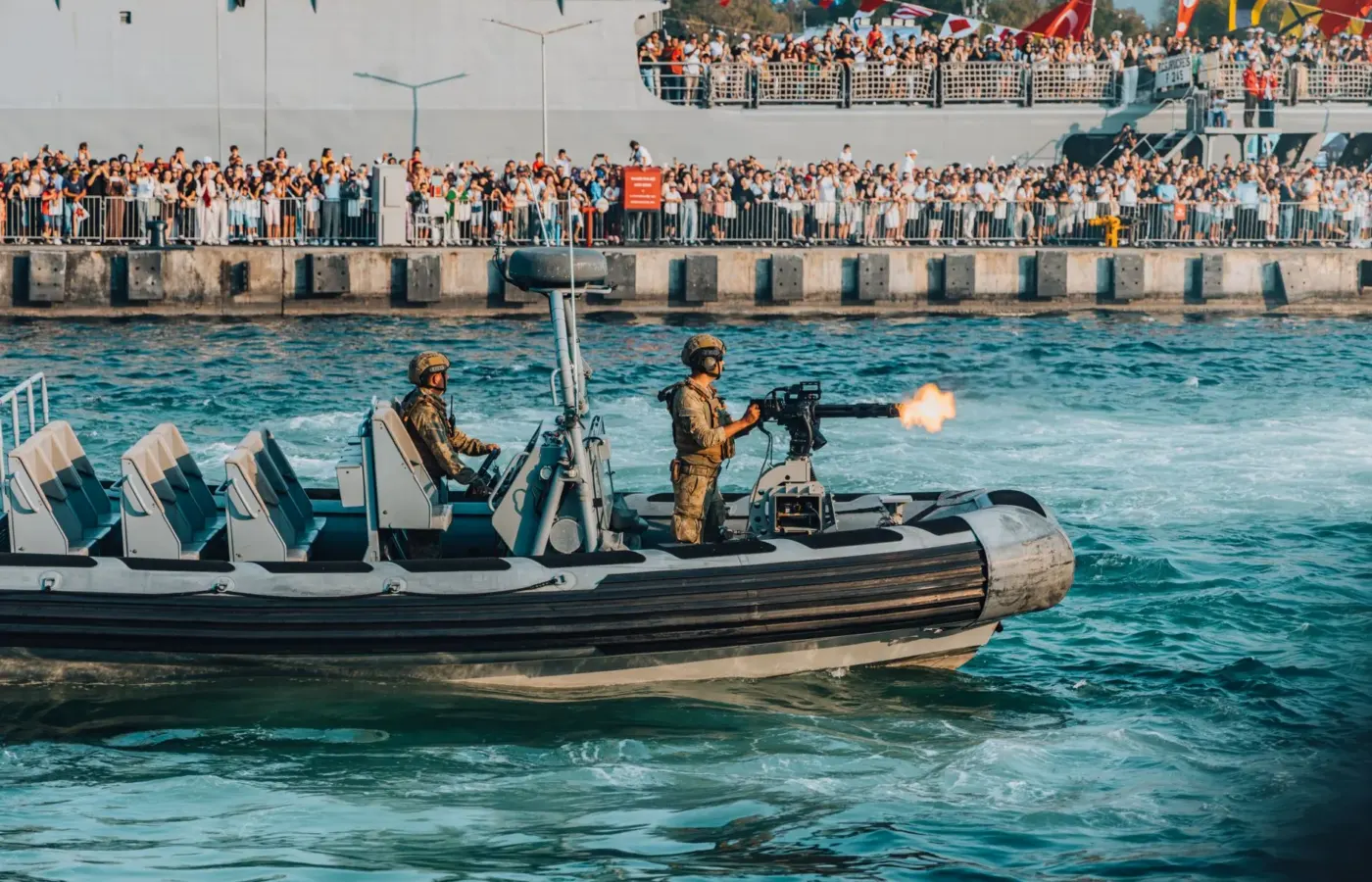
The Watercat M18 AMC is an armored, modular, high-speed landing and combat boat based on an approximately 20-meter aluminum hull. According to Marine Alutech data and existing operational examples, it is designed to perform various missions, including troop transport, landing operations, patrol, escort, medical evacuation, evacuation, and combat support.
- Propulsion system: Two 660 kW diesel engines and water jet propulsion.
- Maximum speed: 40 knots or more.
- Range: Approximately 200 nautical miles.
- Troop transport: Maximum of 25 fully equipped personnel.
- Operational characteristics: Suitable for operation in shallow waters and coastal and island environments.
This type of performance is particularly useful in waters with complex configurations of islands, bays, and ports, such as the Baltic Sea. The waterjet propulsion system is easier to operate in shallow waters compared to propeller propulsion systems, and it supports rapid maneuvering in narrow waterways and ports.
Finnish Navy operational experience was a key factor in the selection process
The Watercat M18 AMC is operated by the Finnish Navy under the designation Jehu-class. The Finnish Navy signed a contract to procure 12 of these vessels in 2012. Marine Alutech describes this warship as a high-speed, multi-purpose platform capable of performing troop transport, amphibious operations, and patrol missions.
In the German procurement project, it is known that existing boats already in service with the navies of NATO member states or partner countries were listed as requirements. The operational performance of the Finnish Navy and the validation experience in the Baltic Sea operational environment are considered strengths of the Watercat M18 AMC.
Up to 15 units to be procured… Initial order expected to be 10 units
According to reports, the German military has set the total project size at a maximum of 15 vessels. According to a report by Hartpunkt, the plan is to initially procure 10 vessels, and then order an additional 5 in the near future.
During the bidding process, Marine Alutech’s Watercat M18 AMC and the CB90 series design from Swedish company Saab were competing. Even if the Watercat M18 AMC is selected as the final contractor, it must undergo qualification assessments, certification, and acceptance tests within the German military, which will require additional time before operational deployment.
Potential acquisition starting in 2029…Support for defense along the Baltic Sea coast
According to current industry forecasts, the first boat is likely to be delivered to the German armed forces starting in 2029. Prior to acquisition, qualification certification and performance evaluations will be conducted to ensure compatibility with the German armed forces’ operational environment.
If the Watercat M18 AMC is introduced as planned, the German Navy’s Marine infantry battalions will acquire enhanced capabilities in troop transport, amphibious operations, and port defense, expanding beyond their current reliance on small, high-speed vessels. In particular, it is expected to enhance mobility in performing coastal defense, maritime escort, military evacuation, and joint amphibious operations along the Baltic Sea coast.
This project is significant not only because it moves away from focusing solely on large warships to strengthen the German Navy’s capabilities, but also because it aims to secure small combat platforms that can connect coastal areas, ports, and islands. However, the final contract amount, delivery date, and specific equipment configuration for the German military are expected to be finalized after the official contract announcement.
Frequently Asked Questions (FAQ)
What type of combat boat is the German Navy planning to adopt?
The Watercat M18 AMC is a multi-purpose combat boat manufactured by the Finnish company Marine Alutech. The Finnish Navy operates it under the designation “Jehu-class.”
How many Watercat M18 AMC vehicles has Germany procured?
Currently, the plan is for a maximum of 15 units. According to industry reports, there is a plan to secure an initial batch of 10 units and then add 5 more.
What is the maximum speed of the Watercat M18 AMC?
Based on the publicly available operational data, the maximum speed is 40 knots or more, and it uses a waterjet propulsion system.
What missions is the Watercat M18 AMC used for?
It can be utilized in various coastal operations, including troop transport, amphibious landings, patrols, escort duties, port protection, military evacuation and medical transport, and combat support.
When did the German Navy begin its operational deployment?
The first batch of boats is potentially scheduled for delivery starting in 2029. However, the schedule may vary depending on the final contract and the results of the trial evaluations.