Ukraine’s F-16s: Operational burden increases due to missile supply disruptions
The Ukrainian Air Force’s F-16 fighter jets are facing a new challenge: a shortage of air-to-air missiles while intercepting Russian drones and cruise missiles. According to a report by Reuters, Ukraine has not sufficiently secured the U.S.-made missiles necessary for F-16 operations from the end of November 2025 to mid-December.
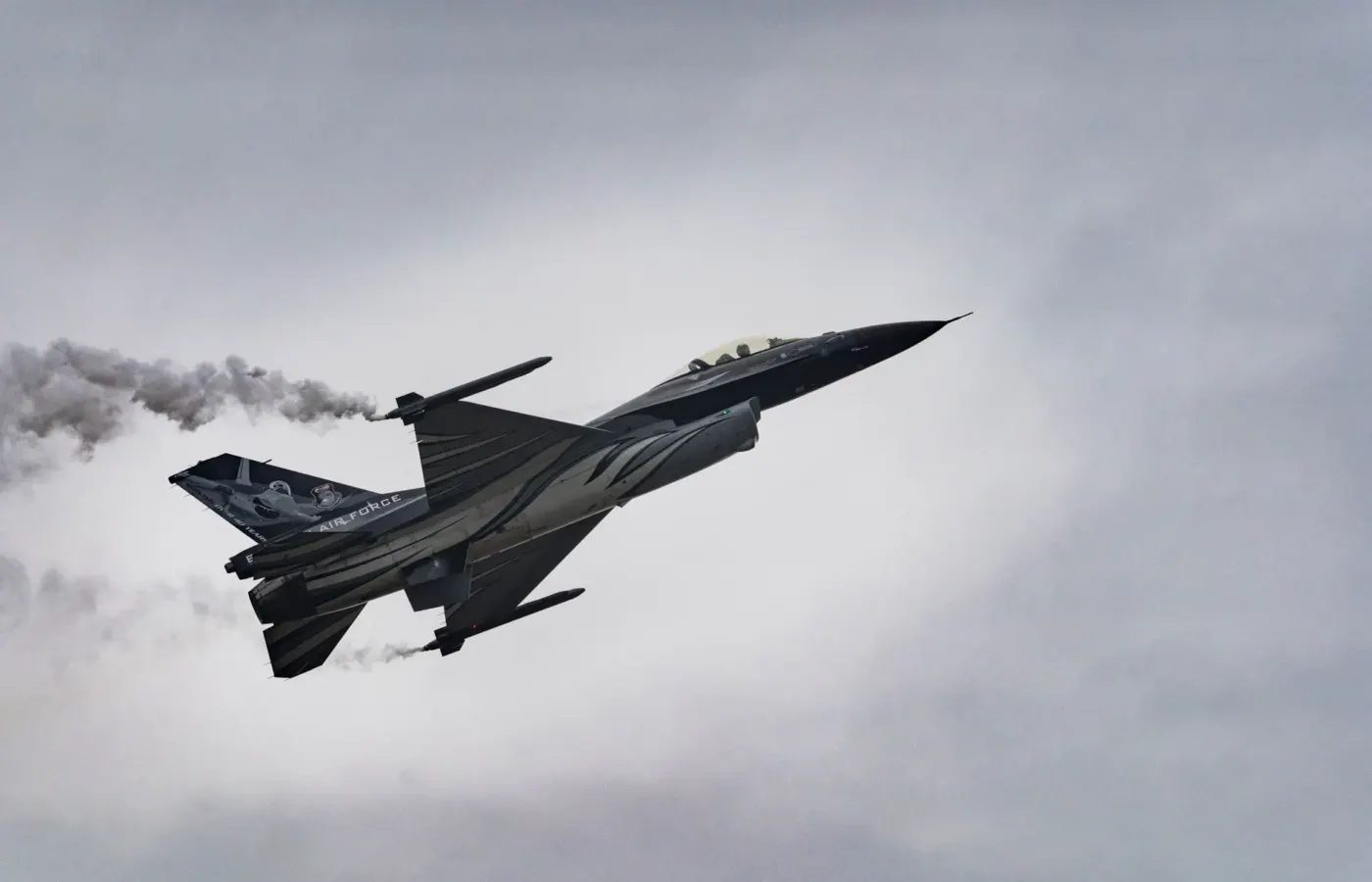
The F-16 is a key component of Ukraine’s multi-layered air defense system. However, sustained interception operations are only possible if the number of fighter jets is matched by the availability of onboard weapons and supplementary supplies. Therefore, disruptions in missile supply are not merely a logistical issue, but directly affect the sustainability of air defense operations.
Background of the F-16 missile shortage
The primary armament used on Ukrainian F-16s includes the short-range, infrared-guided AIM-9 Sidewinder and the medium-range air-to-air missile AIM-120 AMRAAM. These weapons are used to intercept Russian cruise missiles and drones, or to deter the approach of Russian aircraft.
The problem lies in the fact that Russia is repeatedly conducting large-scale aerial attacks, which is rapidly increasing the consumption of interceptor missiles. Reuters reported that Ukraine’s partner countries were unable to immediately provide additional supplies due to a lack of available inventory at the time. Unlike fighter jets, missiles are a consumable resource that are expended even in a single interception operation.
Supply chain burdens persist despite support from the United States and Europe
The U.S. Department of Defense announced in January 2025 a security assistance package for Ukraine worth approximately $500,000,000, which included air defense missiles such as AIM-7, RIM-7, and AIM-9M, as well as equipment to support the operation and maintenance of F-16 aircraft. This measure was intended to help Ukraine operate both Western-made fighter jets and air defense systems.
However, an announcement of support does not immediately mean the arrival of a sufficient quantity of equipment for actual use. Production schedules, national stockpiles, maintenance, and transportation procedures must all be coordinated, and the supporting countries must also maintain a minimum reserve for their own air defense systems. For this reason, Ukraine is demanding a predictable, long-term supply system rather than one-time support.
Missile shortages are changing the operational methods of the F-16
If there is a shortage of missiles, the Ukrainian Air Force will find it difficult to respond to all aerial targets in the same way. They must decide whether to intercept relatively inexpensive drones with expensive air-to-air missiles, or whether to rely on machine guns or ground-based air defense systems.
Consequently, the F-16 is likely to be deployed first against targets that could cause significant damage, such as Russian cruise missiles or large-scale drone attacks. As the inventory of U.S.-made missiles becomes more limited, pilots will need to manage engagement distances and target priorities more strictly, which could also affect the number of missions and the time spent in the air.
The specialized media outlet Warzone reported that Ukraine is using its F-16 fighter jets while managing its missile inventory. This indicates that the operational range and sortie frequency are now determined not by the fighter’s inherent performance, but by the supply of weapons and the maintenance system.
Challenges of Russian air attacks and Ukrainian air defense
The F-16 cannot replace all functions of Ukraine’s air defense system. Intercepting ballistic missiles requires ground-based systems such as the Patriot, while countering drones and cruise missiles requires a combination of fighter jets, surface-to-air missiles, and electronic warfare equipment.
The British Royal United Services Institute has analyzed that while the Ukrainian F-16s are achieving results in countering cruise missiles and unmanned aerial vehicles, longer-range air-to-air weaponry and target information support are crucial to deter the deployment of long-range strike weapons by Russian fighter aircraft. Therefore, the lack of missiles not only affects the F-16’s interception capabilities but also impacts its strategic role in limiting the operational range of Russian aircraft.
Future key issue: Establishing a sustainable supply system
To address Ukraine’s shortage of F-16 missiles, it is necessary to increase the scale of additional support and improve the predictability of supply. Regular resupply schedules and stockpiling plans for each type of missile are more important than concentrated deliveries over a short period.
Furthermore, a system is needed to assign the appropriate weapon to each target. Using expensive AMRAAM missiles for all drone engagements is not a sustainable long-term solution. Therefore, a multi-layered defense is inevitable, combining short-range missiles, machine guns, ground-based air defense systems, and electronic warfare measures.
The F-16 has become a crucial asset in bolstering Ukraine’s air defense capabilities, but the introduction of fighter jets alone does not complete air defense. To maintain the operational effectiveness of the F-16, it is necessary to have sufficient missiles, maintenance parts, trained personnel, and a stable information and command system.
Frequently Asked Questions (FAQ)
What missions will the Ukrainian F-16s be deployed for?
It is used for intercepting Russian drones and cruise missiles, patrolling airspace, deterring the approach of Russian aircraft, and for limited air-to-ground missions.
What are the main missiles used in the Ukrainian F-16s?
Examples include the short-range AIM-9 Sidewinder and the medium-range AIM-120 AMRAAM. The actual weapons installed can vary depending on the aircraft’s modification status and the support country’s available supply.
If there are insufficient missiles, can the F-16s not be deployed?
While it does not completely prevent deployment, it reduces the types of weapons that can be used in actual missions and limits the available options for engagement. Consequently, the priority for deployment and the selection of targets may become more stringent.
Why are air-to-air missiles used to intercept drones?
The F-16 is capable of quickly covering a wide area and can be used to counter drones. However, considering the cost of missiles and available inventory, intercepting all drones with fighter jets has limitations in terms of efficiency.
Are the United States and Europe providing missiles to Ukraine?
The United States has included air defense missiles and support for the operation of F-16 fighter jets in its security assistance packages. However, the actual supply speed and scale are limited by each country’s stockpiles and production schedules.
What is the impact of the F-16 missile shortage on the war?
The range and duration for which Ukraine’s air defense systems can respond to Russian aerial attacks may be reduced. In particular, missile inventory management becomes a critical factor in defending cities and key infrastructure, especially during sustained large-scale attacks.