U.S. Navy certifies autonomous vessel operation using Rolls-Royce MTU engines
Rolls-Royce‘s MTU Series 4000 and Series 2000 maritime engines have received certification for use in the U.S. Navy’s autonomous and unmanned vessel operations. According to Rolls-Royce, this certification demonstrates the reliability of the propulsion system for unmanned surface vessels that must operate for extended periods without personnel or maintenance support.
The U.S. Navy is working to expand its fleet of unmanned surface vessels, with a key evaluation criterion being whether the engines and power systems can operate for extended periods without human intervention. This certification is expected to serve as a catalyst for the development and operational foundation for these vessels.
MTU Series 4000 passes 720-hour durability test
The mtu Series 4000 has passed two 720-hour endurance tests. 720 hours is equivalent to approximately 30 days, and during the tests, it was verified that the main propulsion system and the fuel and lubricant systems could operate for extended periods without preventive maintenance or repairs.
The certified Series 4000 engine supports a maximum propulsion output of 4,300 kW and a power generation output of 3,000 kWe. The engine configurations are available as V8, V12, V16, and V20 models, allowing for application based on the size and mission of the vessel.
Series 2000 components certified through testing and operational performance
The mtu Series 2000 was not evaluated solely based on the 720-hour test, which is the same method used for the Series 4000, but rather received certification based on rigorous testing of engine components and extensive actual operational performance over thousands of hours.
The Series 2000 is available in V10, V12, and V16 configurations and supports a maximum propulsion output of 1,939 kW. The possibility of applying it to unmanned surface vessels is being discussed, particularly for vessels with relatively low power output or those focused on auxiliary power and propulsion systems.
U.S. Navy unmanned surface vessel program and certification standards
The U.S. Navy has been conducting long-duration reliability tests on engines for unmanned surface vessels, in accordance with the requirements related to unmanned systems included in the National Defense Authorization Act of 2021. According to a U.S. Navy announcement, the tests focused on determining whether the engine system could continue operating without human intervention or preventive or corrective maintenance.
The U.S. Navy conducted a 720-hour demonstration of unmanned surface vessel engine systems in 2024, including the MTU 20V 4000 M93L and MTU 8V4000M24S. Propulsion systems that pass these tests will provide a foundation for developing unmanned vessels that can operate for up to 30 days without maintenance personnel.
The Significance of Expanding Autonomous Vessel Operations
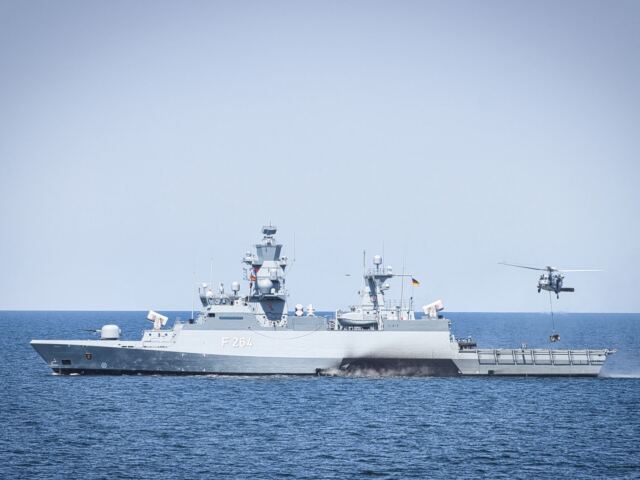
The launch of the Navy’s Robotics and Autonomous Systems Combat Development Center coincides with the development of unmanned surface vessels, which can perform various missions such as surveillance, reconnaissance, communication relay, mine warfare, and long-range operations without deploying crew members to dangerous areas. A propulsion system that operates stably for extended periods without maintenance for extended periods is a key element that determines operational endurance and fleet operational flexibility.
While this certification does not mean that specific vessels will be ordered or contracts awarded, it is significant because it strengthens the technological foundation for applying proven commercial engines to unmanned vessels. In the context of international competition, such as the construction of China’s unmanned submarine motherships , the future operational deployment will likely focus not only on propulsion systems but also on integration with autonomous navigation, communication, cybersecurity , and safety control technologies.
Frequently Asked Questions (FAQ)
What kind of product is the mtu engine certified by the U.S. Navy?
These are the MTU Series 4000 and Series 2000 maritime engines from Rolls-Royce. Both product lines have received U.S. Navy certification for operation in autonomous and unmanned vessels.
What tests has the mtu Series 4000 passed?
The Series 4000 has passed two 720-hour durability tests. The tests were conducted to verify whether the system can operate for extended periods without human intervention and without preventive or corrective maintenance of the main systems.
How many days does a 720-hour test correspond to?
720 hours is approximately 30 days. The U.S. Navy’s engine tests for unmanned vessels are designed to verify the ability to operate without maintenance for extended periods.
What is the maximum output of the Series 4000?
It supports a propulsion output of up to 4,300 kW and a power generation output of 3,000 kWe, according to the autonomous operation certification standards.
How was the Series 2000 certified?
The Series 2000 received certification based on engine component testing and thousands of hours of actual operational performance. Its maximum propulsion output is 1,939 kW.
Does this certification apply directly to commercial autonomous vessels as well?
This certification applies to the operation of autonomous and unmanned vessels by the U.S. Navy. However, it can serve as a reference case for the development of propulsion systems for future commercial autonomous ships, as it demonstrates the ability to operate for extended periods without maintenance.