- Communication was lost at 100 mph; who holds the switch to the war?
- Why is this controversy not simply ending as an “internet outage”?
- The person who imposed the restriction has not yet been revealed.
- The control exerted by private companies is intertwined with the level of trust in the United States.
- The parliamentary investigation begins with the question: “Who pressed the button?”
- Confirmed facts and unanswered questions.
- Frequently Asked Questions.
Communication was lost at 100 mph; who holds the switch to the war?
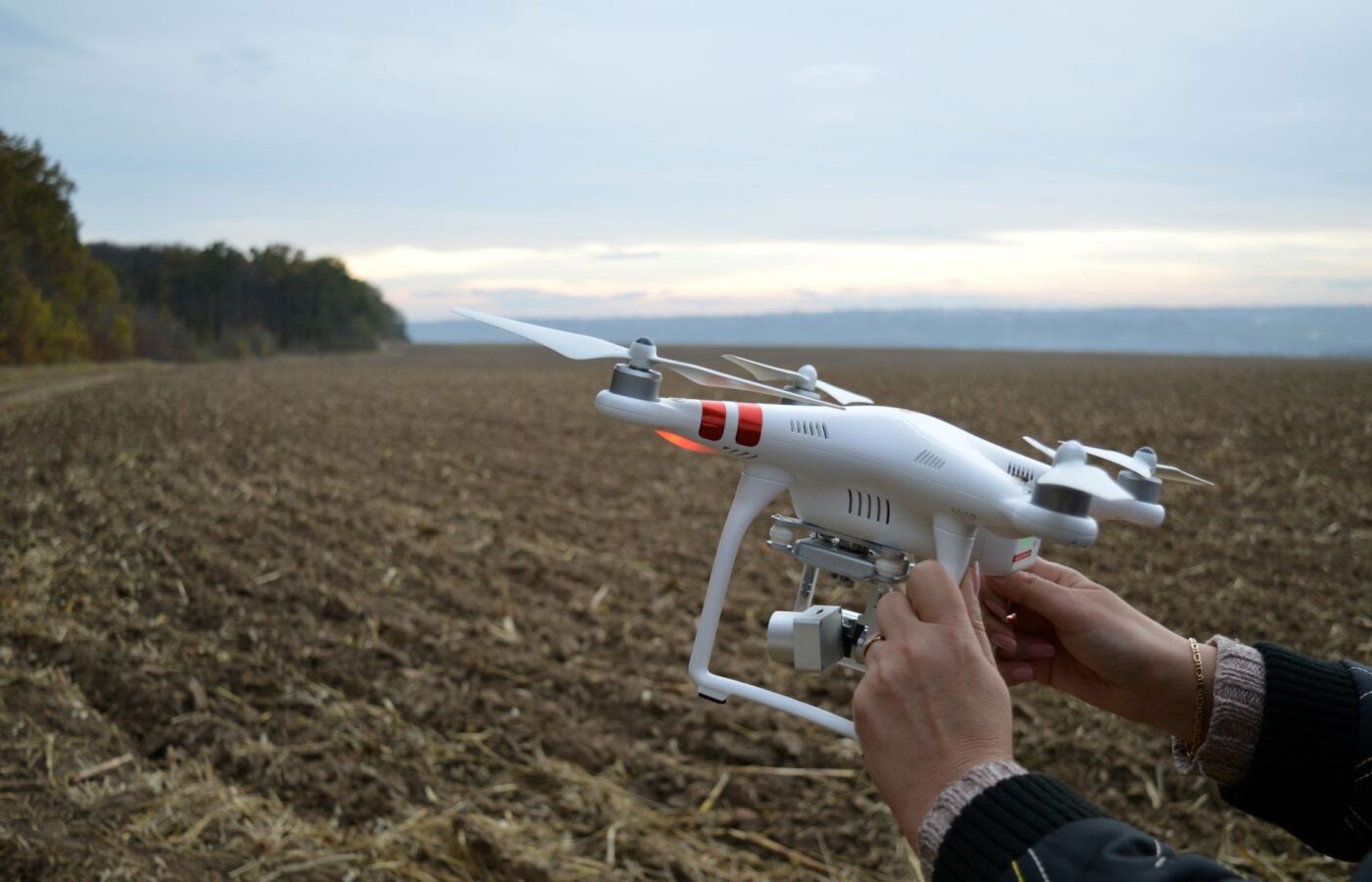
It has been claimed that Ukraine’s satellite communication, which is used to intercept Russian drones, is being disrupted by drones flying at speeds exceeding 100 mph. This means that interceptor drones, which must fly at high speeds to engage the enemy, are losing connection with their operators due to their speed. The core issue is not simply a communication outage. It raises questions about the extent to which private companies can restrict the military communication network, which is funded by the U.S. government, and who is responsible for such decisions.
U.S. Senate Foreign Relations Committee Democrats Jeanne Shaheen and Chris Coons requested that SpaceX preserve documents and communications related to Starlink and Starshield restrictions on November 13, 2026. The Senate letter stated that restrictions occurred from October 13 to October 24, 2026, and that new outages were reported on November 12 on the front lines and in Russian-occupied territories.
Even a brief outage can make a significant difference on the battlefield.
Why is this controversy not simply ending as an “internet outage”?
Starlink is a commercial satellite communication service, while Starshield is a Starlink-based service for government and military customers. Ukraine has been using Starshield, through a contract with the U.S. government, for reconnaissance drone operations and for intercepting Russian attack drones. In the battlefield, this communication is not merely a convenience feature, but a critical component of operations.
The Ukrainian side stated that the outage in October has been resolved. However, they claimed that restrictions occurred again on November 12. Denis Shienik, Ukraine’s chargé d’affaires in the United States stated that the front lines and occupied territories are still experiencing speed limitations, and that the contact line is a defensive line that first intercepts Russian drones.
The Ukrainian side claimed that the Starshield connection was lost at a speed of 100 mph. President Zelenskyy stated that rapidly moving interceptor drones can lose connection with the operator, and warned that the defense of energy infrastructure may be weakened during the winter.
The Senate letter stated that, during the first period, Russia carried out nearly 4,000 aerial attacks. However, it did not confirm a direct causal relationship between the restrictions and specific instances of casualties or failures in air defense.
In warfare, communication is the invisible road.
If the roads are congested, the sequence of commands, alerts, and interception will also be delayed. If Ukraine’s air defense and energy infrastructure defenses are weakened, it could lead to power outages, disruptions in heating, and an increased risk of civilian casualties. However, it cannot be stated definitively that Starshield is solely responsible for all drone operations and air defense functions.
The person who imposed the restriction has not yet been revealed.
The most important question is simple: Did SpaceX initiate this, or did the U.S. government order it? Based on the information that has been publicly released so far, the answer remains unclear.
The Senate has demanded that SpaceX provide details regarding the effective date of the restrictions, the technical conditions, the entities responsible for issuing and approving the restrictions, and the restrictions that are still in place. The request also included a requirement to confirm the data retention measures by November 30, 2026. This indicates that the senators are investigating not only quality issues but also the decision-making process and contract oversight.
SpaceX’s explanation is completely opposite. The company responded to Axios, stating, “This is false. There has been no change,” after Ukraine raised the issue of new restrictions in November. Ukraine claims that the restrictions have been reinstated, while SpaceX states that there has been no change.
The arguments of both sides are in conflict.
Several possibilities remain. It could be the result of a deliberate policy decision, or it could be due to technical errors, device settings, or problems with the operational environment. It has not been confirmed whether the restrictions in October and November were caused by the same factor. It is also unclear whether the U.S. government or the Ministry of Defence ordered or approved the restrictions.
The uncertainty itself is the problem. If it is a military communication network provided through a U.S. government contract, it must be clear who is responsible for explaining any outages, issuing repair orders, and assessing any damage. We cannot simply hide behind a veil of secrecy because a switch is not visible.
The control exerted by private companies is intertwined with the level of trust in the United States.
Senator Chris Coons criticized the situation in which Starshield is switched on and off, stating, “It is killing civilians. It is undermining the world’s confidence in the United States as a supplier of key security equipment.” He further stated that the service was paid for by U.S. taxpayers according to the contract, and added, “This is not Elon Musk’s personal toy.”
The expression may be harsh, but the issue is clear. If a private company can effectively restrict national security services independently, it is difficult to assume that the U.S. government has secured control simply by entering into a contract. On the other hand, if SpaceX has not made any actual changes, it must clarify the cause of the outage observed on-site and the reporting system.
In any case, the responsibility for the explanation remains.
American taxpayers bear more than just costs. Allied nations conduct operations based on the assumption that the critical equipment and services provided by the United States will be maintained during times of crisis. If that assumption is undermined, the agreements will require additional conditions and alternative solutions.
This incident also revealed the vulnerability of relying on a single business entity. While the technological superiority of one company can strengthen a nation’s military capabilities, it can also create a structure where a lack of alternative networks can result in service limitations. Although it has not been confirmed that Russia was a direct party to these restrictions, it could gain military advantages if Ukraine’s air defense and drone operations are disrupted.
The parliamentary investigation begins with the question: “Who pressed the button?”
Senator Coons stated that if the Democratic Party secures control of both the House and the Senate in 2027, they will prioritize investigating the Starshield issue and hold a public hearing. Reports also indicated that the Democratic Party secured control of the Senate and the House in the U.S. midterm elections in 2026. However, the specific format of the public hearing has not yet been finalized.
Republican Senator John Cornyn and others have requested that the Department of Defense inspector general conduct an investigation into the Starlink terminal restrictions and the disruption of the evacuation and alert system for US personnel, citing concerns about the events of October 2026. It was reported that Representative Jim Himes sent a confidential communication to the Director of National Intelligence requesting an explanation for the cause of the Starshield slowdown, but the full content and the government’s response have not been disclosed.
The starting point of the investigation is clear.
- What restrictions were in place from October 13th to October 24th?
- What was the technical difference between the restrictions reported on November 12th?
- Was there an entity that issued or approved the restrictions?
- How did the U.S. government contracts define service outages and response to outages?
- If there are still any restrictions in place, how are the governments of Ukraine and the United States verifying this?
Ukraine’s current Starshield contract is scheduled to expire in mid-2027. The Ukrainian government is negotiating a new contract with the United States while also considering alternative options. Renewing the contract is not merely a matter of price and capacity. The authority to impose restrictions, advance notification, obligations to restore service in the event of an outage, and independent verification procedures could all become points of contention.
It is unknown whether an alternative communication network can be secured in a short period. Therefore, the debate has expanded from the question of “whether to continue using SpaceX” to the question of “whether it is appropriate to entrust this to a single company.” In a battlefield, redundancy is not a luxury.
Confirmed facts and unanswered questions.
The confirmed facts are clear. The Ukrainian side reported limitations on Starlink and Starshield services in October and November of 2026, and the U.S. Senate requested the preservation of relevant materials and explanations. Ukraine claimed that these limitations hindered the operation of reconnaissance and interception drones, as well as the defense of energy infrastructure. SpaceX denied that there were any changes regarding the limitations in November.
However, it has not been confirmed who imposed the restrictions, what the exact technical cause was, whether the same phenomenon occurred on all devices, or whether the restrictions are still in place. It cannot be definitively determined from publicly available information alone whether the restrictions directly caused the death of a specific civilian or the failure of a specific military operation.
Claims linking the restrictions to President Donald Trump’s policies towards Russia or to Elon Musk’s personal decisions have not been proven by publicly available evidence. What is needed now is not political speculation, but rather a verification of who issued what orders, when, and what conditions were applied to which equipment.
The key issue is not just the number 100 mph. It is the fact that the functionality of a communication network, upon which a nation spends money and relies for military purposes, can be compromised, caught between battlefield needs and corporate decisions. The operational records, contract terms, and approval documents must be made public to determine where responsibility lies.
The answer has not yet been determined.
Frequently Asked Questions.
How is Starshield different from Starlink?
Starlink is a commercial satellite communication service, while Starshield is a Starlink-based service for government and military customers. Ukraine has been using Starshield, through a contract with the U.S. government, for reconnaissance drone operations and for intercepting Russian attack drones.
Did SpaceX impose the Starshield restrictions, or did the U.S. government order them?
It has not been confirmed. The U.S. Senate has demanded an explanation of who ordered or approved the restrictions and the technical conditions involved. SpaceX denied the allegations of restrictions in November, stating that “no changes were made.”
Did speed restrictions actually cause civilian casualties or failures in air defense?
The Ukrainian side and some U.S. politicians have claimed that civilians and defensive operations may suffer damage. However, a direct causal relationship between specific deaths or specific failures of air defense systems and the restriction has not been confirmed by publicly available information.
Why is 100 mph a problem?
The Ukrainian side claims that interceptor drones, moving at speeds exceeding 100 mph, are losing connection with their operators. This loss of connection can hinder the interception of Russian drones and the defense of energy infrastructure.
Can Ukraine replace Starshield?
The Ukrainian government is in negotiations with the United States for a new contract, while also exploring alternative solutions. However, it is not yet known when an alternative network with the same scope and reliability as Starshield can be secured.