F-35: Latest production run prices increase by up to 11.5% per model
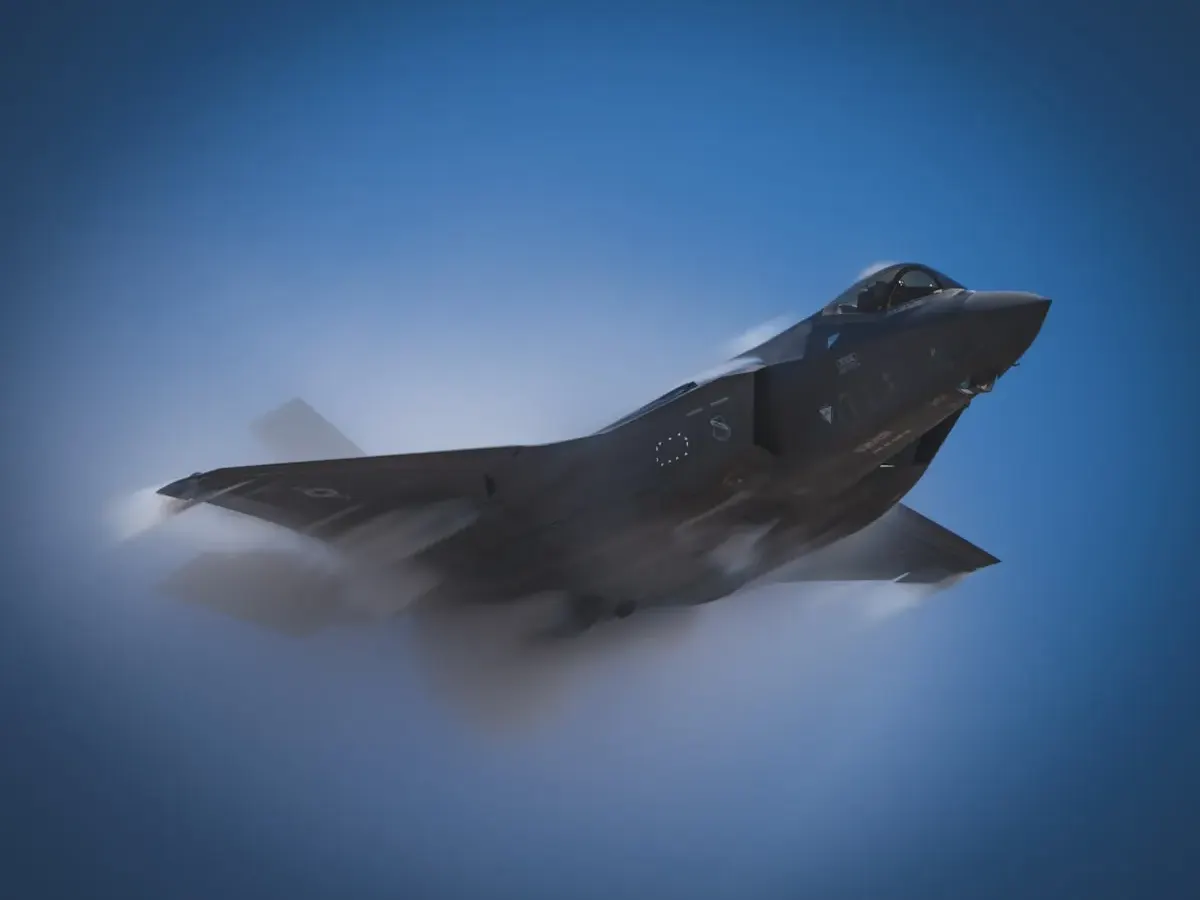
The average procurement cost per unit for the latest production batch of F-35 fighter jets has increased significantly compared to previous contracts. According to reports citing data from the F-35 Joint Program Office (JPO) and the U.S. Department of Defense, the average flyaway cost for production lots 18 and 19 was $92,000,000 for the F-35A, $121,400,000 for the F-35B, and $110,800,000 for the F-35C.
Compared to production lots 15 to 17, the F-35A increased by 11.5%, the F-35B by 11.4%, and the F-35C by 8.5%. Here, the flyaway cost refers to the average procurement cost, including basic equipment such as the engine and radar, which are necessary for delivery and are not simply the price of the airframe.
F-35 Model-Specific Price Increases
F-35A: $82,500,000 to $92,000,000
The average flyaway cost of the F-35A for the Air Force has increased from 82,500,000 US dollars to 92,000,000 US dollars. The F-35A is an aircraft that takes off and lands on conventional runways, and its relatively simple structure among the three variants has allowed it to maintain a lower price range.
F-35B: Highest price due to its vertical takeoff and landing system
The price of the F-35B operated by the U.S. Marine Corps has increased from $109,000,000 to $121,400,000. It is the most expensive of the three models because it incorporates a complex propulsion system, including a lift fan and a rotating engine nozzle, which enable short-takeoff and vertical landing capabilities.
F-35C, carrier-based variant, also increased by 8.5%
The F-35C, designed with aircraft carrier operation in mind, has increased in price from $102,100,000 to $110,800,000. While it features a wider wing and folding wingtips, as well as aircraft carrier landing equipment, its recent price increase has been lower than that of the F-35A and F-35B.
Inflation and modernization costs driving price increases
According to the Air & Space Forces Magazine, the JPO explained that the latest prices are calculated based on figures for the current year. Consequently, the actual increase in price for recent production may be greater than what is shown in the U.S. Department of Defense’s acquisition reports, which were compiled using constant prices as of 2012.
The background of the price increase includes inflation, raw material price increases, and supply chain instability. Lockheed Martin has also stated that inflationary pressures are increasing on raw materials and overall production costs.
Aircraft modernization is also a factor that affects costs. The F-35 is expanding its processing capabilities, weapon operation, and sensor fusion capabilities through Technology Refresh 3 (TR-3) and Block 4 performance enhancements. The U.S. Government Accountability Office (GAO) has estimated the cost of the Block 4 modernization program to be $16,500,000,000.
Despite mass production, prices have risen again
The U.S. Department of Defense plans to procure a total of 296 F-35 aircraft from production lots 18 and 19. The related contract with Lockheed Martin is reportedly worth approximately $24,300,000,000, but this contract primarily covers the cost of the aircraft, with engine costs being handled separately.
The manufacturer and the U.S. Department of Defense have maintained that the F-35 program is moving into the mass-production phase and that the increase in prices is below the inflation rate prevailing at the time. By contrast, prices for individual aircraft models in current terms are significantly higher than those of earlier production batches, inevitably increasing the burden on budget authorities.
Consider both the purchase cost and the maintenance costs
The cost issues of the F-35 cannot be determined solely by the purchase price of the fighter jet. The GAO pointed out that the total lifecycle cost, including operating, maintenance, and modernization expenses, varies depending on the number of aircraft, annual flight hours, operational period, and inflation forecasts.
In particular, the engine and thermal management systems are areas that directly affect future performance improvements and maintenance costs. GAO analyzed that modernizing the engines could potentially result in long-term maintenance cost savings of approximately 25,600,000,000 US dollars, but also assessed that the technical requirements and cost risks have not been completely resolved.
Impact of F-35 Price Increases on the Defense Budget
If the price of each aircraft increases, the number of fighter jets that can be procured with the same budget may decrease, or adjustments may be necessary for follow-on costs such as weapons, maintenance, and training. In particular, the F-35B and F-35C have complex operational systems, so not only the purchase cost but also long-term maintenance infrastructure and parts supply plans are important.
However, the recent price increases do not necessarily translate directly into an increase in the overall project costs. This is because the contract terms vary by production lot, whether or not the engines are included, and the reference prices used are different. When evaluating the F-35 program in the future, it is necessary to distinguish between the flyaway cost per aircraft and the total lifecycle cost.
Frequently Asked Questions (FAQ)
What is the price increase of the F-35 fighter jet?
Based on production lots 18 and 19, the average flyaway cost increased by 11.5% for the F-35A, 11.4% for the F-35B, and 8.5% for the F-35C.
What is the latest price of the F-35A?
The average flyaway cost of the F-35A is approximately $92,000,000. This is an increase of $9,500,000 compared to the previous production lot, which had a cost of $82,500,000.
What is the most expensive F-35 variant?
Based on the most recent production figures, the F-35B, which has short-takeoff and vertical-landing capabilities, is the most expensive, costing approximately $121,400,000.
What is the reason for the increase in the price of the F-35C?
The F-35C is an aircraft designed for carrier operations, featuring a wide wing, foldable wings, and a reinforced landing structure. The price is believed to be influenced by factors such as inflation, rising costs of raw materials and supply chains, and modernization tasks.
Does the fly-away cost refer to the operating cost per flight hour?
No. The Flyaway cost refers to the average procurement cost required to produce and deliver a single fighter aircraft. Hourly flight costs and long-term maintenance costs are calculated separately.
Can the increase in the price of the F-35 lead to a reduction in the procurement quantity?
If prices increase, the number of aircraft that can be acquired with the same defense budget may decrease, or the budgets for armaments, maintenance, and training may be adjusted. The actual impact varies depending on the contract terms and budget allocations of each country.