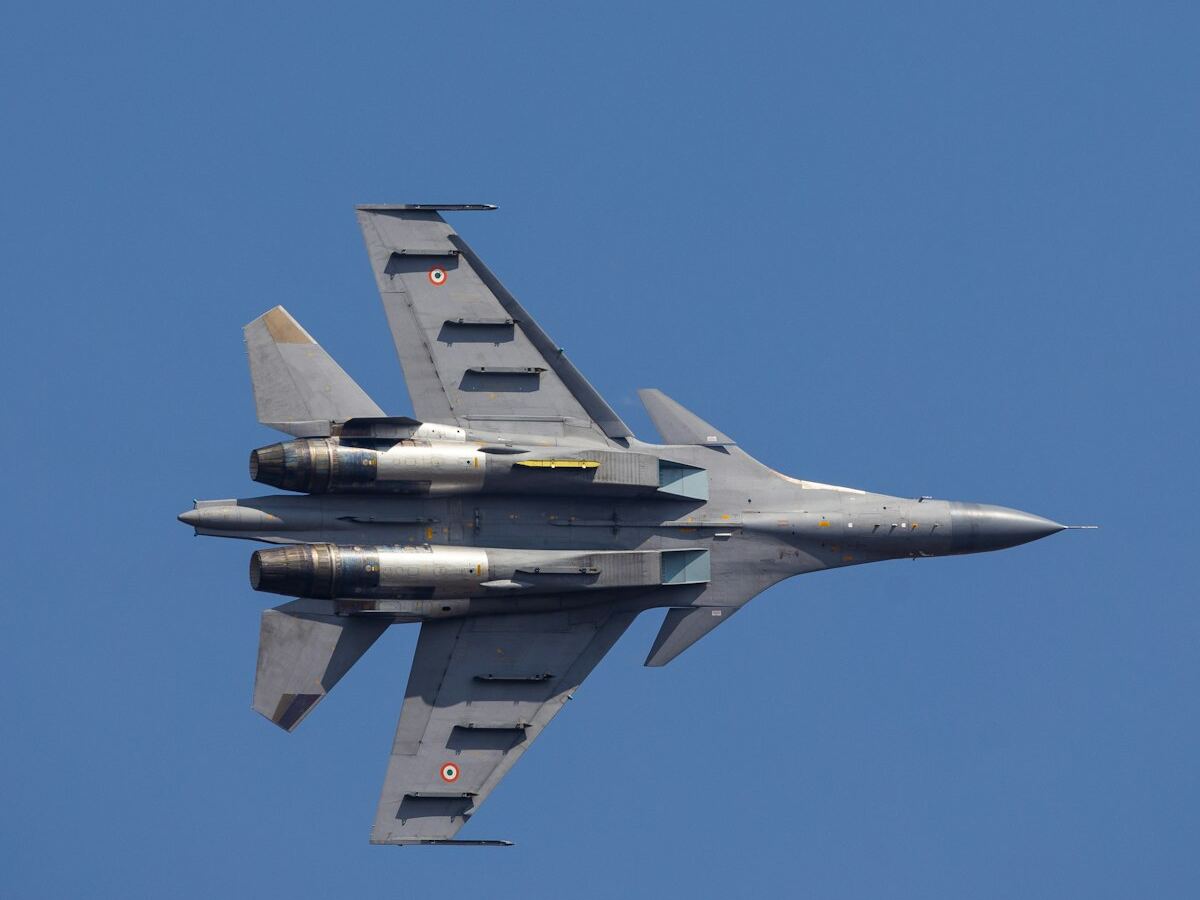
- Can fighter jets really be intercepted at a distance of 300 kilometers?
- The R-37M missile can disrupt an entire operation, even though it is smaller than a single missile.
- The number of launches and the number of interceptions are different.
- Publicly disclosed specifications and confirmed figures.
- Ultimately, the key to success lies in a connected system.
- Frequently Asked Questions.
Can fighter jets really be intercepted at a distance of 300 kilometers?
According to the specifications of the R-37M export version (RVV-BD) released by Russia, the R-37M family is listed as having a length of 4.06 meters and a launch weight of 510 kilograms. It is also claimed that the range of the Russian-made R-37M is at least 300 kilometers. However, these figures are based on some publicly available data and information provided in Russian publicity and analysis.
The actual maximum range of the Russian-made R-37M has not been publicly confirmed. Therefore, it cannot be definitively stated that it can always reliably intercept fighter jets beyond a range of 300 km. Available data indicates a different picture. Under conditions of high-altitude, high-speed launch and the possibility of mid-course corrections, it is a weapon that significantly restricts the operations of aircraft near the front lines.
300 km does not guarantee a hit.
The maximum range of air-to-air missiles is a value obtained under specific conditions. For the missile to achieve this range, the launch platform must have a high altitude and speed, the target must be moving in a favorable direction, and the missile must continuously receive the information necessary for course corrections during its flight. If the target changes its direction or speed during flight, the engagement conditions also change.
There is a difference between flying a projectile a long distance and hitting a target from a long distance.
The R-37M missile can disrupt an entire operation, even though it is smaller than a single missile.
The R-37M is a Russian long-range air-to-air missile, classified as the AA-13 series by NATO. It has been confirmed to be used by Russia’s MiG-31BM interceptor aircraft and upgraded Su-35S fighter jets. RUSI and CNA assessed that this missile posed a persistent threat to Ukrainian fighter aircraft and attack aircraft during the Russia-Ukraine war.
The R-37M missile initially flies using inertial guidance. During its mid-course phase, it receives corrections via radio or data link, and in its terminal phase, it uses its own active radar seeker. Therefore, the missile’s performance is not determined solely by the missile itself. The launch platform’s altitude and speed, the radar system, the command and control system, and the data link must all function together.
RUSI analyzed that in 2022, Russian fighter jets launched missiles at higher altitudes and speeds than Ukrainian fighter jets, giving the missiles more kinetic energy. Furthermore, it explained that the combination of the MiG-31BM’s high operational altitude and performance, along with the missile’s long range, allowed Russian fighter jets to put pressure on aircraft near the front lines from outside the range of Ukrainian air defense systems.
CNA assessed that the combination of operating the R-37M missile and conducting air patrols with Russian fighter jets has created a persistent threat and deterrent effect for sorties near the Ukrainian front lines.
It changes the mission even without hitting its target.
RUSI explained that not all long-range launches necessarily indicate a high probability of hitting the target. However, the launch itself can force the opposing pilot to perform evasive maneuvers. According to CNA, Ukrainian pilots used terrain masking and extremely low-altitude flight to avoid the radar and missile capabilities of Russian fighter jets, as well as the threat of long-range surface-to-air missiles.
These changes alter the flight conditions of aircraft. Fighter jets and attack aircraft must adjust their approach routes, and support aircraft may need to operate from greater distances. Restrictions on the operations of early warning aircraft and aerial refueling tankers can also place a burden on surveillance, aerial refueling, and command capabilities. The core effect of the R-37M is not just the number of aircraft it shoots down.
The number of launches and the number of interceptions are different.
The Russian Aerospace Forces gain more than just opportunities to shoot down aircraft. By presenting a threat at long range, they can extend the engagement range of their own fighter jets and deter Ukrainian aircraft from approaching the front lines. Furthermore, if the enemy repeats defensive maneuvers and low-altitude flights, the burden of each sortie increases.
The Ukrainian Air Force must therefore adjust its flight paths and altitudes accordingly. While the R-37M poses a threat to fighter jets and attack aircraft, it is particularly effective against targets that are easily pressured from a long distance, such as early warning aircraft, tankers, and transport aircraft. However, it is not limited to being a specialized weapon that only targets large, low-maneuverability support aircraft.
RUSI’s 2026 analysis assessed that Russia’s Su-35S force, and increasingly its Su-30SM2 force, had shifted toward primarily relying on the long-range R-37M rather than the medium-range R-77-1. However, publicly available detailed force data on the scale of Su-30SM2’s R-37M operations are limited.
RUSI analyzed that in October 2022, the Russian Aerospace Forces launched a maximum of 6 R-37M missiles per day. This figure represents an analysis of the number of missiles launched, and does not necessarily reflect the actual number of successful interceptions.
Firing many times is different from hitting many times.
Publicly disclosed specifications and confirmed figures.
The IISS reported that images of the R-37M missile mounted on a MiG-31BM aircraft were released in 2018, and it analyzed that this missile may have been fielded in small numbers around 2016-2017. The R-37M is described as a system that is launched at high altitude and speed, combining mid-course corrections with active radar search in the terminal phase.
According to publicly available information, the maximum speed of the R-37M is up to Mach 6, and the maximum altitude for engagement is 25 km. However, these figures are not absolute and do not apply uniformly to all engagement scenarios. The actual performance depends on factors such as launch altitude and speed, target information, and the target’s maneuverability.
The publicly available information for the export version of the RVV-BD indicates a maximum forward range of up to 200 km. Rosoboronexport promotes this missile as a long-range air-to-air missile for aerial targets, including fighter jets, attack aircraft, bombers, and transport aircraft. However, all internal performance differences between the export version of the RVV-BD and the Russian R-37M have not been fully confirmed by publicly available data.
It is not possible to definitively determine, based on publicly available information alone, whether the exact maximum range of the Russian-made missile is 300 km, 300-400 km, or beyond that under specific launch conditions. Claims that the missile has actually shot down fighter jets from beyond 300 km have not been independently verified. Furthermore, the total number of live-fire launches and the actual number of shoot-downs have not been fully and publicly disclosed.
Specifications only tell half the story of a battle.
It is not possible to definitively conclude that the R-37M is consistently superior to the Meteor or the AIM-120C/D. This is because a comparison is needed that controls factors such as launch altitude, speed, target information, electronic warfare, and target maneuvering conditions. The actual combat performance cannot be determined solely based on the missile’s name or its maximum range.
Ultimately, the key to success lies in a connected system.
The actual combat effectiveness of the R-37M cannot be explained solely by the missile itself. The radar systems, command-and-control aircraft, data links, and electronic warfare systems of the MiG-31BM and Su-35S must work together for the advantages of long-range air combat to be realized. If even one element changes, the same missile can produce different results.
If the target receives a warning and changes its direction, speed, or altitude, the probability of a hit may decrease. However, such evasive maneuvers come at a cost. The fighter jet may have to descend to a lower altitude or change its course, which can reduce the time and leeway available for completing the mission.
The significant impact of the R-37M, as analyzed by RUSI and CNA, lies in this: it has forced Ukrainian aircraft to adopt defensive maneuvers and low-altitude flight paths when approaching the front lines or performing missions. Even if the actual number of confirmed kills is limited, the operational pressure remains.
The publicity from the Russian state-owned defense export company, Rosoboronexport, concerns claims about the capabilities of export-model missiles. These claims differ from actual combat performance. Wartime information released by both Russia and Ukraine is influenced by propaganda objectives and operational security, so individual shoot-down claims require separate verification.
Therefore, the answer is clear: the R-37M is not a magical weapon that can certainly shoot down fighter jets 300 km away. However, when combined with high-altitude, high-speed launch capabilities, continuous target information, powerful sensors, and data links, it poses a threat that can alter the course and altitude of aircraft near the front lines.
The effectiveness of the R-37M missile cannot be measured solely by the distance it travels. It must also include the moment when the opposing pilot begins defensive maneuvers and changes their mission profile. The operational effect lasts longer than the numbers suggest.
Frequently Asked Questions.
Can the R-37M air-to-air missile reliably engage and destroy fighter aircraft beyond 300 kilometers?
It is not possible to definitively state this. The exact maximum range of the Russian version, and the claim of an actual interception at a distance of 300 km, have not been independently and sufficiently verified. The maximum range and the actual effective engagement range are different, and the results vary depending on the launch altitude, speed, and the target’s maneuverability.
Which aircraft does the R-37M pose the greatest threat to?
It poses a threat to fighter jets and attack aircraft. It is particularly effective when targeting easily pressured assets such as early warning aircraft, tankers, and transport aircraft that are easy to pressure from a distance. However, it is not limited to being a specialized weapon solely for targeting support aircraft.
Has there been any confirmed evidence of actual shoot-down successes in the Ukraine war?
The total number of live-fire launches and actual shoot-downs have not been fully and publicly disclosed. RUSI and CNA evaluated not only the number of interceptions but also operational effects such as deterring sorties, defensive maneuvers, and forcing low-altitude flights.
Is the performance of the fighter aircraft that launches the missile more important than the missile’s range?
The altitude and speed of the launch platform, the radar, the command and control system, and the data link are all critical. The R-37M is not a weapon that functions with a single missile; it is a part of an integrated air combat system.
Is there any way for fighter jets to evade the R-37M missile?
If the target receives a warning and changes its direction, speed, or altitude, or if it utilizes low-altitude flight and terrain masking, the probability of a hit may decrease. However, this evasive maneuver itself makes it difficult to complete the mission, which is the deterrent effect of the R-37M.