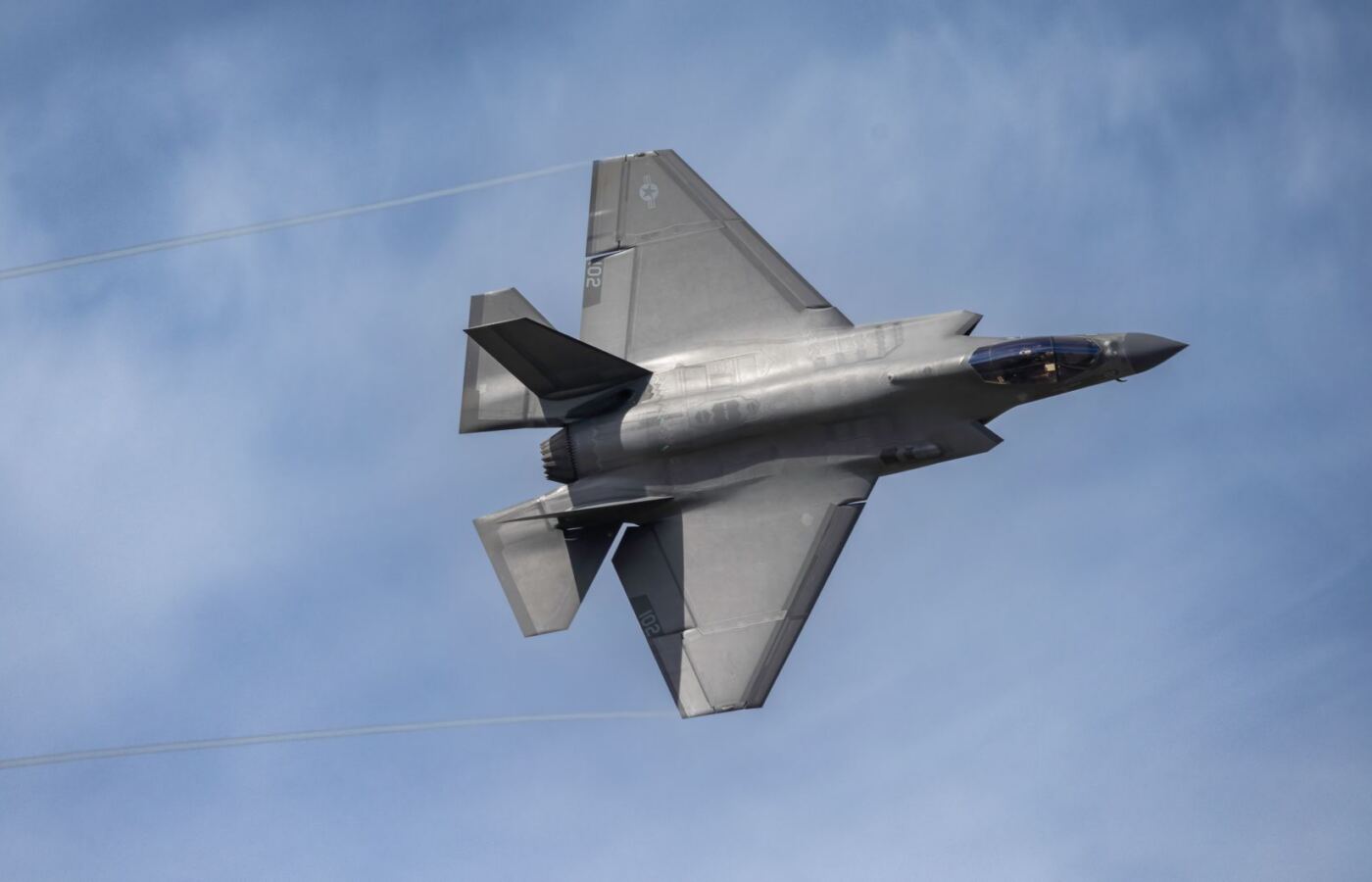
- The F-47 has not entered service
- Why has the F-47 drawn so much attention?
- In a nutshell: What makes the F-47 different?
- The F-47’s core advantage is how it connects
- Why the F-47 still cannot be compared with the F-22 by the numbers
- Should the F-47 be compared with the F-22 or the F-35?
- Frequently Asked Questions
A fighter jet has received an official name before the public has seen a finished aircraft or a complete performance chart. On March 21, 2025, President Donald Trump announced that Boeing would lead the U.S. Air Force’s next-generation air-superiority program—and that the aircraft would be called the F-47.
That raises an obvious question: What kind of fighter is the F-47, and will it really be different enough to replace the F-22?
The F-47 has not entered service
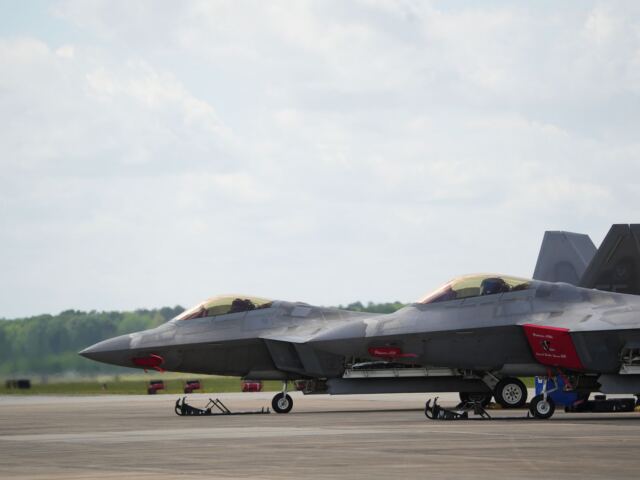
The F-47 is the designation for the crewed fighter Boeing is developing. At the same time, it is intended to serve as the centerpiece of a larger system built around the F-22’s successor and a family of unmanned aircraft designed to work alongside it.
The U.S. Air Force calls this broader system NGAD. It includes a crewed fighter and unmanned aircraft that operate alongside it—what the service calls Collaborative Combat Aircraft.
On March 21, 2025, the Air Force awarded Boeing an engineering and manufacturing development contract. This phase covers refining the design, integrating equipment, conducting tests and building a small number of test aircraft.
It is not yet an operational fighter.
The F-47 should therefore be understood not as a weapon that has completed production and entered service, but as a development program whose final form will emerge through testing.
Why has the F-47 drawn so much attention?
The aircraft has drawn attention not simply because it is a new model. It represents the Air Force’s effort to rethink the air-superiority mission performed by the F-22 for long-range operations in heavily defended environments.
Air superiority means gaining an advantage over an adversary in the air. It involves penetrating areas protected by enemy fighters and air defenses to gather information, strike designated targets and protect friendly operations.
The challenge grows with distance. The Congressional Research Service has cited 590 nautical miles as a publicly available figure related to the F-22’s combat radius and noted that, at distances such as those around China, the aircraft may have to rely on aerial refueling.
Tankers extend a fighter’s time on mission. But they also make operations more complicated.
The tankers must be protected, and the fighters may be more exposed to detection as they move toward refueling points, potentially revealing their position and movements to the enemy.
The Air Force says it wants the F-47 to have a much longer combat radius than the F-22, along with more advanced stealth. It has also identified greater endurance and improvements in maintenance and availability as key goals.
One especially revealing detail is that the program was paused in May 2024. The Air Force resumed it only after revisiting the requirements, costs and the concept of operations it would actually need.
This is not simply a program to build a bigger fighter.
The F-47 is better understood as the result of recalculating what an air-superiority system must be able to do at long range.
In a nutshell: What makes the F-47 different?
The F-47 is a developmental air-superiority platform designed to penetrate farther than the F-22, survive longer and fight alongside unmanned aircraft.
The Air Force describes the F-47 as the world’s first crewed sixth-generation fighter. The label, however, points less to a finished performance ranking than to a development philosophy focused on improving survivability, lethality, persistence, interoperability and adaptability.
Speed alone is not the central issue.
Once a force enters an enemy air-defense network, what matters more is who sees first, whose information is more accurate and how multiple aircraft divide up their roles.
The Air Force has said that many of the F-47’s specific technologies and program details remain classified. What has been disclosed so far is therefore less a technical manual for a finished aircraft than a blueprint for the way the United States wants to fight.
The F-47’s core advantage is how it connects
The F-47’s defining advantage is not simply that it will be faster. It lies in bringing long-range sensors and weapons, communications networks and accompanying unmanned aircraft together as a single combat system.
The design approach outlined by the Air Force includes next-generation stealth and sensor fusion. Sensor fusion combines information gathered by multiple systems and presents it to the pilot as a clearer, more coherent picture of the battlefield.
A force that relies on the sensors of a single fighter can lose its information the moment that aircraft is detected or attacked. When multiple aircraft share data, by contrast, the pilot can draw on a broad, connected view rather than the perspective of one aircraft alone.
One set of eyes is not enough.
The unmanned aircraft operating with the fighter are known as Collaborative Combat Aircraft. They are being developed to fly alongside the F-47 or other crewed fighters and perform tasks such as reconnaissance, electronic warfare and weapons delivery.
Under this model, the crewed fighter does not have to do everything on its own. Unmanned aircraft could scout dangerous areas first or take on specific missions, reducing the workload and exposure of the aircraft carrying a pilot.
Another key concept is an open architecture. Rather than locking every capability permanently into the original design, the approach is intended to make it possible to integrate new technologies relatively quickly.
That is also why digital engineering matters. Threats and technologies can change after development is complete, making a system that can be continually updated more valuable than a fighter built around fixed capabilities.
The U.S. Department of Defense’s fiscal 2026 budget materials define the F-47 not as a single aircraft, but as a weapons system that includes ground equipment, training and digital infrastructure. The research, development and test budget listed for that fiscal year is $3.4794 billion.
Ultimately, the F-47’s effectiveness will not be determined by the airframe alone. Its real combat power will depend on how well the crewed and uncrewed aircraft, sensors, communications networks and ground systems work together.
Why the F-47 still cannot be compared with the F-22 by the numbers
The biggest obstacle to making a precise comparison between the F-47, F-22 and F-35 is the lack of publicly available figures. No officially confirmed numbers have been released for the F-47’s exact length, weight, top speed, range, engine or internal weapons capacity.
The Air Force says it is pursuing greater range and more advanced stealth than the F-22. But it has not yet provided specific figures or operational test results to support those goals.
Goals are not the same as verified results.
Putting the specifications of existing fighters alongside the targets for an aircraft still under development can blur the line between actual performance and expected performance.
The F-47 is also still in the engineering and manufacturing development phase. As test aircraft and prototypes are built, issues involving weight, cost, maintainability and equipment integration may change.
Even exceptional stealth can have limited value if it makes maintenance too difficult and reduces sortie rates. Likewise, a long combat radius may not improve the overall system’s efficiency if the cost of operating the aircraft alongside its weapons, sensors and unmanned partners becomes excessive.
It is therefore too early to declare the F-47 the world’s most capable fighter. But it would also be wrong to dismiss the program as meaningless simply because its performance figures have not been released.
What is clear is the direction the Air Force is taking. It wants a system that can perform the F-22’s mission over greater distances, connect more aircraft and incorporate future technologies more rapidly.
Should the F-47 be compared with the F-22 or the F-35?
To compare the F-47 with the F-22, the focus should be on development goals rather than demonstrated performance. The relevant benchmarks are greater range, more advanced stealth, improved persistence and better maintainability.
The comparison with the F-35 also requires caution. The F-47 is not simply a more advanced multirole fighter in the F-35 mold. It is a separate system focused on the air-superiority mission of replacing the F-22 and on cooperation with unmanned aircraft.
Focusing on whether it is a more expensive F-35 misses the point.
The central question for the F-47 is not how many different missions it can perform, but how it can sustain air-superiority operations over long distances.
For readers looking for a quick explanation of what the F-47 is, the simplest answer is this: it is the crewed successor to the F-22 and the centerpiece of the NGAD family of systems.
If the question is whether it is truly better than the F-22, it is still too soon to reach a conclusion. A meaningful assessment will have to wait until the first flight, testing and evaluation, production decisions and entry-into-service timeline are established—and official figures for its weapons, engine and range are released.
For now, the development direction matters more than a specification sheet.
The F-47 is not a completed set of performance figures, but a development program intended to address the F-22’s limitations by combining long range, stealth and cooperation with unmanned aircraft.
Frequently Asked Questions
Q. Has the F-47 already entered operational service?
A. No.
It is currently in the engineering and manufacturing development phase, which includes development, integration, testing and the construction of a small number of test aircraft.
Q. Will the F-47 completely replace the F-22?
A. The Air Force describes the F-47 as the next-generation air-superiority fighter intended to replace the F-22.
However, the timing and manner of any actual replacement will not be settled until testing and evaluation are complete and production decisions have been made.
Q. What are the F-47’s top speed and weapons capacity?
A. The official top speed, weapons capacity, engine, length, weight and range have not been disclosed.
At this stage, the confirmed information is limited to the program’s goals of achieving greater range and stealth and operating alongside unmanned aircraft.