981,000,000 U.S. dollars is not an immediately disbursed fund
The U.S. Space Force is activating a multiple award contract with a total ceiling of $981,000,000 to expand its space testing and training infrastructure. This project aims to create an environment where the Guardian can repeatedly train orbital warfare and space threat response procedures without interrupting the operation of actual satellites or operational equipment.
However, the $981,000,000 is not an amount that is paid simultaneously with the establishment of a separate fund or contract. According to a statement from the Space Systems Command and a report by SpaceNews , this is a shared contract ceiling amount, under which the 15 selected companies will compete for individual task orders in the future.
The contract is named NITE-STAR, which signifies the project to develop innovative technologies and engineering capabilities for the national space experiment and training complex. The basic contract period is 5 years, with an additional 1-year option, allowing it to be operated until July 2032.
Fifteen defense and aerospace companies selected for the NITE-STAR contract
This contract is an Indefinite Delivery, Indefinite Quantity (IDIQ) contract with multiple suppliers, where the specific scope of work and amount are determined each time they are needed. The Space Force received 20 proposals and selected 15 companies, including traditional large defense contractors and commercial space companies.
The selected companies are Amentum Technology, BAE Systems, CACI, Firefly Aerospace, L3Harris Technologies, Lockheed Martin Space, Northrop Grumman, Pacific Crest Alliance, Parsons Government Services, Redwire Space Missions, Rocket Lab USA, Sierra Space, Boeing, ViaSat, and York Space Systems.
The funds are not distributed equally to each company, with each receiving $981,000,000. Instead, the actual project costs and the companies awarded contracts are determined through a competitive bidding process for each specific task, such as satellites, sensors, and ground systems.
Establish a realistic space training ground using satellites, sensors, and ground systems
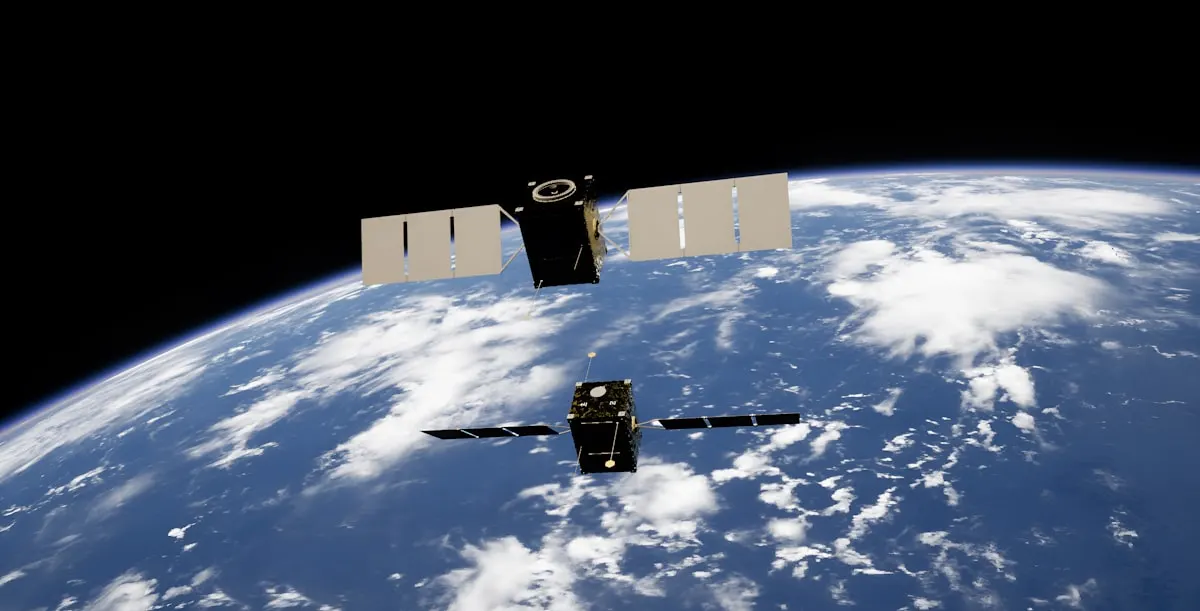
NITE-STAR supports the development of physical test facilities and related equipment that will comprise the Space Force’s National Space Test and Training Complex. The scope of the contract includes the design and integration, testing, operation, maintenance, and systems engineering of space and ground systems.
According to business documents previously released by the Space Force, companies can develop not only satellites and payloads, but also ground stations, telescopes, sensors, measurement equipment, and command and control systems. Digital twins and models that reflect the characteristics of actual equipment are expected to be used for test validation and integration with training environments.
The Space Systems Command is establishing physical test ranges, digital testing and training environments, and a data infrastructure as the core components of its operational testing and training infrastructure. Within this framework, NITE-STAR represents a contractual foundation for the long-term acquisition of real-world capabilities on the ground and in orbit.
Why the Space Force is rushing to develop training simulators
Major General Gregory Gagnon, Commander of the Space Force Combat Force Command, announced on July 17, 2026, at a Mitchell Institute event, that the training conditions for each mission area were not uniform. In particular, he pointed out that space domain awareness and information units need to integrate and operate various types of specialized equipment, and that there is a lack of appropriate simulators.
On the other hand, the missile warning and tracking areas were assessed to have a relatively robust simulated training environment. While Delta 9, which is responsible for orbital missions, still relies heavily on actual mission equipment, resources have been allocated to meet the related simulator requirements, and improvements are underway.
Major General Gagnon stated in December 2025 that approximately 40% of the units under his command lacked realistic training equipment. Without dedicated simulators, operational systems such as space surveillance radars and GPS satellites must be used for training, which can lead to conflicts between actual missions and training opportunities.
Combining virtual training with real-world orbital training
The Space Force is pursuing a strategy that combines virtual environments with actual orbital assets, rather than replacing all training with computer simulations. Virtual training offers the advantage of being able to repeatedly conduct activities such as electronic warfare, satellite threat response, and tactical validation without exposing tactics to adversaries or disrupting commercial satellite operations.
Actual training using satellites and ground sensors is necessary to experience unexpected situations and space physics phenomena. The National Space Test and Training Complex is planned to evolve into a distributed test and training environment that encompasses not only orbital warfare but also electronic warfare and cyber warfare training.
The success of the NITE-STAR contract depends not only on the contract’s maximum value, but also on how quickly specific tasks are ordered and how seamlessly the developed equipment integrates with the training systems of frontline units. The Space Force plans to use this to expand opportunities for repeated training of the Guardian system and to strengthen its readiness for space warfare against potential adversaries.
Frequently Asked Questions (FAQ)
Has the U.S. Space Force created a new fund with 981,000,000 dollars?
It is not the case. $981,000,000 is the shared ceiling for tasks that can be ordered under the NITE-STAR multiple award IDIQ contract. The entire amount is not paid at the time of contract signing, nor is it deposited into a separate fund.
What kind of business is the NITE-STAR contract?
This contract is for the development and maintenance of satellite, payload, sensor, ground station, and measurement equipment, as well as related testing and training capabilities, required for the U.S. Space Force’s National Space Test and Training Complex.
Which companies were selected for the NITE-STAR contract?
A total of 15 companies were selected, including Lockheed Martin, Northrop Grumman, Boeing, BAE Systems, and L3Harris, as well as Rocket Lab, Firefly Aerospace, Redwire, and Sierra Space.
Why does the Space Force need simulators?
Without dedicated simulators, it is necessary to use operational radar or satellite systems for training. Simulators allow for repeated practice of threat response and orbital maneuvering procedures without interfering with actual missions.
What is the timeline for the NITE-STAR contract?
The basic contract period is 5 years, and with a 1-year option, tasks can be commissioned until July 2032. The actual schedule and amount will vary depending on the individual task contracts.