Plans to convert steam catapults to electromagnetic catapults, starting with CVN-81
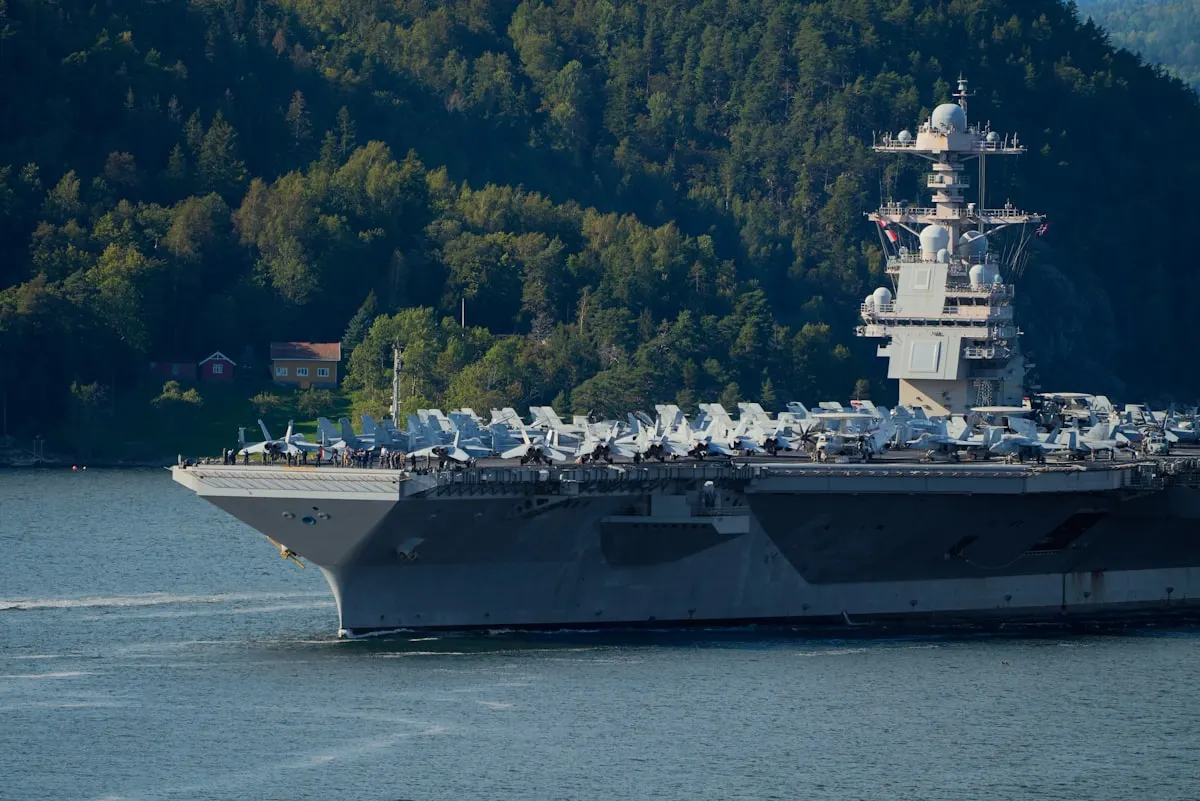
U.S. President Donald Trump is pushing for a plan to equip the next Gerald R. Ford-class aircraft carrier, CVN-81, with a steam-powered catapult system instead of the electromagnetic aircraft launch system. The presidential memorandum, released by the White House on August 13, 2026, also includes plans for changes to the aircraft carrier system and the expansion of submarine maintenance facilities.
The original memorandum instructed the Ministry of National Defense and the Navy to report, within 60 days, on the schedule, required resources, and implementation plan for replacing the electromagnetic aircraft launch system of CVN-81 with a steam-powered system, and for replacing the advanced weapon elevator with a hydraulic system.
Therefore, this measure is not an order to immediately remove the equipment from existing aircraft carriers, but rather an instruction to develop specific conversion plans for the CVN-81 currently under construction. According to the Associated Press, the already commissioned USS Gerald R. Ford, and its successors, the John F. Kennedy and the Enterprise, are not included in this conversion plan.
Differences between steam catapults and EMALS
A steam catapult uses high-pressure steam generated by the reactor to push a piston, which accelerates the aircraft. While extensively used on Nimitz-class aircraft carriers and possessing a wealth of technical experience, steam catapults require steam pipes and mechanical components, leading to significant maintenance burdens and personnel requirements.
EMALS is a system that uses electricity and a linear motor to launch aircraft. The U.S. Navy’s Naval Air Systems Command highlights the advantages of EMALS, including precise control of launch speed, the ability to operate a wide range of aircraft from small unmanned aerial vehicles to heavy fighter jets, and a reduction in maintenance requirements and personnel needs.
The U.S. Navy provisionally assessed that the data from the USS Gerald R. Ford’s trials indicated that the Electromagnetic Aircraft Launch System (EMALS), the Advanced Arresting Gear (AAG), and the flight deck design contributed to a higher aircraft sortie rate compared to the Nimitz-class. Conversely, the White House cited the fact that the steam-powered and hydraulic systems have been proven in actual combat and are easier to expand the supply chain as the basis for pursuing the transition.
CVN-81 Redesign: Cost and Schedule Risks
The key issue is that the steam pipes and related equipment must be re-integrated into the CVN-81, which is currently under construction based on the Ford-class design. Because the Ford-class ships have reduced onboard steam service piping and adopted a power-centric structure, the catapult modification may require extensive redesign, going beyond a simple equipment replacement.
The manufacturer of the EMALS, General Atomics, announced to the Associated Press that approximately half of the production for the catapults and arresting gear for the CVN-81 has been completed. The company stated that design changes at this point could lead to significant costs, schedule delays, and risks of system integration.
The actual implementation and scope of the changes are expected to be finalized based on factors such as the submission of plans within 60 days, budget allocation, and the approval process by the National Assembly. The presidential memorandum explicitly states that any related measures will be implemented within the framework of applicable laws and available budget.
Plans for a submarine component repair center and the 5th Public Shipyard
This directive includes measures not only for aircraft carrier maintenance but also to reduce delays in submarine maintenance. The Ministry of National Defense must develop a plan to establish an integrated component repair center within 90 days, which will be responsible for procuring new parts and repairing and refurbishing aging parts.
The center is designed to maintain a sufficient supply of spare parts for submarines of the Los Angeles, Virginia, Seawolf, Ohio, and Columbia classes, ensuring that at least one vessel can be fully equipped. Potential locations are being considered, with a focus on central hubs that are close to road, rail, and waterway transportation networks.
The U.S. Government Accountability Office (GAO) analyzed in a 2026 report that U.S. Navy attack submarines experienced a total of 3,454 days of maintenance delays from fiscal year 2021 to fiscal year 2025. The same report pointed out that factors such as component shortages, canceled maintenance, and aging facilities are constraints on the Navy’s readiness.
The directive also stipulates that a plan for the establishment of the Fifth Public Navy Shipyard must be submitted within 120 days. The new shipyard plan includes potential locations near the Pacific Fleet, up to three new dry docks, and a financing plan based on public-private partnerships.
Impact on the U.S. Navy’s capabilities
The proposal to convert to a steam catapult system is expected to serve as an opportunity to reassess costs, reliability, personnel requirements, and future aircraft operational capabilities, considering the contrasting options of restoring a proven mechanical system versus maintaining a modern electric system.
Considering the future carrier air wing, which will likely include a greater proportion of unmanned aerial vehicles, the advantages of the EMALS, which allows for precise control of launch energy, are also important factors in the decision-making process. Conversely, the White House is emphasizing the productivity and resilience of the steam-based system, which can utilize existing industrial infrastructure.
Ultimately, the system modification of CVN-81 is a large-scale project that requires consideration not only of technical feasibility but also of redesign costs, construction schedule, congressional budget, and the possibility of rebuilding the supply chain. The submarine parts repair center and the Fifth Public Shipyard also appear to have their actual progress in improving military capabilities largely determined by site selection and budget acquisition after the planning stage.
Frequently Asked Questions (FAQ)
Did President Trump order the removal of EMALS from all aircraft carriers?
It is not. On August 13, 2026, the directive instructed that plans be submitted within 60 days for the installation of a steam catapult and a hydraulic weapon elevator on the fourth Ford-class ship, CVN-81, Doris Miller, which is currently under construction.
How do steam catapults launch aircraft?
High-pressure steam pushes the piston in the cylinder located beneath the flight deck, and the shuttle, which is connected to the piston, accelerates the aircraft to takeoff speed over a short distance.
What advantages does EMALS have over steam catapults?
The U.S. Navy stated that the EMALS is designed to precisely control launch speed and operate aircraft of various weights, and that it requires fewer personnel and less maintenance space compared to steam-based systems.
Does the construction schedule of the CVN-81 Doris Miller get affected?
There is a possibility of impact. Modifying the existing Ford-class design to accommodate a steam-based system would require a re-evaluation of piping, internal spaces, and power and auxiliary systems, which could lead to increased costs and a risk of schedule delays.
What is the function of the submarine component repair center?
The facility is responsible for stockpiling key components for major submarine classes and repairing and refurbishing faulty components to supply shipyards. The goal is to reduce the time spent waiting for parts procurement or diverting equipment from other submarines.