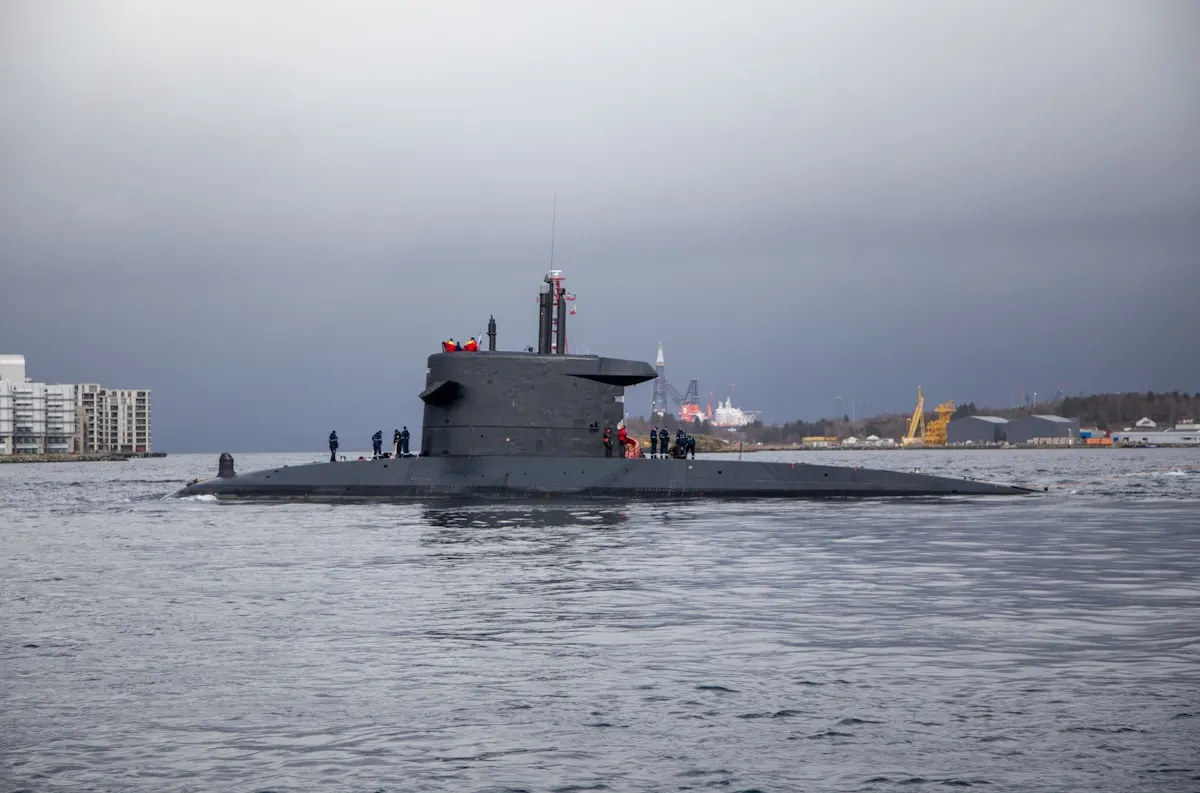
Ultra Maritime and Anduril demonstrate UUV detection technology in the 2026 Lanternfish exercise
Ultra Maritime and Anduril successfully demonstrated unmanned underwater vehicle (UUV) detection and classification technology at the U.S. Navy’s 2026 Lanternfish exercise. This multinational exercise, held in mid-July in Keyport, Washington, USA, brought together autonomous underwater vehicles and seabed technologies from Australia, the United Kingdom, and the United States, with the aim of protecting ports and underwater infrastructure. This technology is setting a new standard in the fields of maritime safety and security.
Technical achievements of Sea Spear and Seabed Sentry
Ultra Maritime’s Sea Spear is a deployable sonar system that has successfully detected, tracked, and classified medium to large-diameter Unmanned Underwater Vehicles (UUVs). It is a lightweight, deployable acoustic array with a 21-inch diameter and can be deployed on both manned and unmanned platforms.
Anduril’s Seabed Sentry is a modular seabed payload system deployed by the Dive XL autonomous underwater vehicle. It hosts a Sea Spear array as its payload and, after deployment, utilizes artificial intelligence technology to perform acoustic processing at the tactical edge. When the two systems are integrated, they form a distributed autonomous seabed network designed for rapid deployment and scalable production.
The meaning and operational results of the Lanternfish training exercise
The Lanternfish exercise is a multinational training program focused on protecting critical underwater infrastructure and responding to emerging threats from autonomous vehicles. During the exercise, the Sea Spear provided continuous acoustic monitoring while transmitting tracking data to an underwater command center.
The demonstration showcased an operationally significant achievement. When Anduril’s Seabed Sentry collects acoustic signals and transmits tracking data to Anduril’s Lattice combat management platform, Lattice transmits the resulting tactical picture to the U.S. Navy’s command-and-control system. This means that integration between the systems was achieved without requiring military software engineering.
Increasing UUV Threat and Defense Policy
The threat posed by Unmanned Underwater Vehicles (UUVs) is rapidly increasing. Ports, harbors, and coastal waters are facing threats not from large submarines, but from smaller, cheaper, and autonomous underwater systems. Adversarial nations are investing in this capability to threaten ports, underwater pipelines, submarine fiber optic cables, and extensive marine infrastructure.
The U.S. Navy and Coast Guard are taking proactive measures to address these threats. They are seeking scalable and adaptable response solutions that are compatible with existing detection systems across the maritime domain, with a particular focus on strengthening the protection of ports and critical infrastructure.
Commercialization potential and industrial prospects
The partnership between Ultra Maritime and Anduril achieved full underwater testing in 2025, representing a significant advancement in distributed, low-cost seabed surveillance capabilities. This technology can also be applied to the protection of civilian ports and infrastructure, giving it broad commercial value.
If this technology is commercialized in the future, it is expected to significantly contribute to improving the safety of ports and marine infrastructure. Many companies involved in marine commercial activities will benefit from these solutions.
Frequently Asked Questions (FAQ)
Q: What kind of system is Ultra Maritime’s Sea Spear?
The Sea Spear is a lightweight, deployable acoustic array sonar system with a 21-inch diameter, capable of detecting, tracking, and classifying medium to large-sized Unmanned Underwater Vehicles (UUVs). It can be deployed from both manned and unmanned platforms and provides continuous acoustic surveillance.
Q: How does Anduril’s Seabed Sentry operate?
A: Seabed Sentry is a modular seabed payload system deployed by the Dive XL autonomous underwater vehicle. It hosts the Sea Spear as a payload, performs acoustic processing using AI technology, and transmits tracking data via the Lattice communication framework.
Q: What is the purpose of the Lanternfish training?
The Lanternfish exercise is a multinational training program aimed at protecting critical underwater infrastructure and enhancing the ability to respond to emerging threats from autonomous vehicles. It integrates autonomous underwater vehicles and underwater technology from Australia, the United Kingdom, and the United States to evaluate emerging technologies under realistic operational conditions.
Q: What is the main problem that this technology solves?
A: Adversarial nations are investing in small, autonomous underwater systems to threaten ports, pipelines, undersea fiber optic cables, and marine infrastructure, making it essential to have technologies that can detect and respond to these threats. Existing anti-submarine warfare tools are not optimized for small, slow, and quiet autonomous vehicles.
Q: What is the commercial value of this technology?
A: This technology can be applied to the protection of civilian ports and infrastructure, and if commercialized, it can provide significant benefits to companies involved in marine commercial activities. The development of a distributed, low-cost underwater surveillance capability is the primary commercial value.
Q: What are the U.S. Navy’s future plans?
A: The U.S. Navy has prioritized countering the threat posed by Unmanned Underwater Vehicles (UUVs) and is continuing to invest in the development of scalable and adaptable solutions that are compatible with existing detection systems. It is continuously strengthening its response capabilities through various training exercises.