UK and Estonia test dispersed force structure ahead of 2027 MAAF transition
The United Kingdom and Estonia are preparing to transition to a MAAF (Mobile Anti-Armour Force) designed to complement tank-heavy armored forces. According to the UK Ministry of Defence, Britain’s Estonia-based force will be reorganized from its existing armored battle group into a MAAF from April 2027, with troop numbers increasing from roughly 800 to 1,200.
The restructuring is not simply about reducing heavy equipment. Its central aim is to disperse combat power across multiple locations by combining mobile platforms, unmanned systems, reconnaissance and surveillance assets, digital command-and-control networks, and precision fires—making the force harder for an adversary to detect and strike.
Ukraine war and Estonia’s operating environment shape MAAF transition
The UK Ministry of Defence says the new force design reflects lessons from the war in Ukraine, as well as Estonia’s terrain and operating environment. Wargames conducted by the UK and Estonia concluded that a structure built around greater mobility, dispersion, and specialization could deliver stronger operational effects than a conventional armored formation.
Estonia is one of the key defensive anchors on NATO’s eastern flank. The UK has served as the framework nation for the NATO multinational battlegroup based at Tapa, Estonia, since 2017. Since summer 2025, it has also maintained a fourth brigade in the UK at high readiness to reinforce Estonia.
Combining drones, digital targeting, and precision fires
Unmanned systems and reconnaissance assets
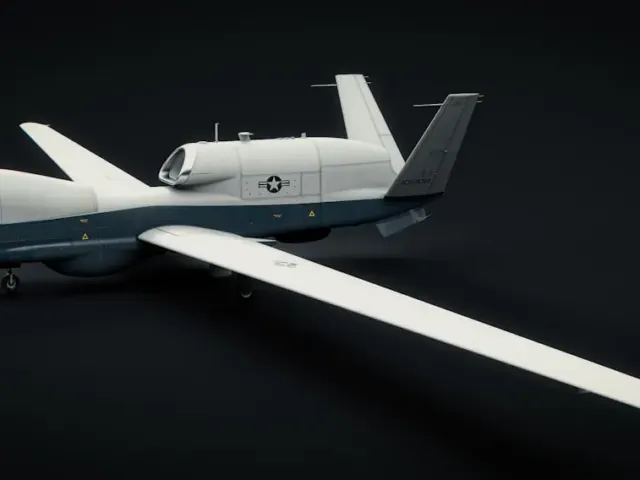
The MAAF is expected to use unmanned aerial systems and reconnaissance and surveillance assets to gather targeting information while avoiding the concentration of troops and vehicles in a single location. The British Army recently tested the use of drone data in Estonia, sharing it across the battlefield so tank crews and dismounted infantry could view the same real-time operational picture.
ASGARD and digital command and control
The UK Ministry of Defence’s ASGARD is a digital targeting program that connects sensors with command-and-control systems to identify targets and rapidly recommend suitable weapons. According to Janes, British, French, and Estonian forces tested some of ASGARD’s capabilities during NATO’s Exercise Hedgehog in Estonia in 2025.
The system is designed to process information from disparate sensors—including drones, radars, and forward observers—within a single network. This can shorten the time between detecting a target and selecting the means to engage it, while allowing dispersed units to share the same operational picture.
Anti-armour weapons and long-range fires
The MAAF’s combat power is based not only on individual anti-armour weapons, but also on their integration with long-range fires and reconnaissance networks. The UK Ministry of Defence has said it will integrate precision fires, networked command and control, and expanded unmanned capabilities into its Estonia-based force while continuing to improve the accuracy and striking power of multiple-launch rocket systems.
That does not mean heavy equipment is becoming irrelevant. NATO released footage in 2025 of the British Army conducting live-fire exercises with the Archer 155mm self-propelled howitzer at Tapa, Estonia. The system was presented as capable of striking targets at ranges of up to 50 kilometers before rapidly relocating.
MAAF tests a new way of fighting
The MAAF’s central concept is to use multiple small, mobile units linked by networked sensors and fires to maintain pressure on an adversary, rather than relying on a single shock force led by tanks and armored vehicles. When dispersion, deception, and rapid repositioning are combined, an opponent’s surveillance and strike systems have a harder time locating targets.
For such a structure to work, however, it will require resilient communications, the ability to operate under electronic warfare conditions, forward-positioned stocks of ammunition and equipment, and effective information-sharing among allies. Under a new roadmap, the UK and Estonia have also agreed to expand equipment and ammunition stockpiles, military innovation, and defense-industrial cooperation.
The future of UK-Estonia military cooperation
The UK’s MAAF transition is less a reduction in its troop commitment to Estonia than a redesign of how British forces will operate on NATO’s eastern flank. The plan is to combine a 1,200-strong force with a reinforcement brigade held at readiness in the UK, strengthening both the permanent presence and the ability to reinforce it during a crisis.
The key question now is how much firepower and staying power the MAAF can generate in real-world exercises and rotational deployments. If the British Army succeeds in integrating drones, digital targeting, anti-armour weapons, and long-range fires into a single operational system, Estonia could become an important proving ground for dispersed ground forces in Europe.
Frequently asked questions (FAQ)
What is the MAAF?
MAAF stands for Mobile Anti-Armour Force. It is a British military concept that combines mobile platforms and anti-armour weapons with unmanned systems and reconnaissance and surveillance assets.
When will the MAAF be deployed in Estonia?
The UK Ministry of Defence says it plans to transition the force stationed in Estonia from its existing armored battlegroup to a MAAF from April 2027.
How large will the British force in Estonia be?
Following the transition, the UK’s force in Estonia is expected to grow from roughly 800 personnel to approximately 1,200.
Will the MAAF completely replace tanks?
No. The MAAF is intended to complement tank-centered forces. Depending on operational requirements, the UK plans to employ armored forces alongside self-propelled artillery, multiple-launch rocket systems, and reinforcement brigades.
What role does ASGARD play?
ASGARD is a British digital targeting program that integrates information from a range of sensors—including drones, radars, and forward observers—over a digital network and supports target identification and weapons selection.