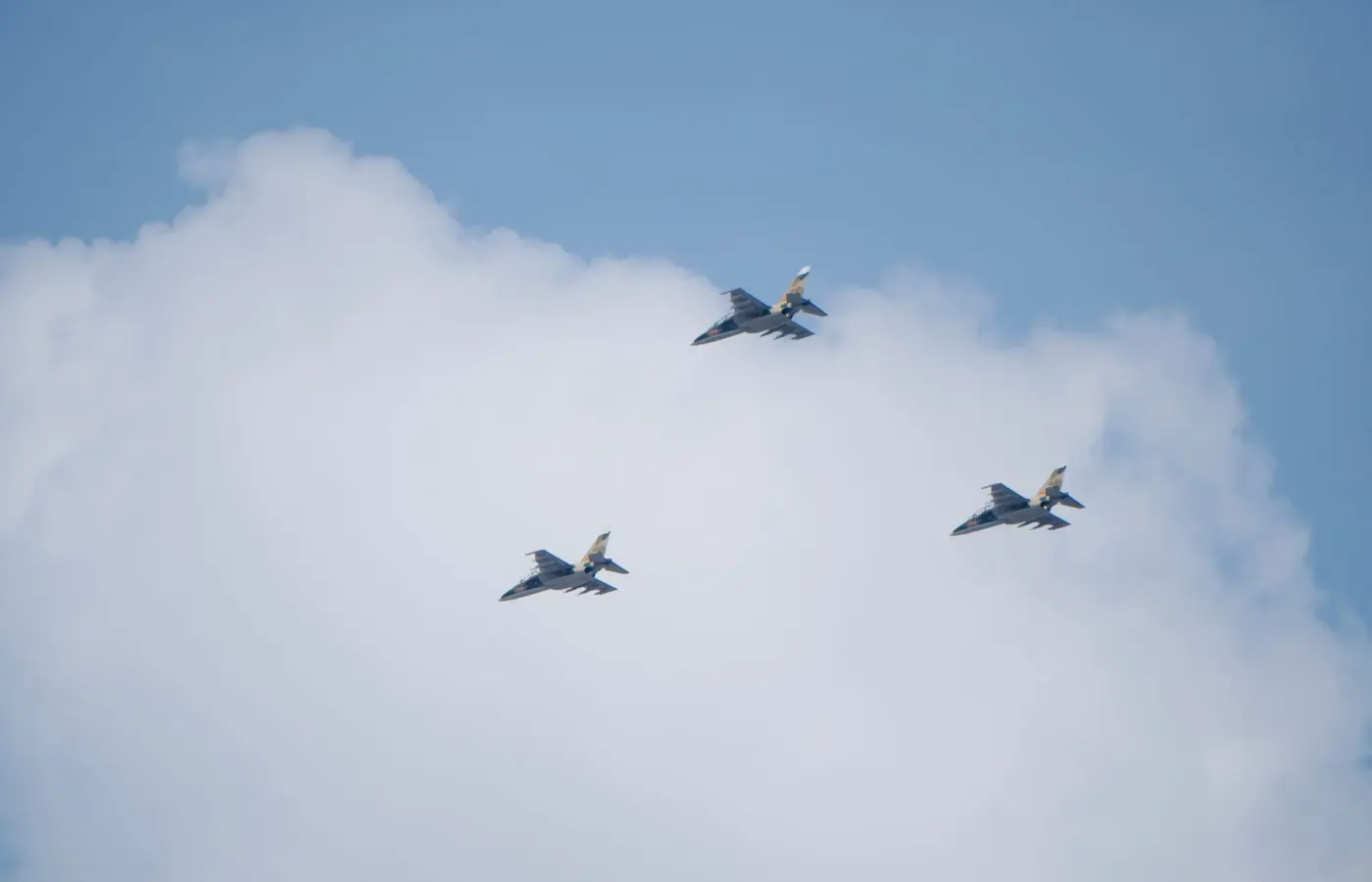
Singapore: Initial review of potential participation in GCAP
Singapore is reportedly exploring the possibility of cooperating with the Global Combat Air Programme (GCAP), a project being pursued by the United Kingdom, Italy, and Japan. However, the current stage is an initial discussion, and participation in the program or the acquisition of fighter jets has not yet been decided.
According to a report by Jane’s on July 28, 2026, Singapore is discussing potential collaborations with GCAP. The report stated that these discussions are currently in the exploratory phase and that the Singaporean government has not yet made a decision on participation.
Singapore Air Force: Transitioning from F-15SG and F-16 to F-35
The Singaporean Air Force currently operates the F-15SG and upgraded F-16 aircraft as its main fighter jets. According to a statement from the Singaporean Ministry of Defense, the Air Force deployed 10 F-16s and 8 F-15SGs to the Red Flag exercises held in Alaska, USA, in May and June 2026.
The country is considering the acquisition of Lockheed Martin F-35 aircraft. The Singaporean government has announced plans to procure a total of 20 aircraft, consisting of 12 F-35B short take-off/vertical landing (STOVL) variants and 8 conventional take-off/landing (CTOL) F-35A variants.
The Singapore Ministry of Defense stated that the F-35s will gradually replace the aging F-16 fleet. While the F-16s have undergone performance upgrades and are currently in service, they are scheduled to be progressively reduced starting in the mid-2030s.
What is the GCAP (Global Combat Air Program) project?
GCAP is an abbreviation for the Global Combat Air Programme, a next-generation fighter aircraft development project jointly undertaken by the United Kingdom, Italy, and Japan. The three countries announced the launch of the program in December 2022, with the goal of deploying the new fighter aircraft in active service starting in 2035.
The core of the GCAP program goes beyond the development of a single, manned fighter aircraft. The goal is to establish a future air combat system that integrates stealth technology, advanced propulsion systems, sensor and data systems, and artificial intelligence-based technologies, and that can be operated in conjunction with autonomous and unmanned platforms.
Government-level project management is handled by the GCAP International Organization and its affiliated GCAP Agency. In the industrial sector, Edgewing, a joint venture established by BAE Systems, Leonardo, and Japan Aircraft Industries Promotion, leads the aircraft design and development.
2026: A development contract worth 4,600,000,000 pounds is signed
According to a statement from the British Ministry of Defence, the GCAP Agency signed a contract with Edgewing on July 2026 for a sum of £4,600,000,000. The United Kingdom, Italy, and Japan will jointly fund the project, and the contract focuses on finalizing the aircraft’s core requirements and advancing design and testing work.
This indicates that the GCAP program is moving beyond the conceptual study phase and entering the full-scale design and development stage. However, the detailed specifications of the aircraft, the number of units to be procured by each country, and the estimated price per unit have not yet been finalized and publicly disclosed.
Background to Singapore’s review of the GCAP
Singapore has consistently invested in advanced sensors, precision strike capabilities, network-centric operations, and overseas training facilities to compensate for its limited land and airspace. The acquisition of the F-35 aircraft also involved a lengthy evaluation process and a phased approach to increasing the order quantity.
The initial consideration of GCAP can also be interpreted as a long-term approach to prepare for the air force force structure after 2035, rather than for the immediate replacement of fighter aircraft. Because the operational periods of the F-35 and the GCAP fighter may partially overlap, the two systems may be considered as complementary forces rather than competitors.
If Singapore proceeds with actual cooperation, the key issues will likely be the level of participation, the scope of technology access, the sharing of development costs, and the interoperability with existing U.S.-made weapon systems, as well as industrial cooperation. Based on the currently available information, it is too early to determine whether Singapore will opt for joint development or simply consider adopting the technology.
Key factors determining participation in the GCAP
- Project schedule: Whether the plan to deploy the system for actual use by 2035 remains on track.
- Costs and scale of introduction: Conditions for sharing development costs, and future fighter acquisition and operation costs.
- Industrial Cooperation: Scope of development and maintenance participation provided to Singaporean defense and aerospace companies.
- Interoperability: The F-35 and F-15SG have the potential for integration with Singapore’s command and control and sensor systems.
- Technical Approach: This concerns the improvement of mission systems, data sovereignty, and the authority related to long-term logistics support.
While the Singaporean GCAP review is still in its early stages, if it proceeds, it could serve as a significant example of expanding the project’s market reach in the Asia-Pacific region. Future official announcements from the Singaporean Ministry of Defense or participating countries in the GCAP program will likely be the key indicators for assessing the actual level of cooperation.
Frequently Asked Questions (FAQ)
Did Singapore officially participate in the GCAP?
That is not correct. The report from July 2026 concerned initial exploratory discussions, and there has been no official announcement from the Singaporean government regarding participation in the program or the purchase of fighter jets.
Which countries are participating in the GCAP?
The core countries involved in the development of the GCAP are the United Kingdom, Italy, and Japan. These three countries manage the project through government-level international organizations and joint industrial bodies.
When is the GCAP fighter jet scheduled for operational deployment?
The target date proposed by the participating countries is 2035. The actual deployment date may be adjusted depending on the development and testing schedule.
How many F-35s is Singapore acquiring?
The publicly announced procurement includes a total of 20 aircraft: 12 F-35B models and 8 F-35A models. This capability will eventually replace the F-16s currently in service with the Singaporean Air Force.
Will the GCAP replace the F-35?
Singapore’s GCAP (Next-Generation Fighter) review does not necessarily mean an immediate replacement for the F-35. The GCAP fighter is intended for future capabilities after 2035, and if adopted, it may share roles with the F-35.