K21 Infantry Fighting Vehicle Analysis
Overview
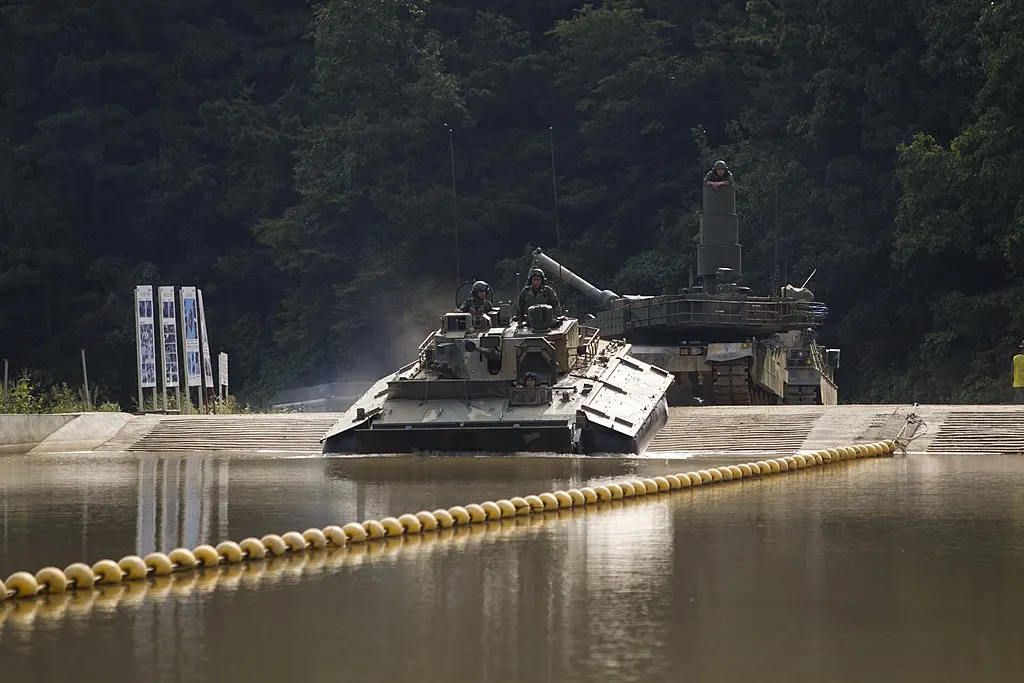
The K21 Infantry Fighting Vehicle (IFV) represents South Korea’s independently developed next-generation tracked combat platform. Engineered to enhance both mobility and firepower, it replaces the legacy K200 armored personnel carrier and is purpose-built to execute diverse combat missions suited to modern warfare.
- Key Features
- Powerful Armament: 40mm chain gun plus 7.62mm coaxial machine gun
- Superior Mobility: Amphibious capability, maximum speed of 70 km/h
- Robust Protection: Composite armor construction with anti-tank missile resistance
- Advanced Combat Systems: Integrated Digital Battlefield Management System (BMS)
Development Background
South Korea recognized significant shortcomings in its K200 armored personnel carrier—specifically insufficient firepower and protection for true IFV operations—and determined that advancing infantry support and armored unit effectiveness in contemporary conflicts required developing a new next-generation platform.
- Development Timeline
- 1999: K21 development program initiated
- 2003: Prototype vehicles produced
- 2009: Series production commenced
- 2010: Republic of Korea Army deployment began
- 2020s: K21 performance upgrade programs (K21A1 development) and export campaigns launched
Strengths and Limitations
🔹 Strengths
✔ Powerful Firepower: Capable of mounting 40mm chain gun and anti-tank missiles ✔ Excellent Mobility: Amphibious design allows operations across diverse terrain ✔ Enhanced Protection: Composite armor and optional active defense systems ✔ Advanced Combat Systems: Integrated digital battlefield management architecture ✔ Relatively Lightweight: At 25 tons, offers favorable transport and deployment characteristics
🔻 Limitations
❌ Limited Combat Experience: No extensive operational history ❌ Protection Constraints: Protection levels remain below those of main battle tanks ❌ Anti-Tank Armament Restrictions: Integration of anti-tank missiles ongoing from K21A1 variant onwards
: Republic of Korea Armed Forces / CC BY-SA 2.0 / Wikimedia Commons
Regional IFV Comparison (China, Japan, North Korea)
| Specification | K21 (South Korea) | ZBD-04A (China) | Type 89 IFV (Japan) | North Korean Next-Gen APC |
|---|---|---|---|---|
| Weight | 25 tons | 27 tons | 26 tons | 20–25 tons (estimated) |
| Dimensions (Width × Length × Height) | 3.4m × 6.9m × 2.6m | 3.2m × 7.2m × 2.5m | 3.3m × 7.0m × 2.4m | 3.1m × 6.8m × 2.3m (estimated) |
| Maximum Speed | 70 km/h | 65 km/h | 60 km/h | 55 km/h (estimated) |
| Armament | 40mm chain gun + 7.62mm machine gun | 100mm large-caliber gun + 30mm chain gun | 35mm chain gun + 7.62mm machine gun | 30mm chain gun + 14.5mm machine gun |
| Armor | Composite | Composite + ERA | Steel | Steel (estimated) |
| Engine Power | 750 hp | 730 hp | 600 hp | 500–700 hp (estimated) |
| Competitive Advantage | Superior firepower, amphibious capability | Large-caliber gun, firepower superiority | High reliability, rapid deployment | Optimized for DPRK operations, numerical advantage |
Advanced IFV Comparison (United States, United Kingdom, Russia, France)
| Specification | K21 (South Korea) | M2A4 Bradley (USA) | Warrior IFV (UK) | BMP-3 (Russia) | VBCI (France) |
|---|---|---|---|---|---|
| Weight | 25 tons | 30 tons | 25 tons | 18–22 tons | 32 tons |
| Dimensions (Width × Length × Height) | 3.4m × 6.9m × 2.6m | 3.2m × 6.6m × 2.9m | 3.3m × 6.5m × 2.8m | 3.2m × 6.7m × 2.4m | 3.1m × 7.6m × 2.8m |
| Maximum Speed | 70 km/h | 66 km/h | 75 km/h | 70 km/h | 100 km/h |
| Armament | 40mm chain gun + 7.62mm machine gun | 25mm chain gun + TOW missile | 30mm chain gun | 100mm large-caliber gun + 30mm chain gun | 25mm chain gun + missile system |
| Armor | Composite | Composite + ERA | Composite | Steel + ERA | Composite |
| Engine Power | 750 hp | 600 hp | 550 hp | 500 hp | 600 hp |
| Competitive Advantage | Superior firepower, amphibious capability | Proven reliability, robust protection | Excellent mobility, extensive variants | Lightweight design, large-caliber armament | Exceptional mobility, wheeled design |
Future Development Roadmap
- K21A1 Development Underway: Integration of anti-tank missiles and enhanced protection
- K21A2 Research Phase: Exploring active defense system integration
- Export Expansion: Targeting Middle Eastern and Eastern European markets
- Network-Centric Combat Enhancement: Improved electronic warfare countermeasures and connectivity