SLBM (Submarine-Launched Ballistic Missile) Comparative Analysis
Overview
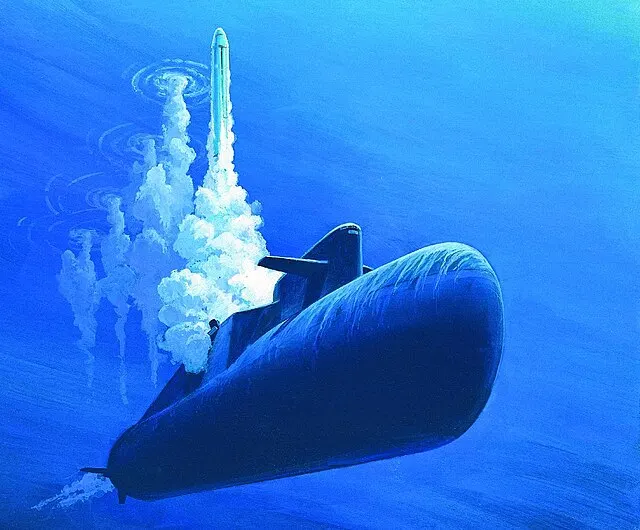
SLBMs (Submarine-Launched Ballistic Missiles) are ballistic missiles that can be launched from submarines. The Republic of Korea Navy has recently acquired the capability to operate its own domestically developed SLBMs through the Dosan An Chang-ho-class submarines. SLBMs are a crucial strategic weapon, offering the ability to conduct covert operations and possessing a high degree of survivability, which allows them to exert a strong deterrent effect.
- Main features
- Capable of being launched from submarines: Can be launched underwater to surprise the enemy and evade detection.
- Long-range strike capability: Provides strategic deterrence through medium to long-range capabilities.
- Capable of carrying either a nuclear warhead or a conventional warhead: Capable of performing a variety of missions.
- Capable of carrying multiple independently targetable reentry vehicles (MIRVs): Enables a single missile to strike multiple targets.
Development background
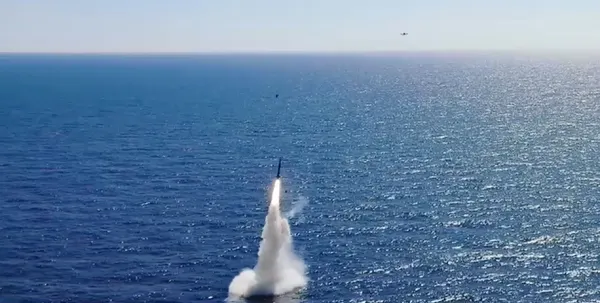
The Republic of Korea has been developing its own submarine-launched ballistic missiles (SLBMs) to counter the threats posed by North Korea’s ballistic missiles and nuclear weapons. It has successfully developed SLBMs that can be deployed on Dosan-an-changho-class submarines. As one of the first non-nuclear countries to develop SLBMs, the Republic of Korea has strengthened its strategic defense capabilities.
- Development process
- Mid-2010s: Review of the necessity for developing a Korean-type Submarine-Launched Ballistic Missile (SLBM).
- 2021: Successful test launch of a submarine-launched ballistic missile (SLBM).
- 2022: Deployment began on the Dosan An Chang-ho-class submarines.
- Currently, additional improvements and modular development are underway.
Advantages and disadvantages analysis
🔹 Advantages
✔ Strengthening strategic deterrence: Capable of surprise attacks through covert maneuvering.
✔ Increased probability of evading enemy interception: Higher survivability compared to ground-based ballistic missiles.
✔ Powerful retaliatory strike capability: Enables rapid response to key targets.
✔ Capability to perform various missions: Can be equipped with either nuclear or conventional warheads.
🔻 Disadvantages
❌ High development and maintenance costs: The use of advanced technology results in high costs.
❌ High technical difficulty: Technology is required to ensure stable launch from a submarine.
❌ Limitations due to the lack of a nuclear warhead: Its capabilities are limited to conventional strike capabilities.
Comparison of SLBM capabilities of neighboring countries (China, Japan, North Korea)
| Items: | Korean-type Submarine-Launched Ballistic Missile. | JL-2 (China) | Japan (not possessed). | North Korean Submarine-Launched Ballistic Missile (estimated). |
|---|---|---|---|---|
| Range | 500~800km | 7,400km | There is no text to translate. | 1,500 km (estimated). |
| Tip type | Traditional. | Nuclear warhead. | There is no text to translate. | Nuclear and conventional (estimated). |
| Operating submarine | Dosan An Changho-class. | Jin-geup nuclear submarine. | There is no text to translate. | Sinpo-class (estimated). |
| Multiple independently targetable re-entry vehicle capability (MIRV). | There is no text to translate. | Presence. | There is no text to translate. | (Estimated) None. |
| Competitive advantages | Possible surprise attack. | Long-range nuclear strike capability. | There is no text to translate. | Possibility of using nuclear warheads. |
Comparison of Submarine-Launched Ballistic Missiles (SLBMs) in Advanced Countries (United States, United Kingdom, Russia, France)
| Items: | Trident II (United States) | Trident II (United Kingdom) | Bulava (Russia) | M51 (France) |
|---|---|---|---|---|
| Range | 12,000km | 12,000km | 8,000km | 10,000km |
| Tip type | Multiple Independently Targetable Reentry Vehicle (MIRV). | Multiple Independently Targetable Reentry Vehicle (MIRV). | Multiple Independently Targetable Reentry Vehicle (MIRV). | Multiple Independently Targetable Reentry Vehicle (MIRV). |
| Operating submarine | Ohio-class | Vanguard-class | Borei-class | Le Triomphant-class. |
| Multiple independently targetable re-entry vehicle capability (MIRV). | Presence. | Presence. | Presence. | Presence. |
| Competitive advantages | Long-range, multiple-warhead strike. | Core of the UK’s nuclear power. | Russian strategic nuclear forces. | Europe’s most powerful submarine-launched ballistic missile. |
Development direction
- Range Extension: Efforts are underway to expand the current range, which is approximately 500 to 800 km, to over 1,000 km.
- Next-generation warhead development: Possibility of developing various warhead options (electronic warfare warheads, precision strike warheads).
- Consideration of introducing nuclear submarines: Research is needed to maximize the operational efficiency of SLBMs.
- Research on the possibility of overseas exports: Review of sales potential, focusing on countries in Asia and the Middle East.