Hypersonic weapons refer to advanced weapon systems that fly at speeds of Mach 5 or greater. Due to their high speed and unpredictable flight paths, these weapons are difficult to detect and intercept with current defense systems.
As a result, major military powers such as the United States, Russia, and China are accelerating the development and deployment of hypersonic weapons.
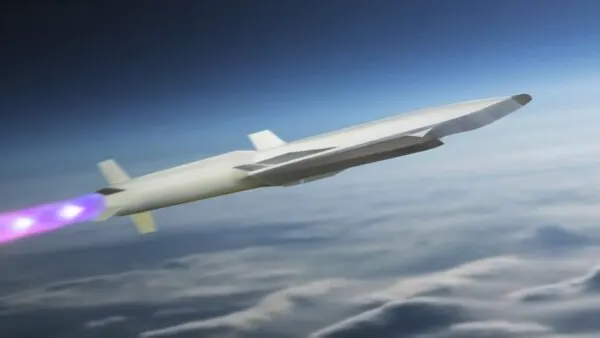
Types of hypersonic weapons
Hypersonic weapons are broadly classified into two categories:
- Hypersonic Glide Vehicle (HGV): Utilizing the propulsion of a ballistic missile, it ascends to a high altitude and then glides towards its target.
- Hypersonic cruise missile (HCM) : It uses a scramjet engine to ingest oxygen from the atmosphere and flies at hypersonic speeds.
Development status in major countries
- The United States is developing hypersonic weapons through various programs, including the Air-Launched Rapid Response Weapon (ARRW) and the Long-Range Hypersonic Weapon (LRHW). Recently, the United States successfully conducted a test launch of an air-launched hypersonic weapon.
- Russia: Russia possesses hypersonic weapons such as the Avangard, Zircon, and Kinzhal, and some of these have already been deployed for combat use. In particular, the Kinzhal missile has been used in the war in Ukraine.
- China has developed and deployed hypersonic weapons, such as the DF-ZF, and is continuously advancing related technologies.
Characteristics and challenges of hypersonic weapons
Hypersonic weapons possess the following characteristics:
- High-speed flight: It flies at a speed of Mach 5 or higher, making it difficult to intercept with existing missile defense systems.
- Evasive maneuvers: These maneuvers involve unpredictable flight paths to evade defensive systems.
- Low-altitude flight: Flying at a low altitude makes detection difficult.
Due to these characteristics, hypersonic weapons pose a significant challenge to current defense systems. Consequently, various countries are undertaking the development of new defense systems capable of detecting and intercepting hypersonic weapons.
Current status of China’s hypersonic weapon development
China holds a leading position in the development of hypersonic weapons. A representative example is the DF-ZF (WU-14) hypersonic glide vehicle (HGV), which was deployed for actual use in 2020.
The DF-ZF is reportedly capable of a maximum range of 2,000 km, and when combined with the DF-17 booster, it can fly up to 2,500 km. Furthermore, China is developing the DF-41 intercontinental ballistic missile (ICBM), which is expected to be capable of carrying a hypersonic nuclear warhead.
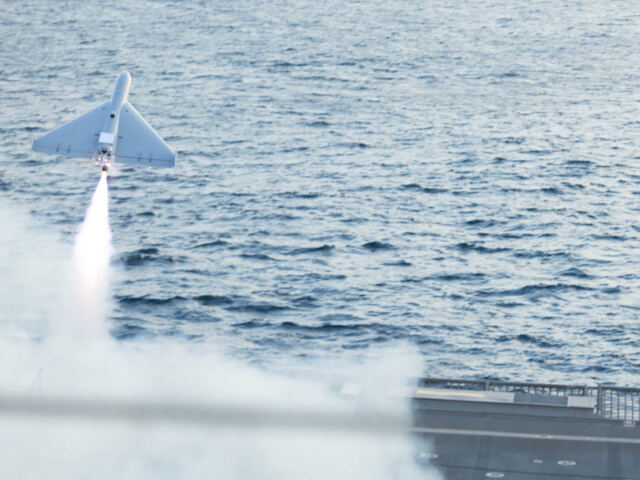
Recently, a video was released showing the test flight of a hypersonic drone called “MD-19.” This drone is reportedly capable of carrying weapons and flying at a speed of 7 times the speed of sound in the stratosphere.
Military experts predict that this drone could be a game-changer that will alter the nature of warfare. China’s rapid advancements have raised the possibility that some of its key technologies may have utilized American advanced technology.
Reports have indicated that more than 300 American technologies have been sold to dozens of companies in China involved in the development of hypersonic and missile technologies since 2019.
Current status of South Korea’s hypersonic weapon development
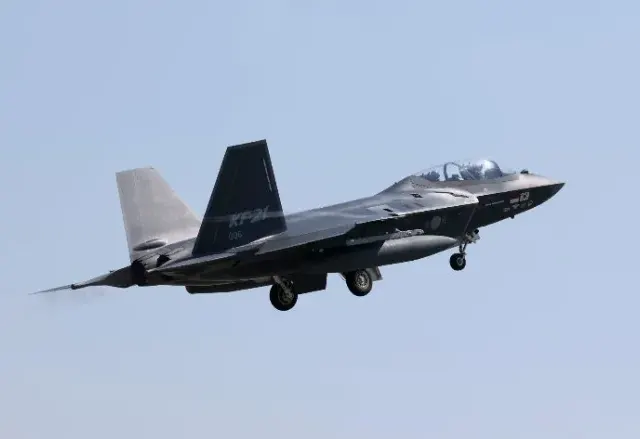
South Korea is relatively early in the development of hypersonic weapons, but has recently been making active efforts in this area. The Agency for Defense Development is currently working on the development of a Mach 5 hypersonic air-to-surface missile that could be mounted on the KF-21 “Boramae” fighter.
This missile is expected to possess high-speed strike capabilities, allowing it to quickly neutralize key North Korean targets. Furthermore, South Korea plans to enhance its hypersonic weapon interception capabilities by the mid-2030s through the development of the L-SAM-II, an improved version of the Korean-made THAAD interceptor (L-SAM) that was recently successfully test-fired.
This is interpreted as a measure to counter the threat of hypersonic weapons from neighboring countries.
Analysis and outlook
China’s development of hypersonic weapons appears to be aimed at gaining a strategic advantage in its competition with the United States.
Specifically, the high speed and unpredictable flight paths of hypersonic weapons can neutralize existing missile defense systems, and are expected to contribute to strengthening China’s A2/AD (Anti-Access/Area Denial) strategy.
In South Korea, the development of hypersonic weapons is intended to strengthen its ability to respond to North Korea’s nuclear and missile threats. In particular, the development of air-to-surface hypersonic missiles is expected to contribute to strengthening deterrence by providing the capability to rapidly strike North Korea’s leadership and key facilities.
However, the development and deployment of hypersonic weapons could trigger an arms race in the region, which could lead to security dilemmas.
Therefore, South Korea must also make efforts to establish international norms and cooperative systems to control and manage these hypersonic weapons, alongside their development.
In conclusion, the development of hypersonic weapons in China and South Korea is closely linked to the security strategies of each country, and the advancement of this technology is expected to have a significant impact on the security landscape of Northeast Asia. Therefore, continuous monitoring and analysis are necessary.