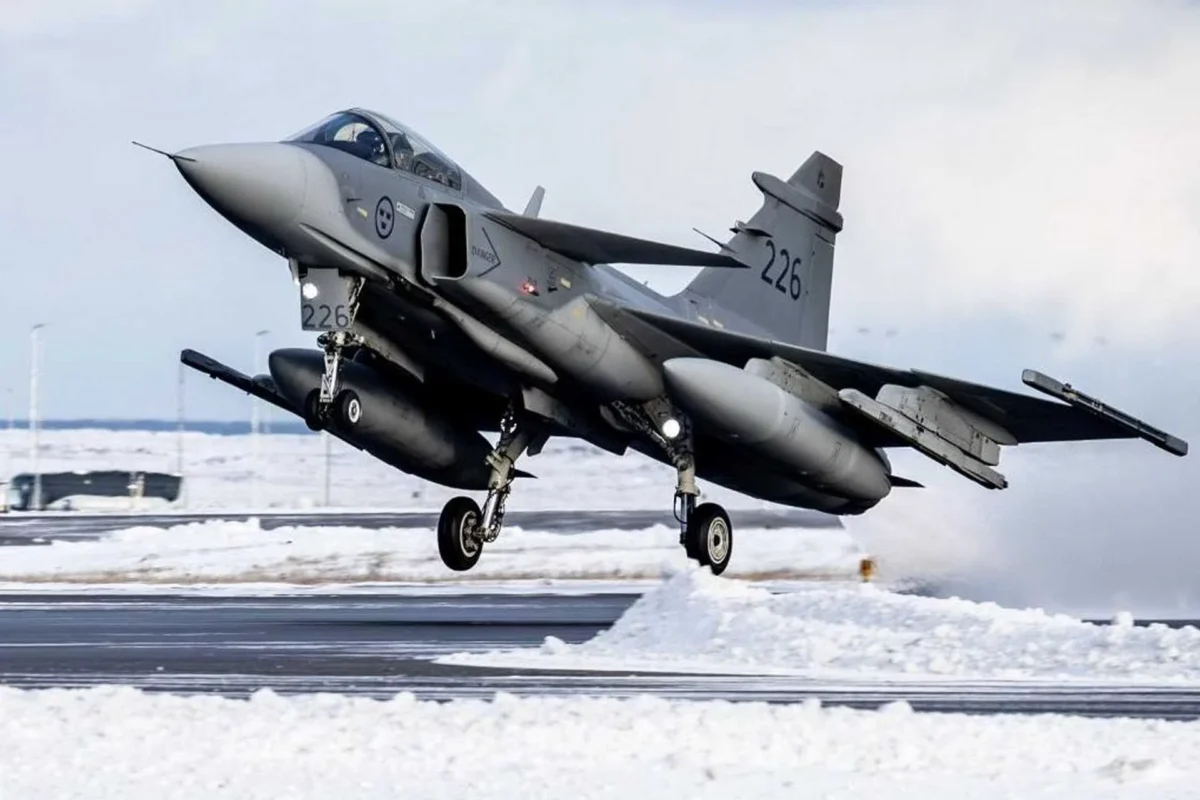
Reasons why the Gripen fighter jet is gaining renewed attention
Recently, the Saab Gripen E fighter jet from Sweden has been making a strong impression in fighter jet procurement projects around the world.
For some time, attention has been focused on the F-35 Lightning II, a fifth-generation stealth fighter. However, recently, the Gripen has received praise as a “fighter jet that is actually good to operate,” and several countries are considering its adoption or additional purchases.
A prime example is Brazil and Canada. Brazil is planning to acquire an additional 20 Gripen E/F aircraft, in addition to the existing contract for 36. Canada is also considering a plan to operate a mixed fleet of Gripen aircraft, potentially up to a maximum of 72, alongside the F-35.
As you know, the Gripen has been sold to some countries, including Thailand, but it is an aircraft that has been overlooked for a long time.
The Rafale, after being overlooked upon its introduction, is currently experiencing a period of unprecedented success over the past nearly 10 years. Let’s examine the reasons why the F-35 has not dominated the market, and why the Gripen, which was on the verge of extinction, has been revitalized.
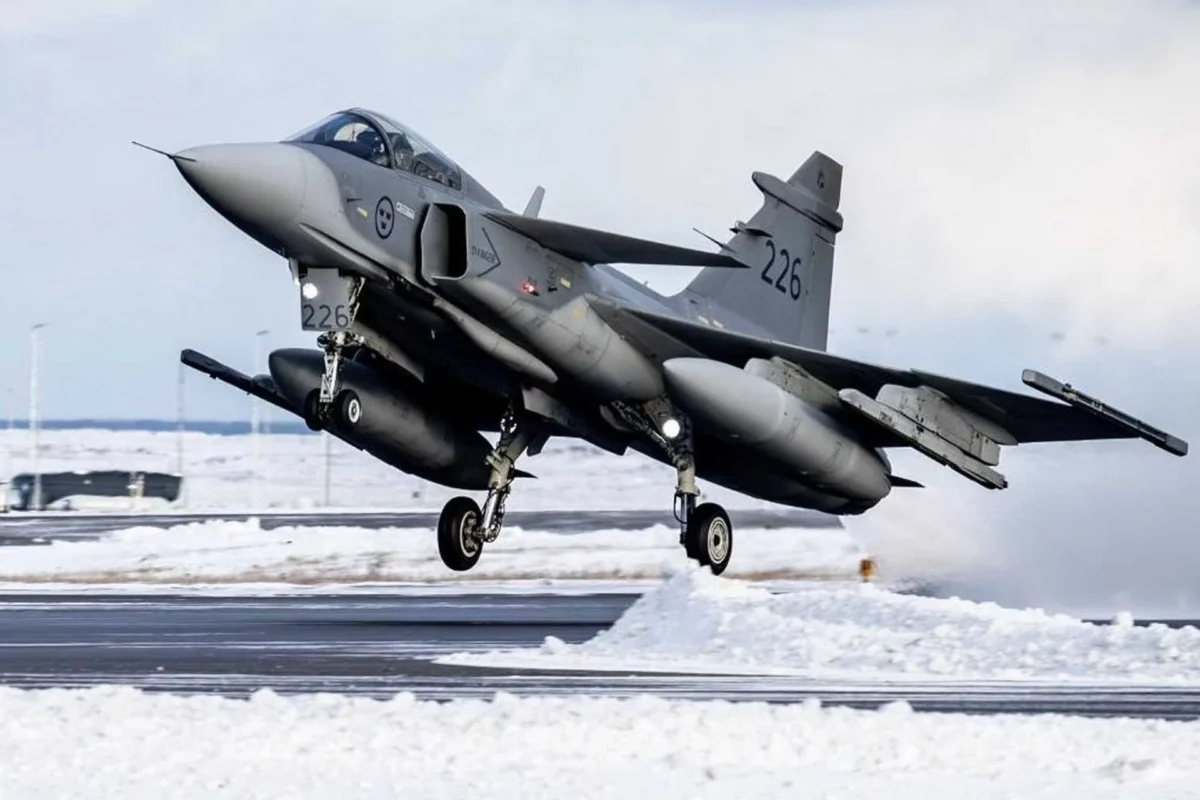
Operating costs are relatively low
The Gripen is attracting attention primarily because of its cost-effectiveness.
Modern fighter jets are not only expensive to purchase, but the maintenance costs incurred over decades are even more significant. While the F-35 possesses excellent performance, its maintenance system is complex and costly.
On the other hand, the Gripen has relatively low operating costs and a simple maintenance system. It can be maintained by a small number of personnel, and rearming and refueling can be completed in a short time, allowing it to maintain a high operational rate even in wartime.
Operable without a runway
One of the most distinctive features of the Gripen is its ability to operate in a distributed manner.
During the Cold War, Sweden designed its large airbases so that fighter jets could operate from regular roads, even if the airbases themselves were destroyed in a Soviet attack.
Because of these characteristics, the Gripen is capable of taking off and landing on short runways and highways, and can be operated with a small maintenance team. Canada is considering the Gripen for defense of the Arctic region and territorial surveillance precisely because of these features.
Latest electronic equipment and powerful armament
Just because the cost is low does not mean that the performance is lacking.
The latest Gripen E/F incorporates the following advanced equipment:
- AESA radar
- Infrared search and track equipment (IRST).
- Integrated Electronic Warfare System.
- Network-based data links.
- Long-range air-to-air missile: Meteor.
The Meteor missile is considered one of the world’s most advanced air-to-air weapons, offering a significant advantage in long-range engagements. Brazil has already successfully completed live-fire tests.
Advantageous from the perspective of national sovereignty
Recently, another reason why various countries are showing interest in the Gripen is due to technology transfer and the promotion of their own domestic industries.
Brazil is currently assembling and manufacturing Gripen aircraft domestically, and plans to acquire research and development, as well as maintenance, capabilities in the future.
If Canada chooses the Gripen, it is also considering options that include final assembly and maintenance within the country, as well as software management. This is interpreted as an effort to reduce dependence on the U.S.-centered system and to secure national control.
A platform suitable for the drone era
Modern warfare is no longer simply a matter of fighter jets battling each other.
Manned-unmanned teaming is emerging as a key element of next-generation air warfare.
The Gripen F, a two-seater jointly developed by Brazil, is designed to allow the rear seat occupant to control drones, manage the battlefield, and perform electronic warfare missions. This design incorporates the concept of simultaneously commanding a formation of fighter jets and drones in future combat scenarios.
Demand is rapidly increasing
Recently, the countries showing interest in the Gripen are not limited to Brazil and Canada.
- Brazil is considering further imports.
- A purchase agreement has been signed with Colombia.
- Additional procurement from Thailand.
- Ukraine: Under consideration for introduction.
- Canada: Review of mixed-force capabilities.
Because of this, there are even discussions about a situation where production capacity is struggling to keep up with demand. The production capacity of engines and radar systems is being identified as a key factor in future supply.
Gripen Replay is currently being activated
The Gripen is regaining popularity for reasons that go beyond just its performance.
The fighter jet market is shifting from an era that “only pursued the highest performance” to one that prioritizes “actual capabilities that can be maintained and operated.”
While the F-35 is considered a top-tier stealth fighter, the Gripen is evaluated as a practical option that offers relatively lower operating costs, higher availability, excellent electronic equipment, and outstanding industrial cooperation benefits.
Ultimately, the recent popularity of the Gripen goes beyond being simply a “cost-effective fighter.” It signifies that the Gripen is being reevaluated as a platform that simultaneously satisfies the economic, autonomous, and survivability requirements of future air forces.