- How to win without sinking the ship
- One sentence between modeling and combat: unproven
- A doctrine with the numbers missing
- When the name disappears, so does the category
- South Korea received a doctrine—and a receipt
- This doctrine is aimed not at the enemy, but at Congress and allied wallets
- Three things to watch
How to win without sinking the ship
You do not have to sink an enemy ship. Knock out a single radar or communications antenna, and you create a window of opportunity on the battlefield. That was the idea put forward by Maj. Gen. Harrington, commander of the U.S. Army’s 7th Infantry Division and of the Multi-Domain Command–Pacific (MDC-PAC), from the stage of the Walter E. Washington Convention Center in Washington, D.C.
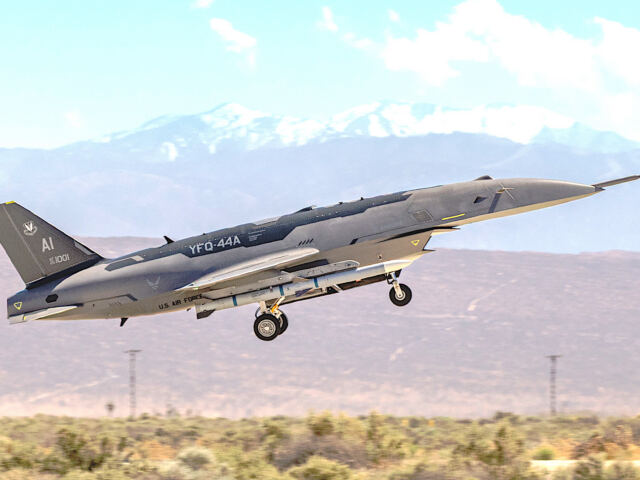
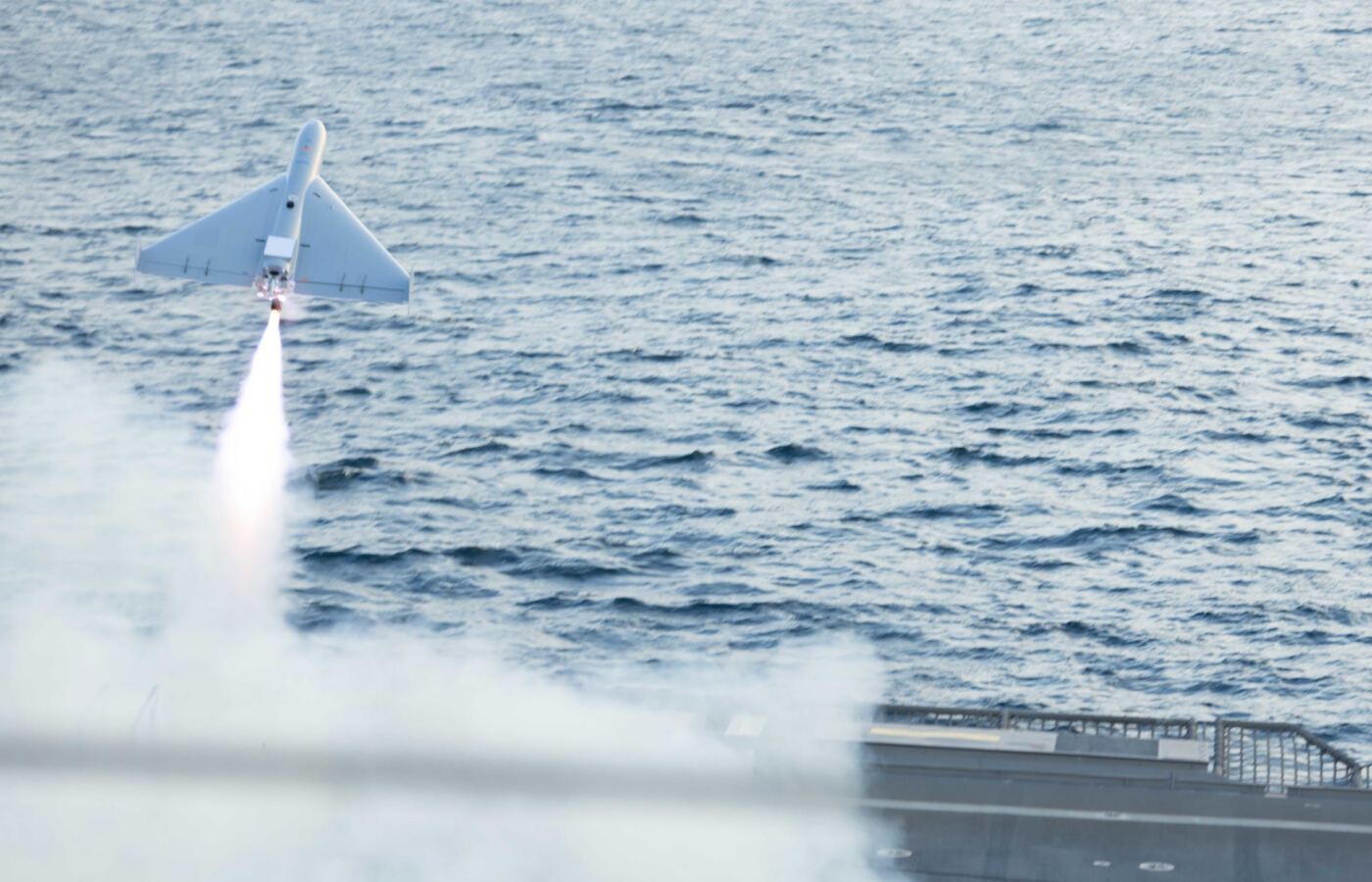
At a panel held during the Association of the United States Army’s annual symposium from Oct. 12 to 14, 2026, Maj. Gen. Harrington and Brig. Gen. Carpenter, commander of Multi-Domain Command–Europe (MDC-E), offered the first detailed public account of how the LUCAS (Low-Cost Unmanned Combat Attack System) loitering munition could be used in the Pacific and European theaters. The questions came from Howard Altman of the specialist publication The War Zone. “You don’t necessarily have to sink the ship,” Harrington said. “If you can disable a particular system, you create a window of opportunity.”
After the remarks were reported on Oct. 17, coverage in South Korea largely returned to the K-LUCAS fielding plan announced in June and the controversy over its price tag, reportedly in the hundreds of millions of won per unit. What went largely unreported was the actual combat concept the U.S. military had laid out: mission kills, strikes on mobile launchers and the integrated use of launch effects. The first question is why this doctrine was disclosed now—and what the panel left unsaid.
One sentence between modeling and combat: unproven
Harrington’s explanation sounded like a settled tactic. But the only basis he cited was modeling—in other words, wargaming or simulation. That means the concept has not been validated against an actual major surface combatant.
LUCAS does have a combat record. It was used in strikes against Iran during Operation Epic Fury on Feb. 28, 2026, and Adm. Cooper of U.S. Central Command called it “indispensable.” In July of the same year, three Saronic Corsair unmanned surface vessels struck submarine and maintenance facilities at Iran’s Bandar Abbas naval base, marking the first operational use of USVs by the U.S. military. But all of those operations targeted ground facilities or vessels in port. None involved selectively disabling only the radar or communications systems of a maneuvering major warship. The mission-kill concept has yet to be proven in an actual maritime engagement.
A doctrine with the numbers missing
The two generals were most careful around numbers. How many systems would be acquired, when they would be fielded and how much they would cost—both Harrington and Carpenter confined themselves to conceptual references, saying only that they had “modeled” certain options or “preferred” particular approaches. The vision of low-cost, massed strikes was clear, but no concrete coordinates were provided for turning that vision into a real procurement plan.
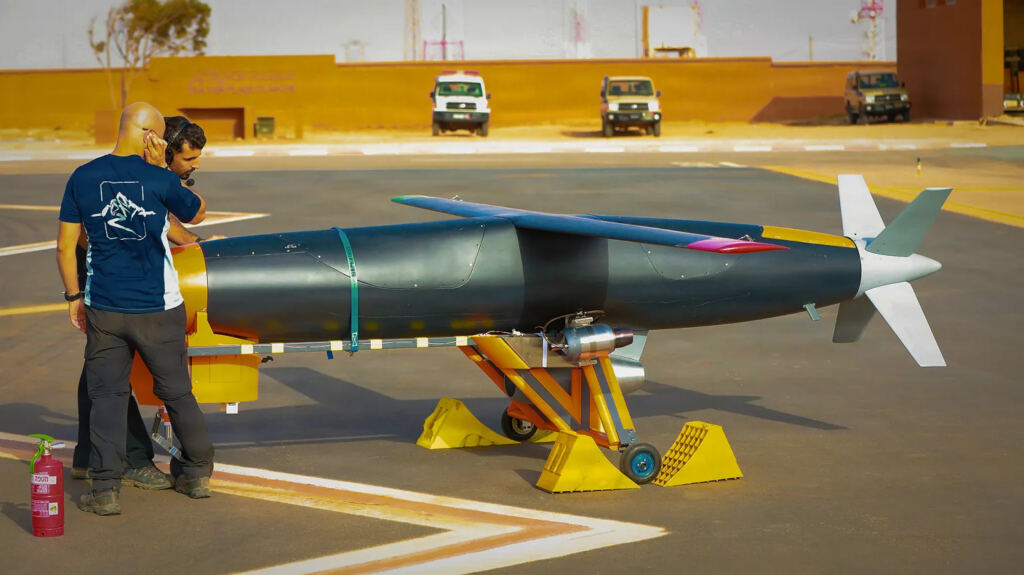
By contrast, the numbers from private companies were specific. Covenant Anthem had completed more than 200 test flights by the time of a live-fire trial in Tan-Tan, Morocco, in August 2026, and had already secured $150 million in orders. The contrast between the strategic language used by Army generals and the hard numbers in startup press releases is the real story of the AUSA stage.
When the name disappears, so does the category
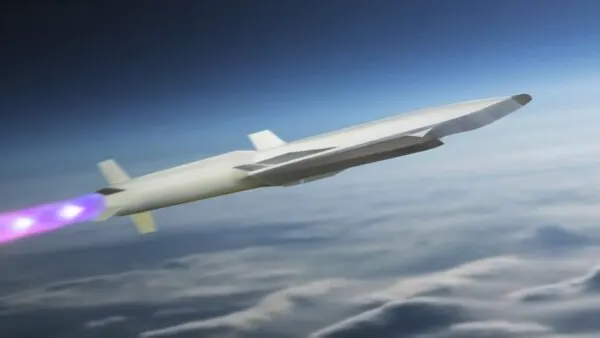
LUCAS, the Corsair USV and the Anthem missile have different functions and different customers. Yet the panel grouped all three under the single category of “launch effects.” That may reflect a broader trend in which the boundaries between long-range one-way attack drones, traditional cruise missiles and decoys are becoming blurred. As those distinctions fade, so too could the lines governing which budget accounts fund the systems and which standards apply to export controls. This remains an observation about a possible direction, but it should not be dismissed lightly: acquisition systems and export-approval procedures have long depended on clear boundaries between weapons categories.
South Korea received a doctrine—and a receipt
In June 2026, South Korea’s Ministry of National Defense announced an accelerated fielding plan for K-LUCAS, modeled on the LUCAS system that had reportedly been proven in combat during the war with Iran. The ministry said it intended to acquire more than 20,000 low-cost, expendable drones by 2030, describing them as an asymmetric strike capability against North Korean coastal artillery, missile boats and mobile launchers.
The remarks at AUSA provide an operational outline for that concept. Carpenter said the reason he favored such systems was that they are resilient against electromagnetic interference, have long range and carry enough power to destroy systems such as the SS-26 and SS-21. That targets essentially the same problem as South Korea’s kill-chain concept of detecting and striking North Korean mobile ballistic-missile systems—including the Iskander-M (SS-26 Stone) and Tochka (SS-21 Scarab)—before launch. Harrington’s mission-kill concept could likewise be adapted to disable only the radar and communications systems of North Korean naval forces, buying the South Korean Navy time to act.
The problem is cost. The U.S. Army’s LUCAS is reportedly priced at $35,000 per unit, while K-LUCAS has been reported at roughly 1 billion won per unit, or about $704,000 at the converted rate. Starting from the same basic design, the gap has grown to nearly 20-fold. South Korean outlet Biz Hankook has already pointed to the failure in cost-effectiveness, but viewed alongside the low-cost, massed-use philosophy the U.S. military described at AUSA, the gap raises questions that go beyond the numbers. It remains unclear whether a plan to acquire more than 20,000 systems can survive at a unit price of 1 billion won—or whether the quantity will be cut first.
This doctrine is aimed not at the enemy, but at Congress and allied wallets
My view is that the primary audience for the AUSA remarks was not Iran, China or Russia, but congressional budget officials and allied procurement authorities. There are two reasons. First, the panel offered an unusual lack of numbers for what was presented as a tactical doctrine. How many systems would be deployed, by when and at what cost were all left out, while conceptual language was repeated. Second, on the same stage, startup Covenant Anthem was presented with concrete figures: more than 200 test flights and $150 million in orders. Placing the generals’ ambiguity alongside the companies’ specificity suggests that the panel was less a field manual than a promotional stage aimed at the next budget cycle.
I would be wrong if the mission-kill concept is soon validated in an actual maritime engagement, or if the Army shortly releases specific requirements and budget figures for LUCAS, Anthem and the Corsair USV. So far, neither has happened.
Three things to watch
- Whether a real-world swarm-flight or large-scale live-fire demonstration of LUCAS equipped with Shield AI’s Hivemind autonomous flight system will be disclosed—from late 2026 to early 2027. If made public, it would be the first sign that the mission-kill concept is moving beyond simulation.
- Whether Covenant Anthem transitions into a formal U.S. Army acquisition program and its Leipzig, Germany, production line becomes operational—in 2027. Such a transition would help establish “launch effects” as a formal budget category.
- The specifics of K-LUCAS’s unit cost, progress toward domestic production and accelerated fielding schedule before 2030—in 2027–2028. If the price does not fall from the 1-billion-won range, the target of more than 20,000 systems is likely to be revised.
Lead photo — U.S. Army · NAVCENT
Article photo — U.S. Army
U.S. federal government works (public domain). Use of U.S. Department of Defense visual materials does not imply Department of Defense endorsement.