U.S. Air Force expands competition based on CCA Increment 2
The U.S. Air Force is simultaneously working on the concept development for the Collaborative Combat Aircraft (CCA) Increment 2 and accelerating plans for a successor to the MQ-9A Reaper unmanned aerial vehicle. While the two programs have different missions, they share a common goal of rapidly acquiring unmanned capabilities through competition among multiple companies and the use of open architectures.
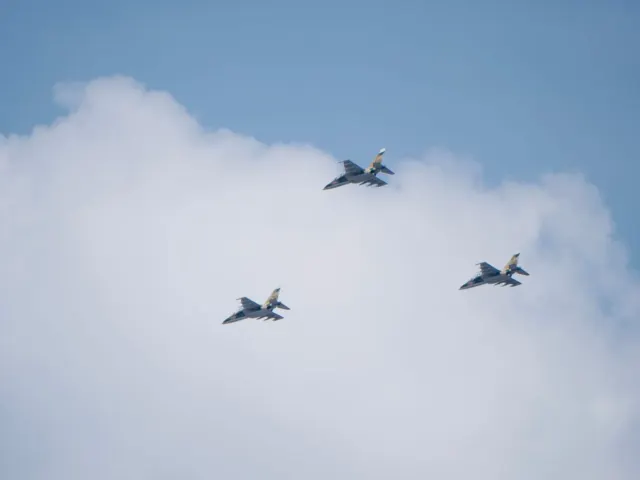
The official name of the CCA is Collaborative Combat Aircraft, which refers to semi-autonomous unmanned combat aircraft that operate in conjunction with piloted fighter aircraft. The U.S. Air Force plans to utilize CCAs to increase the detection range and survivability of manned fighter aircraft, and to expand the number of forces that can be deployed for high-risk missions.
CCA Increment 2: Approximately 20 companies are eligible to compete
According to information released by the U.S. Air Force in June 2026, nine companies are participating in the initial conceptualization phase of the CCA Increment 2 program. However, all approximately 20 companies currently included in the existing supplier pool will have the opportunity to compete in the subsequent design phase.
This does not mean that the number of candidate companies for Increment 2 has been limited to 9. Based on the results of the concept refinement and test performance, the Air Force plans to sequentially narrow down the companies that will participate in the development and production stages of the X-37B.
The detailed mission requirements and performance criteria for the Increment 2 program have not yet been publicly released. The Air Force is maintaining a competitive structure, avoiding premature dependence on specific companies or a single design, while reviewing various mission requirements and cost levels.
Increment 1: Entry into the FQ-42 and FQ-44 production stages
The U.S. Air Force signed a CCA (Combat Capability Assessment) Increment 1 engineering and manufacturing development and production contract with General Atomics for the FQ-42 and with Anduril for the FQ-44 in June 2026. The Air Force aims to acquire more than 150 combat-ready CCA platforms by 2030, including these two models.
The mission autonomy software project, which is separate from the aircraft itself, has selected six companies as potential suppliers: Anduril, General Atomics, Lockheed Martin, Northrop Grumman, RTX Collins Aerospace , and Shield AI . Among these, Anduril, Collins Aerospace, and Shield AI will participate in the initial six-month competitive phase.
According to an announcement by the Air Force, the company that will supply the autonomous software for Increment 1 is scheduled to be selected in the summer of 2027. This selection process is separate from the selection of companies for the Increment 2 aircraft program.
MQ-9A Reaper follow-on program: Conceptualization to begin by the end of 2026
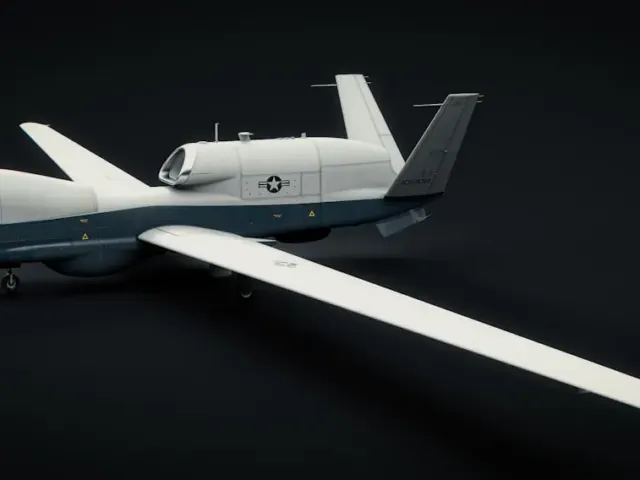
The U.S. Air Force is also establishing the requirements for a successor system to the MQ-9A Reaper, which will perform long-endurance intelligence, surveillance, and reconnaissance, as well as strike missions. According to a report by Aviation Week, the Air Force plans to begin a concept development phase similar to the CCA (Combat Air Patrol) program by the end of 2026, and will select multiple companies.
The purpose of this stage is not to immediately select a finalized follow-on model, but rather to compare the designs and technologies of various companies to concretize operational concepts, costs, productivity, and mission requirements. Therefore, it should not be interpreted as an immediate decision to decommission the MQ-9A or as the start of a full-scale production contract.
The U.S. Air Force plans to cooperate with the Defense Innovation Unit and utilize commercial technologies and non-traditional defense companies. The key requirements include lower costs compared to existing platforms, the potential for mass production, modular design, an open system architecture, and the ability to quickly replace mission equipment.
The CCA and the MQ-9 successor have different mission profiles and operational concepts
The CCA (Close Combat Aircraft) is a semi-autonomous air system that supports high-intensity combat missions such as air-to-air and strike operations, under the command of a manned fighter aircraft. In contrast, the MQ-9 follow-on program focuses on a next-generation unmanned platform designed to loiter for extended periods and perform intelligence, surveillance, and reconnaissance, as well as precision strike missions.
The Air Force plans not to decommission its existing MQ-9 fleet in the short term. According to a statement from the U.S. Air Force, it will continue to maintain the currently held MQ-9s and secure available aircraft, while simultaneously preparing a more cost-effective and mass-producible follow-on system for the long term.
The common strategy applied to both projects is to decouple the hardware and software and to adopt open standards managed by the government. This allows for faster replacement of sensors, weapons, and autonomous software, and ensures continued competition among suppliers.
Significance of the U.S. Air Force’s unmanned systems restructuring
The U.S. Air Force is building the Collaborative Combat Aircraft (CCA) not as a single unmanned combat aircraft development program, but as an aviation power ecosystem that expands performance and production through continuous competition. The official goal is to deploy approximately 1,000 combat-capable CCA units in the long term.
The MQ-9 follow-on program also prioritizes modular unmanned aircraft that can be mass-produced, even if it means accepting losses compared to a smaller number of high-cost platforms. In future competitions, factors such as flight range, payload capacity, production speed, open architecture, ease of maintenance, and software integration capabilities are expected to be key evaluation criteria.
Frequently Asked Questions (FAQ)
How many companies are participating in CCA Increment 2?
In the initial conceptualization phase, 9 companies are participating. However, in the subsequent design phase, approximately 20 companies included in the supplier pool will be able to compete.
When will the final model of the CCA Increment 2 program be selected?
The U.S. Air Force plans to narrow down the list of competing companies after the concept refinement and technology demonstration phases. However, the schedule for the final selection of the Increment 2 aircraft has not been disclosed.
Are the FQ-42 and FQ-44 models part of the CCA Increment 2 program?
No. The General Atomics FQ-42 and the Anduril FQ-44 are production models of the CCA Increment 1.
When will the competition for the MQ-9A Reaper successor begin?
The U.S. Air Force plans to begin the concept refinement phase, involving multiple companies, by the end of 2026. This is an initial competition to refine requirements and designs, not a final aircraft selection.
Does the CCA directly replace the MQ-9A Reaper?
No. The CCA is a combat air system designed to operate in conjunction with manned fighter aircraft. The MQ-9 successor will be developed primarily for long-endurance intelligence, surveillance, and reconnaissance, as well as strike missions.