- Blackbeard is not yet ready for deployment.
- This test confirmed integration, not launch.
- The key factor is not the performance of a single round, but the production volume.
- Following the HALO program, the U.S. Navy chose to shift to a different production strategy.
- The remaining hurdles are live-fire exercises and operational deployment.
- Frequently Asked Questions.
Blackbeard is not yet ready for deployment.
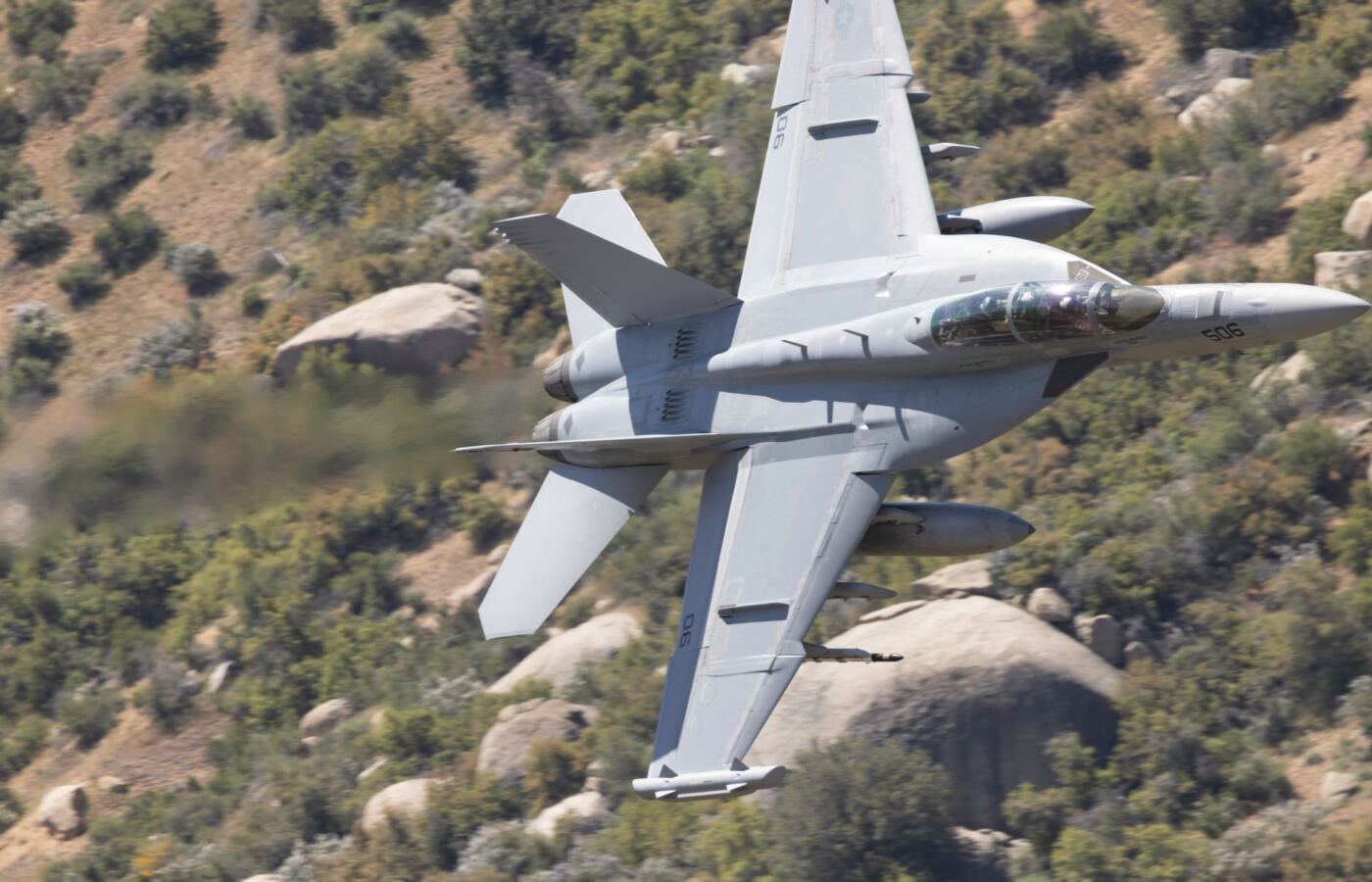
Although the new hypersonic missile was personally inspected by the U.S. Navy’s Chief of Naval Operations, the missile did not separate from the aircraft during this test. The F/A-18E/F Super Hornet flew with two Blackbeard test articles on board, but it did not involve firing the weapon or hitting a target.
The first question readers will ask is straightforward: Is the Blackbeard missile already deployable for actual combat? The answer is not yet. The Blackbeard is currently in the development and integration phase, having completed unarmed test flights mounted on the F/A-18E/F Super Hornet. The U.S. Navy is working to develop early operational capability for the missile.
The name “hypersonic” does not guarantee its maturity.
This test confirmed integration, not launch.
On October 28, 2026, Admiral Daryl Caudle, Chief of Naval Operations of the U.S. Navy, visited Naval Air Station Patuxent River in Maryland and examined the Blackbeard air-launched, long-range, hypersonic strike missile at VX-23. Related materials from the U.S. Navy were posted on DVIDS on November 2, 2026.
The U.S. Navy recently announced that it had conducted flight tests of the Blackbeard system on an F/A-18E/F Super Hornet at Pax River. The tests, which were developmental flight tests, did not involve the separation of the weapon or live firing. The aircraft and the two test articles safely returned to the airfield.
Therefore, this flight demonstrates progress in the integration of weapons and aircraft. However, it does not prove flight after separation, live firing, target accuracy, or fighter aircraft safety.
Mounting and launching are different.
It has been confirmed that the U.S. Navy describes the Blackbeard as an air-launched hypersonic strike weapon designed to engage both maritime and surface targets. However, the exact speed, range, and warhead weight have not been confirmed in publicly available information.
The key factor is not the performance of a single round, but the production volume.
Blackbeard is a weapon developed by defense startup Castelion and being pursued through the U.S. Navy’s Multi-mission Affordable Capacity Effector, or MACE, program. Unlike existing expensive, low-volume hypersonic weapons, the U.S. Navy is seeking to secure a strike capability that can be produced in relatively large quantities.
The numbers also point in this direction. In September 2026, the U.S. Navy placed a production order worth up to 200 million dollars with Castelion for the initial production and delivery of Blackbeard. The U.S. Navy’s fiscal year 2027 weapons budget proposal includes 353 rounds in the initial production batch of MACE, along with 156 million dollars for related production, logistics, and program management support.
However, the 353 rounds included in the budget do not necessarily mean that 353 items have been operationally deployed. The inclusion of quantities and amounts in the budget does not guarantee that the specified quantities will all be produced, delivered, or operationally deployed as planned.
A plan is not operational deployment.
Orders were also placed to secure Blackbeard’s early operational capability. In June 2026, an order worth $23.4 million was placed for 50 pre-production prototypes and 50 storage and transportation containers, and in August 2026, a U.S. Navy order worth $89,997,162 was finalized to advance Blackbeard’s early operational capability.
Following the HALO program, the U.S. Navy chose to shift to a different production strategy.
The U.S. Navy previously pursued the HALO (Hypersonic Air-Launched Ordnance) program, but discontinued it in 2024 due to budget constraints. Subsequently, Blackbeard has been proposed as a candidate for the MACE (Multi-mission Affordable Capacity Effector) program and is being considered for production.
In this project, the U.S. Navy emphasizes not only the highest performance. For carrier-based fighter jets to have the option to strike from greater distances, it is essential to secure sufficient ammunition for actual operations. Therefore, Blackbeard aims for relatively mass-producible ammunition rather than a single, expensive weapon.
Vice Admiral John “Doc” Dougherty IV, Commander of PAE(A) and Commander of the Naval Air Systems Command, stated, “To win in contested environments, we must deliver lethality at scale inside the operational window of relevance.” This means that in contested environments, we must provide a large amount of firepower within the timeframe that is operationally relevant.
The U.S. Navy’s air power and aircraft carrier strike groups will gain the option to attack targets at greater distances from the existing F/A-18E/F aircraft. On the other hand, taxpayers and the congressional body must observe whether the production orders, totaling up to 200 million dollars, and the fiscal year 2027 budget will actually lead to operational deployment and cost savings.
The promise of low costs has not yet been verified.
Even if the U.S. Navy and Castelion emphasize low cost and mass production, the actual mass production cost and long-term maintenance costs have not been confirmed based on currently available information. The deployment of hypersonic weapons in actual combat could reduce the warning and interception time of the opposing country, potentially leading to misjudgments in crisis situations and escalating the arms race.
The remaining hurdles are live-fire exercises and operational deployment.
The confirmed facts are clear. The Blackbeard system underwent flight tests while integrated with the F/A-18E/F Super Hornet. The tests were developmental in nature, and did not include weapon separation or live firing. The U.S. Navy is planning the initial production and delivery, and the budget includes 353 rounds of the MACE system for the initial production run.
Conversely, the exact timing of the actual operational deployment has not been confirmed. It has not been publicly confirmed whether the missiles were separated from the aircraft, whether the targets could be hit, or at precisely what Mach number the missile was flying. It has also not been confirmed that the F-35C has actually been integrated and certified.
In the future, separation tests, live-fire exercises, target accuracy verification, and aircraft safety checks will be necessary. The remaining challenges include determining whether production volume can actually be increased, and whether reliability and a military supply and maintenance system can be secured while maintaining low costs.
Rapid production does not guarantee operational readiness.
The key point of this news is not that a missile capable of being fired today has emerged. It is that the U.S. Navy is seeking to turn hypersonic weapons from a small number of high-cost assets into mass-producible munitions. Launch tests and actual production and delivery records will determine whether this initiative can be transformed into an operational capability.
Currently, Blackbeard is not a weapon deployed in the battlefield, but rather a developmental weapon undergoing testing and production transition.
Frequently Asked Questions.
Is the Blackbeard already a missile that has been deployed for actual use?
No. The unarmed developmental test flights on the F/A-18E/F Super Hornet have been completed, but weapon separation and live firing have not been confirmed.
Was the Blackbeard missile actually fired in this test?
No. The public demonstration involved a flight with two test articles mounted on the aircraft, and no weapons were separated from the aircraft or fired in live tests.
What is the exact range and speed of the Blackbeard?
The exact range and speed have not been confirmed through publicly available information. The warhead weight and actual unit price have also not been finalized.
Can Blackbeard be installed on the F-35C?
It has not been confirmed that Blackbeard was actually integrated and certified for the F-35C. The tests that have been publicly disclosed have been conducted on the F/A-18E/F Super Hornet.
How many Blackbeard missiles is the U.S. Navy planning to produce?
The fiscal year 2027 defense budget includes an initial production batch of 353 rounds of the MACE. However, the quantity in the budget proposal does not necessarily mean that the specified quantity will be produced, delivered, and operationally deployed as planned.