- A new, fast transport aircraft, but it has not yet taken off.
- While there is a deployment plan for the year 2030, the schedule and operational capabilities are different.
- Why are new wings being added to the Black Hawk helicopters?
- First, before considering the performance specifications, the most important things to prepare are the people and the systems.
- Who will benefit, and who will have to wait longer?
- “What has been confirmed so far, and what spaces are still available.”
- Frequently Asked Questions.
A new, fast transport aircraft, but it has not yet taken off.
A new transport aircraft, capable of taking off and landing like a helicopter and traveling long distances quickly like an airplane, will become the U.S. Army’s next air assault platform. Its name is MV-75, and it is commonly referred to as Cheyenne II. However, as of November 8, 2026, there is no official confirmation that it has completed its first actual flight.
The question that readers are most interested in is when it will be available for use in military units. The U.S. Army’s official plan is for initial deployment in the early 2030s, but the necessary initial flight tests and evaluations have not yet been confirmed.
The plan was ahead of schedule.
While there is a deployment plan for the year 2030, the schedule and operational capabilities are different.
The U.S. Army announced in August 2024 that the FLRAA (Future Long Range Assault Aircraft) program had passed Milestone B. At that time, the plan was for the first flight in 2026, low-rate initial production in 2028, and initial deployment in 2030. In May 2025, the Army designated the mission design series of the FLRAA as MV-75, and announced that the first prototype would be called the YMV-75A.
The first unit to operate the aircraft will be the 101st Airborne Division. The U.S. Army announced that the aircraft are scheduled to arrive at Fort Campbell starting in 2030. The division’s mission characteristics, which include long-range airborne operations and limited support facility environments, align with the development objectives of the MV-75.
However, a 2025 document stated that the system could be operationally deployed to the unit by 2028. Other official documents indicate that the initial deployment and arrival at Fort Campbell are scheduled for 2030. Therefore, it is difficult to consider 2028 as a confirmed operational deployment date. It is possible that the 2028 date was a projection or an attempt to accelerate the schedule.
It is scheduled to arrive in 2030, but the complete replacement of all units will not be finished by then.
The MV-75 is not a successor that will immediately replace the Black Hawk. The direction indicated by the Army and the project documents is to enhance the UH-60 operational capability and, in the long term, replace some of them. It is unlikely that, starting in 2030, all units of the U.S. Army will use this aircraft, or that the Black Hawk will be completely phased out at the same time.
The first unit receives it first.
Why are new wings being added to the Black Hawk helicopters?
The Future Long Range Assault Aircraft (FLRAA) program is a project to develop a next-generation medium-sized vertical takeoff and landing (VTOL) aircraft that will supplement the existing H-60 Black Hawk operational capability and take over some of its missions. Bell Textron is conducting the project based on the V-280 Valor technology demonstrator. The company was selected as the development contractor on December 5, 2022. An objection raised against the selection, concerning the competitor Sikorsky-Boeing’s SB>1 Defiant, was rejected by the U.S. Government Accountability Office on April 6, 2023.
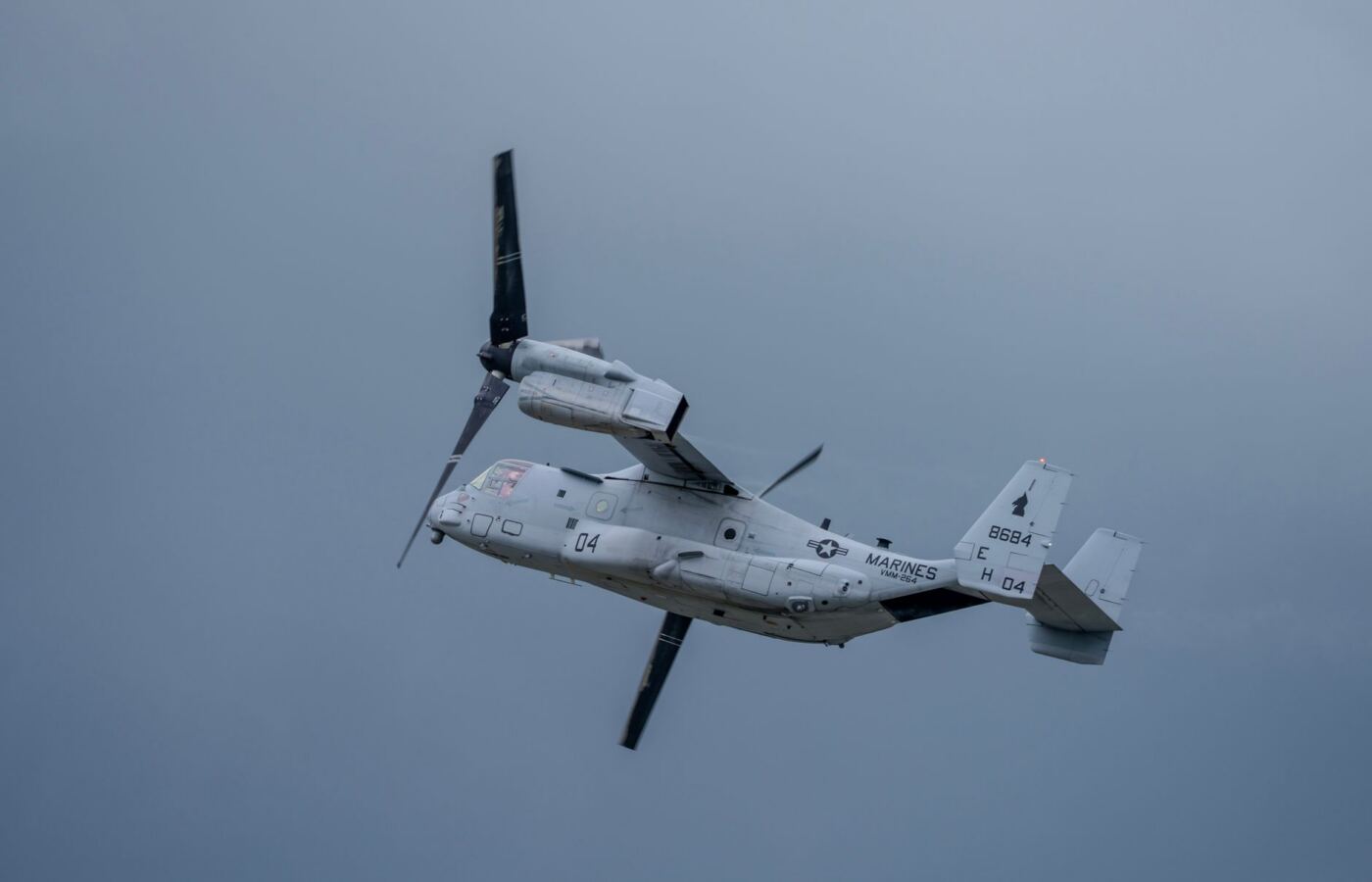
The key feature is the tiltrotor design. When the rotor is positioned vertically, it allows the aircraft to take off and land like a helicopter. When the rotor is tilted forward, it enables the aircraft to achieve speed and range comparable to a fixed-wing aircraft. The U.S. Army states that this design aims to achieve twice the range and twice the speed compared to existing rotorcraft.
The mission is not limited to airborne assaults. It is also planned to be used for tactical resupply, medical evacuation, and support for special operations. In situations requiring long-range transport and rapid delivery, the ability to reach more distant locations and reduce travel time can be a significant advantage. In wartime or disaster situations, the faster evacuation of the wounded is directly linked to the survival rate of the soldiers.
However, “double” is not a reflection of actual performance. It is still a development goal. Bell’s product specifications state a combat radius of 500+ nautical miles, a speed of 280 knots, a crew and troop capacity of 2+12, and a payload capacity of 12,000+ pounds. It is important to distinguish between the figures in the manufacturer’s data and the official test results of the Army.
Being fast does not mean being all-powerful.
First, before considering the performance specifications, the most important things to prepare are the people and the systems.
A tiltrotor is not simply a gas turbine added to a helicopter. Its control methods and maintenance procedures are different. New manuals and training programs must also be developed. The U.S. Army is examining the Marine Corps’ experience with the MV-22 Osprey, including its operation, maintenance, and pilot training.
Sergeant First Class Joshua Baker, a trainer and developer for the U.S. Army’s FLRAA (Future Long-Range Assault Aircraft), explained that the familiarization process is not just about flying. It is a process for understanding the entire ecosystem that comes with operating the tiltrotor aircraft. Simply delivering the aircraft to a unit does not complete the operational capability.
According to Army documents from October 2026, the design of the cockpit display system and cognitive workload is ongoing, utilizing soldier evaluations and simulators. It was stated that these results will influence the first flight and subsequent delivery. In February 2026, it was reported that the first MV-75 prototype was under construction, and in October, design work and user evaluations continued in preparation for the first flight.
Therefore, the central point of contention is not a single aircraft. The transition from “deployment” to “operational use” requires pilots to become familiar with the aircraft, mechanics to handle malfunctions, and units to secure the necessary parts and facilities. Simply accelerating the delivery date of the aircraft may achieve operational capability on paper, but it can halt actual operations in the field.
If the system development lags behind the aircraft development, the operational capability will also be delayed.
The Army Aviation Program Execution Office stated that it will provide next-generation combat capabilities that meet the requirements of cost-effectiveness, survivability, maintainability, reliability, and safety. However, the time when this promise is proven through actual performance and safety will only be determined after flight tests and initial operational deployment.
Who will benefit, and who will have to wait longer?
The units that will benefit most directly are those that conduct long-range air assault and medical evacuation operations. If the MV-75 achieves its target speed and range, it will expand the operational radius of existing helicopters, reducing the time required to transport personnel, supplies, and patients. This is also the reason why the 101st Airborne Division was selected as the first unit to operate the MV-75.
On the other hand, pilots, maintenance personnel, and training developers face the burden of learning to operate new equipment. The Black Hawk already has established operational personnel, as well as a system of spare parts and manuals. New aircraft require a cost in terms of learning and training, even as they offer improved performance.
Taxpayers and the National Assembly are also stakeholders. Long-term budgets are required not only for development costs but also for production, maintenance, training, and facility construction. The final number of units purchased, the total project cost, and the deployment schedule for each component are difficult to determine based solely on publicly available information. Delays in the schedule or failure to meet performance expectations can lead to increased costs and issues with procurement priorities.
It is not possible to quickly decommission the Black Hawk helicopters. The Black Hawk is a proven operational capability, already equipped with trained personnel and a maintenance, parts, and doctrine system. While the MV-75 may be faster and have a longer range, in complex battlefields, air defense systems, electronic warfare capabilities, refueling, and parts supply are crucial for mission success.
The new aircraft is not limited to the Black Hawk.
“What has been confirmed so far, and what spaces are still available.”
The confirmed facts are clear. The U.S. Army has selected Bell Textron as the contractor for the FLRAA program. The program is named MV-75, and the 101st Airborne Division has been designated as the initial operating unit. The plan includes a first flight in 2026, initial production in 2028, and initial deployment in 2030.
However, as of November 8, 2026, there is no official confirmation that the first flight has actually been completed. In April 2026, a senior official also did not provide specific dates for the first flight and production schedule. Even in materials released in October, design work and user evaluations were still ongoing before the planned first flight.
Even if the delivery of a test aircraft is mentioned for the end of 2026, it does not mean complete operational capability or the full operationalization of the unit. The first flight, test evaluation, low-rate production, initial deployment, and sufficient operational capability are all distinct milestones.
The year 2030 is a starting line, not a finish line.
In the future, what needs to be verified is not the name’s grandeur. Instead, it is the actual flight performance of the first prototype, the results of the test evaluations, the commencement of production, the delivery of the aircraft to the 101st Airborne Division, and the operational status of the pilot, maintenance, and parts systems. Only when these aspects are confirmed will the year 2030 transition from a promotional phrase to a concrete schedule.
The true test of the MV-75 lies not only in how quickly it flies, but also in how consistently it can operate, be maintained, and return to service. The current timeline is clear: the initial deployment is planned for 2030. However, whether the MV-75 can actually replace some of the missions currently performed by the Black Hawk can only be determined after the first flight, comprehensive testing, and the establishment of operational procedures.
Currently, the plan comes first.
Frequently Asked Questions.
When will the MV-75 be deployed to U.S. military units?
The U.S. Army’s official plan is to begin initial deployment starting in 2030. The 101st Airborne Division has been designated as the first unit to operate the aircraft, and the aircraft are scheduled to arrive at Fort Campbell. However, the date of the first flight of the actual prototype and the completion of the test evaluation have not yet been officially confirmed.
Did the MV-75 have its first flight in 2026?
As of November 8, 2026, there has been no official confirmation that the actual first flight has been completed. While the Army planned for the first flight in 2026, design work and user evaluations continued until October 2026, preceding the planned first flight.
Does the MV-75 completely replace the Black Hawk?
No. The MV-75 has been described as an aircraft intended to supplement the operational capability of the Black Hawk helicopters and, in the long term, replace some of them. Even if deployment begins in the early 2030s, not all Black Hawk helicopters will be immediately decommissioned.
What are the advantages of the MV-75 compared to the Black Hawk?
The goal is to combine the vertical takeoff and landing capabilities of helicopters with the speed and range of airplanes by utilizing a tiltrotor structure. The Army claims that this new system will offer twice the range and twice the speed compared to existing rotorcraft, but this is a development goal, not a proven operational capability.
Has the safety and maintenance burden of the MV-75 been confirmed?
It is still difficult to make a judgment. The Army is designing the cockpit, cognitive workload, and maintenance and training systems, and is also referring to the Marine Corps’ experience with the MV-22. The actual accident rate and maintenance time can be evaluated after the test flight data and initial operational data of the aircraft are released.