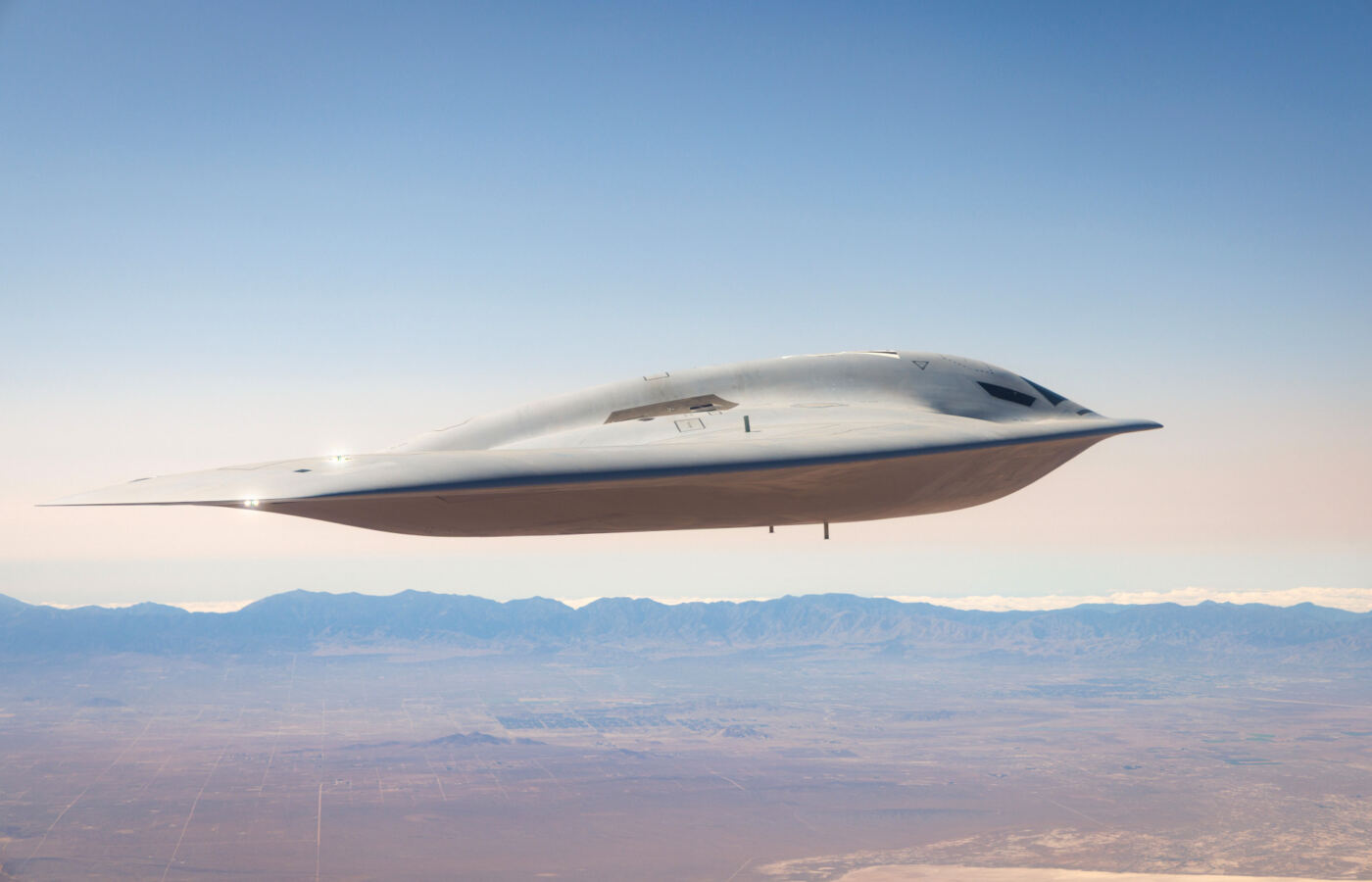
- A blank space larger than a single bomb.
- Just because the armory doors have opened does not mean that the preparations for battle are complete.
- The schedule for the announcement, which cost 4,500,000,000 dollars.
- There is a definite schedule between the delivery date in 2027 and the capability date in 2028.
- The author’s opinion: What the B-21 needs now is not a declaration of completion, but the confidence to support increased production.
- The following three factors determine the quality of the test.
- Frequently Asked Questions.
- Questions
- Questions
- Questions
A blank space larger than a single bomb.
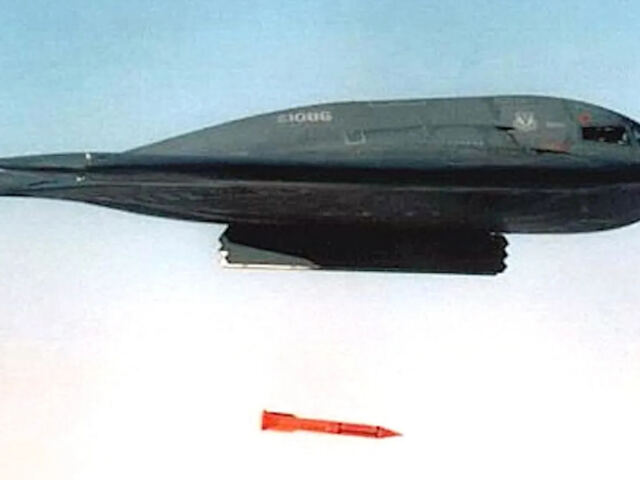
The B-21 Raider, for the first time, dropped conventional weapons from the air, but what the United States revealed was not the name of the weapon, its trajectory, or the results of the impact. It concealed the most important aspect of the penetration bomber testing and left behind the message it wanted to convey.
On November 13th, the U.S. Air Force and the prime contractor, Northrop Grumman, announced that a B-21 test aircraft had taken off from Edwards Air Force Base in California during the first week of November and deployed a conventional weapon, the identity of which has not been disclosed. This is the first publicly known weapons deployment test.
This test is significant because it represents the first step in transitioning the B-21 from a flight-capable stealth aircraft to a bomber with a fully integrated mission system. However, a single weapons separation test is not a complete demonstration of combat capability; rather, it is more like a ticket to a more complex and lengthy certification process.
Just because the armory doors have opened does not mean that the preparations for battle are complete.
Outwardly, the U.S. Air Force confirmed that the new bomber is capable of carrying weapons and deploying them to targets. The Air Force stated that this testing validated the maturity of the digital model and the open systems architecture, emphasizing the design philosophy that allows for the rapid integration of new weapons.
However, what has been confirmed is related to the separation and deployment of one undisclosed conventional weapon. The type of projectile, whether it was a live round, the guidance method, the deployment altitude and speed, the operation of the weapon bay, the target hit data, and the impact on stealth performance have not yet been confirmed. The fact that a weapon detached from the unmanned vessel during testing is not the same as the fact that the weapon penetrated enemy air defenses and hit the target.
The B-21 is designed as a dual-purpose aircraft capable of carrying both nuclear and conventional weapons. To operate the aircraft with a combination of long-range standoff nuclear cruise missiles (AGM-181A Long Range Stand-Off, LRSO), nuclear and conventional gravity bombs, and long-range conventional missiles, it is necessary to verify not only the integration of each weapon system but also the sensors, electronic warfare capabilities, networking, maintenance, and operational readiness. Nuclear certification is a separate process, and congressional guidelines require nuclear weapon operation certification within 2 years of achieving Initial Operational Capability (IOC).
There are currently two test aircraft flying at Edwards. After the second aircraft arrived in September 2025, testing of its weapons and mission systems expanded substantially, and in June 2026, an operational test pilot flew alongside a development test pilot. Increasing the number of test platforms from one to two provides a foundation for accelerating the pace, but it does not mean that the entire weapons inventory has been certified quickly.
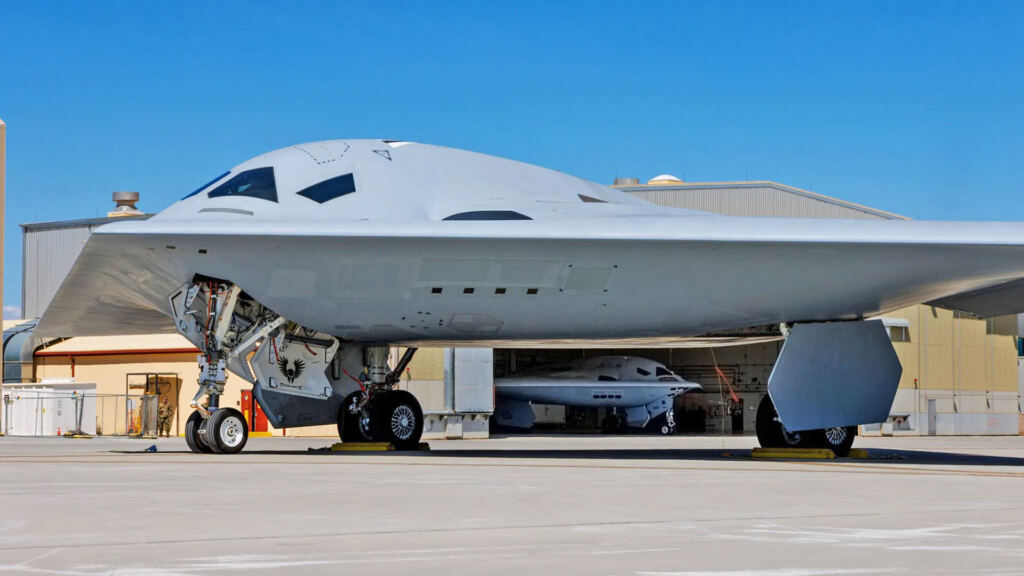
The schedule for the announcement, which cost 4,500,000,000 dollars.
This announcement is both technology news and proof of the production policy. The U.S. Air Force and Northrop Grumman have agreed to increase annual B-21 production capacity by 25% by allocating $4.5 billion in February 2026. In other words, they are expanding production capacity before development testing has been fully completed.
The U.S. Department of Defense‘s total FY2027 budget request for B-21 research, development, and procurement is $6.1087 billion. The average procurement unit cost, based on the premise of acquiring at least 100 aircraft, is presented as $692 million (in 2022 fiscal-year dollars). For a program of this scale, the first weapons drop is not merely an achievement of the test team. It is a moment that gives Congress the impression that ramping up production is not a reckless gamble and sends the supply chain a signal of long-term orders.
The problem is that parallel development and production, while saving time, can increase modification costs. If design and testing results change late in the process, the modifications will have to be applied to already installed production equipment and initial production runs. Digital engineering is a tool for compressing time; it is not an eraser that eliminates physical laws and certification procedures.
In South Korea, this has the meaning of a long-term extended deterrence signal. This is because the B-21 is scheduled to be part of the United States’ nuclear triad’s air power and a long-range conventional strike capability. However, this testing is being conducted in the United States, and plans for deployment in South Korea, missions on the Korean Peninsula, or a joint operation plan between South Korea and the United States have not been announced. The direct impact is not significant.
There is a definite schedule between the delivery date in 2027 and the capability date in 2028.
The Air Force maintains its goal of having the first operational B-21 arrive at Ellsworth Air Force Base in South Dakota in 2027. However, data from the Air Force Global Strike Command dated February 2026 indicated that initial operational capability is scheduled for 2028.
The two are more likely to be different milestones than contradictions. An aircraft arriving at a base is different from having the training and maintenance systems in place to carry out limited operational missions. Parking an aircraft on a runway makes for a photograph, but availability rates and weapons certification generally do not.
The B-2 Spirit, after its first flight and first weapons drop, achieved initial operational capability, but the B-21 differs in its development and procurement methods, as well as its security environment, so a simple comparison is limited. The B-21 utilizes test aircraft with high production representativeness and digital design to reduce time. The answer to that claim does not come from promotional videos, but from subsequent weapons integration and operational testing data.
The author’s opinion: What the B-21 needs now is not a declaration of completion, but the confidence to support increased production.
I believe the primary objective of this presentation is not to demonstrate the completed attack capability of the B-21, but rather to provide political support for the current strategy of simultaneous development and production. First, the Air Force has already initiated a plan to expand production capacity by 25% at a cost of $4.5 billion, and it needs to explain this long-term project involving at least 100 units to the Congress and the supply chain. Second, given that the target date for the arrival of the first operational unit is 2027, it is no longer sufficient to rely solely on flight performance; it is now necessary to shift the narrative to actual weapon deployment.
Therefore, this latest demonstration is a small but calculated milestone. It showed the market and Congress not how well a particular weapon was operated, but that the B-21 had entered the mission systems testing phase. While information gaps in classified programs are always present, the wider the gap, the more important the scope of the next test becomes compared to the content of the announcement.
If my assessment is wrong, it will be because qualitative test data—such as ammunition types, hit results, and the integration of multiple weapons—will be disclosed more quickly and in greater detail than expected over the next few months. In that case, this announcement should be reassessed not as an attempt to create a justification for increased production, but as an interim report on the maturation of actual capabilities.
The following three factors determine the quality of the test.
- Whether test ordnance and drop photos and videos will be released in the coming months will provide an indication of how far the B-21’s weapons separation testing has progressed.
- The question is whether the integration and certification schedules for individual weapons, including LRSO, the JASSM family, and gravity bombs, are presented for after 2027. If these schedules are provided, it will be possible to assess the speed at which the system transitions from single-drop capability to multi-mission capability.
- It will be possible to determine whether the delivery of the first B-21 to Ellsworth Air Force Base and the criteria for initial operational capability will take concrete shape in 2027–2028 and, if they do, to ascertain the gap between the delivery year and the year it is actually fielded.
Frequently Asked Questions.
Questions
Has the B-21 been deployed for actual use as a result of this testing?
It is not. This is the first publicly known development test involving a conventional weapon drop. The Air Force maintains its goal of having the first operational aircraft arrive at Ellsworth Air Force Base in 2027, and some documents indicate an initial operational capability in 2028.
Questions
What weapons were deployed this time?
The U.S. Air Force stated that the object was identified as a conventional weapon, but it did not disclose the identity of the weapon. Details such as the type of munition, quantity, guidance method, whether it was a live round, and the results of target impact were not released.
Questions
Has there been a plan to permanently deploy the B-21 to South Korea or Guam?
The plans for the permanent deployment of B-21 aircraft in South Korea or Guam have not been confirmed in this announcement or in official public materials. The main operating bases that have been publicly announced are Ellsworth, Whiteman, and Dyess Air Force Bases.
Representative photo: U.S. Air Force · USAF Article photo: U.S. Air Force · USAF This is a work of the United States Federal Government and is in the public domain. The use of U.S. Department of Defense visual materials does not imply endorsement by the Department of Defense.