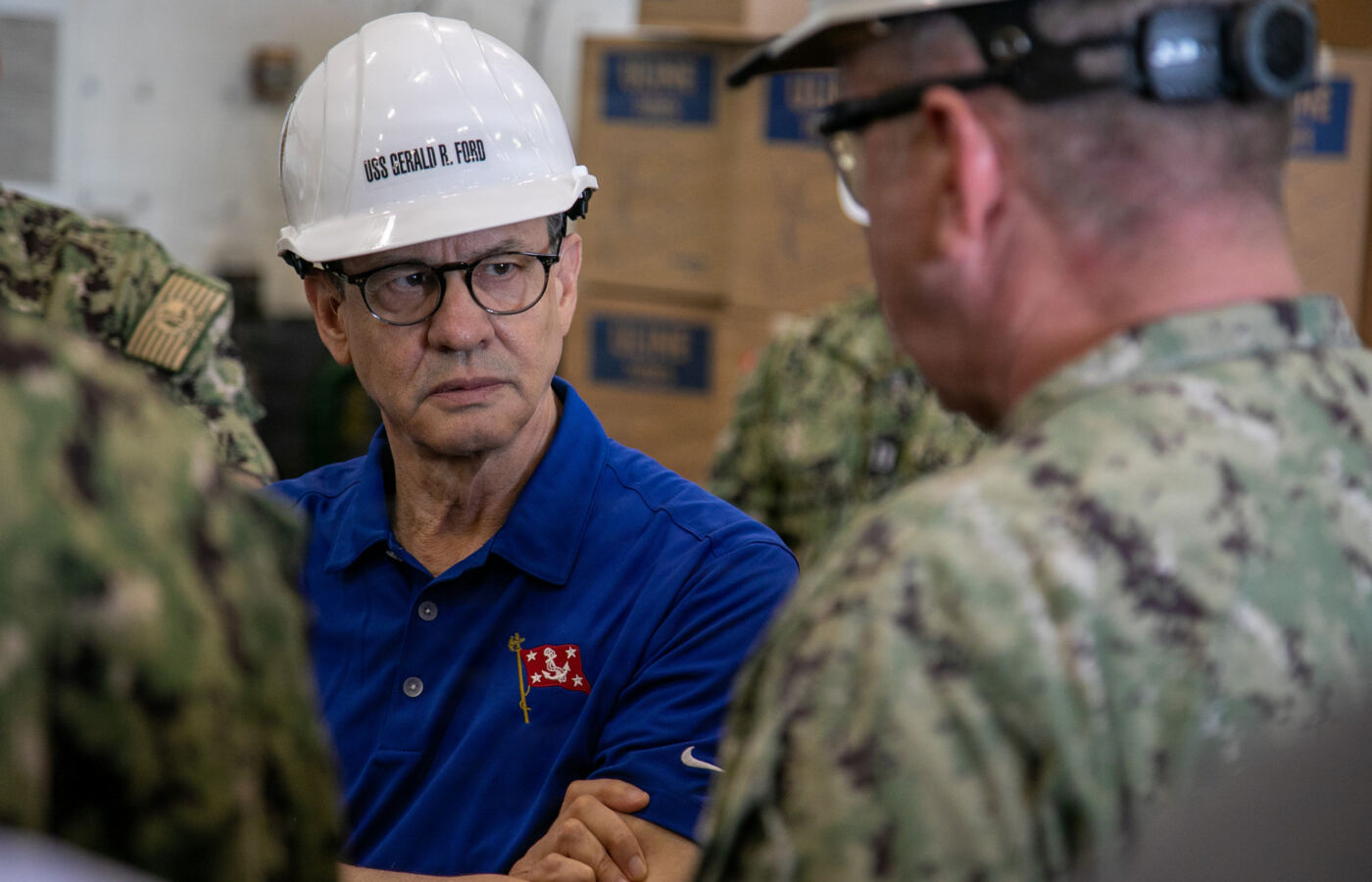
- Aircraft carriers that do not wait for future fighter jets.
- The F/A-XX is a goal, but the CCA is a guaranteed asset.
- The problem is not a single drone, but an aircraft carrier, which is a factory.
- The Navy’s true goal, spearheaded by the F-35C, is not the introduction of unmanned aerial vehicles, but rather the establishment of control.
- The next signal originates from the budget table and the testing conducted on the deck.
- Frequently Asked Questions.
- Does this mean the F/A-XX program is delayed?
- Will the F-35C definitively control aircraft carrier CCA?
- Is X-BAT the aircraft for the Navy’s CCA main program?
Aircraft carriers that do not wait for future fighter jets.
Eleven years ago, the U.S. Navy successfully demonstrated unmanned aircraft carrier launch and landing, as well as autonomous aerial refueling, using the X-47B Unmanned Combat Air System Demonstrator. However, the unmanned carrier-based attack aircraft did not transition into operational service, and that role was subsequently filled by the MQ-25 Stingray unmanned refueling aircraft.
This time, the order is reversed. Instead of developing the Boeing’s next-generation carrier-based fighter (F/A-XX) and then integrating it with the Collaborative Combat Aircraft (CCA), the plan is to enable the existing F-35C Lightning II carrier-based stealth fighter, already deployed on aircraft carriers, to operate unmanned aerial vehicles together.
William J. Totti, the nominee for Under Secretary of the Navy, stated at the Senate Armed Services Committee hearing on November 19th that CCA system integration could begin even before the delivery of the F/A-XX, and that it could also be applied to the F-35. In other words, the Navy has publicly declared that it will not tie the entire unmanned carrier aircraft fielding program to the schedule of the 6th generation manned fighter.
The F/A-XX is a goal, but the CCA is a guaranteed asset.
Outwardly, this is a parallel investment for the next-generation aircraft carrier air wing. The F/A-XX is intended to maintain the qualitative superiority of manned fighter aircraft, while the CCA is designed to expand the quantity of capabilities such as reconnaissance, electronic warfare, deception, missile carriage, and communication relay. Totti explained that 5th generation aircraft, upgraded existing platforms, 6th generation capabilities, and unmanned aerial vehicles each offer distinct operational advantages.
The actual events are more realistic. In the F/A-XX program, Boeing only received the technology development and manufacturing development contracts in September 2026, and the exact flight testing and aircraft carrier deployment schedules have not yet been confirmed. While the legislature allocated an additional $897,260,000 above the president’s budget request for the 2026 fiscal year to push forward the development contract, the requested amount for the 2027 fiscal year is $140,600,000. The fact that the legislature has once provided support does not automatically guarantee a smooth project schedule.
The Navy already issued a request for information on August 31st for the first prototype of the CCA Increment program, which is designed to operate with aircraft carriers. While the F/A-XX program represents the future vision for carrier-based air wings, the CCA program is an effort to acquire components that can be implemented immediately, even if the future vision is delayed. This decision is based on the understanding that waiting for future fighter jets should not leave the current fleet without necessary capabilities.
This decision also puts Boeing in a peculiar position. Boeing is the prime contractor for the F/A-XX program, but it is also involved in the conceptual design of the carrier-based CCA (Carrier-Based Combat Aircraft). While this presents an opportunity to supply both manned and unmanned aircraft, it also creates a structure that ensures the modernization of the carrier air wing will not be halted even if the F/A-XX program is delayed. This design prevents the prime contractor from monopolizing the entire timeline.
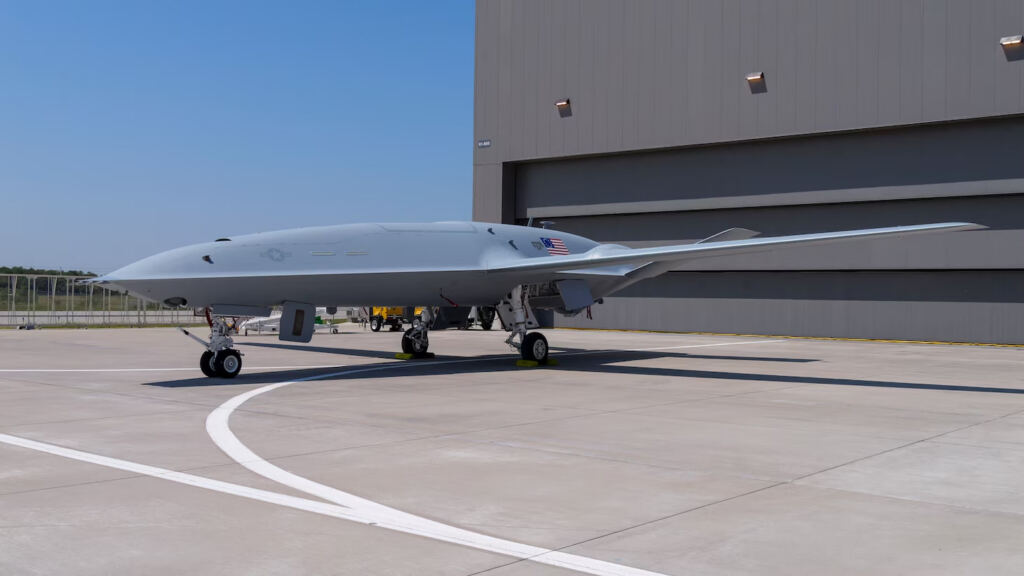
The problem is not a single drone, but an aircraft carrier, which is a factory.
It is a misconception to commonly imagine a CCA as a single unmanned wingman. What the Navy wants is a system that shares data, sensors, and missions. However, using unmanned aircraft on an aircraft carrier is different from launching drones from a runway. Launching and landing, sea conditions, precision guidance, flight deck space, hangar maintenance, weapon reloading, and communication bandwidth must all be managed simultaneously with the existing aircraft carrier air wing.
The Increment 1 Request for Information (RFI) stipulated requirements that were both compatible with existing nuclear-powered aircraft carrier (CVN) infrastructure and existing personnel operations, while also demanding extended range, increased payload capacity, and minimal deck space occupation. One example of the requirement for reconfigurable weapon carriage was the specification of four weapons, each with a maximum weight of 2,500 pounds. The phrase “low cost and expendable” directly contradicts the expensive and demanding requirements encountered the moment a carrier aircraft lands on the deck. The flight deck on a ship at sea is significantly smaller than the presentation space of a drone startup.
The Navy completed a demonstration using two BQM-177A surrogate drones, including an autonomous mission beyond the remote operator’s line of sight. This is undoubtedly a significant advancement. However, the surrogate demonstration did not replicate a battlefield environment that includes electronic warfare, communication jamming, enemy air defense systems, multiple armed Common Carrier Avatars (CCA), and an overload of manned pilots all at once.
The fact that Toti specifically mentioned the F-35C is therefore both a technological and an industrial statement. Although Boeing won the prime contract for F/A-XX, if the common control system involving Lockheed Martin, along with the F-35C’s mission computer and data link, occupies the initial control layer, the center of the carrier air wing will shift from airframe configuration to software and data authority. However, it has not been established that the F-35C will be the sole or primary control platform for the first CCA.
This project does not directly affect South Korea. It is not the case that the operation of the South Korean Air Force’s F-35A or the application of a carrier-type CCA to the South Korean Navy’s power will happen immediately. However, if South Korea intends to integrate the KF-21 with unmanned combat aircraft, multi-purpose unmanned aircraft, and communication satellites, the question remains the same. The issue of who defines the boundary between mission data and autonomy, and who maintains control in an electronic warfare environment, is a more critical issue than the promotional phrase that manned aircraft control unmanned aircraft.
The Navy’s true goal, spearheaded by the F-35C, is not the introduction of unmanned aerial vehicles, but rather the establishment of control.
I see the essence of this statement as an effort to seize control of the carrier air wing’s command structure first, rather than introduce drones early. First, the Navy explicitly highlighted the possibility of operating CCA with the F-35, despite not having disclosed even the detailed schedule or official designation of the F/A-XX. Rather than waiting for future platforms to be completed, by testing existing platforms as control nodes, the Navy can build up mission systems, data links, and autonomy rules first, regardless of delays in aircraft development.
Second, the Navy’s requirements emphasize existing carrier infrastructure, open mission systems, common control systems, and integration with existing personnel rather than mere flight performance. The decisive factor in the carrier CCA competition is likely to be not who designs the coolest unmanned aircraft, but who can operate multiple aircraft and software systems on the flight deck with the least confusion. Fighter aircraft are visible, but control authority is usually hidden in contracts and code.
If my judgment is wrong, it would be because the Navy is using F-35C integration only as a limited transitional test and is rapidly converging on a closed control system centered on the F/A-XX. In that case, the CCA would come to resemble peripheral equipment for next-generation manned aircraft rather than an independent force pillar. Based solely on the information currently available publicly, it is impossible to determine with certainty which direction it will take.
The next signal originates from the budget table and the testing conducted on the deck.
- The resumption of the Naval Air Systems Command (NAVAIR) Increment 1 industry briefing and the announcement of a prototype contract, expected to occur between the end of 2026 and 2027, would indicate that the CCA (Carrier-Based Aviation) program has progressed from the conceptual design phase to actual competition.
- Once it is confirmed how much the budgets for the F/A-XX and the Navy’s CCA are increased compared to the President’s proposal during the FY 2027 appropriations process, it will reveal the priorities that Congress places on manned and unmanned aircraft.
- Once it is revealed which of the F-35C, the EA-18G Growler electronic warfare aircraft, or the F/A-18E/F Super Hornet carrier-based fighter-attack aircraft will become the first control node in actual flight demonstrations after 2027, the power map of the carrier air wing will become apparent.
Frequently Asked Questions.
Does this mean the F/A-XX program is delayed?
There is no basis to make such a definitive statement. While Boeing was awarded the technology development and manufacturing development contracts for the F/A-XX in September 2026, the exact dates for the first flight, initial operational capability, and aircraft carrier deployment schedule have not been disclosed.
Will the F-35C definitively control aircraft carrier CCA?
Toti stated that the CCA capability could also be used with the F-35, but the F-35C has not been definitively confirmed as the sole or primary control platform. The EA-18G and F/A-18E/F are also potential candidates.
Is X-BAT the aircraft for the Navy’s CCA main program?
It is not. The X-BAT vertical takeoff and landing unmanned combat aircraft (X-BAT AI-piloted VTOL aircraft) is a separate project being pursued under the Runway Independent Maritime Expeditionary Strike (RIMES) program. It should not be confused with the aircraft carrier CCA procurement or the main project budget.
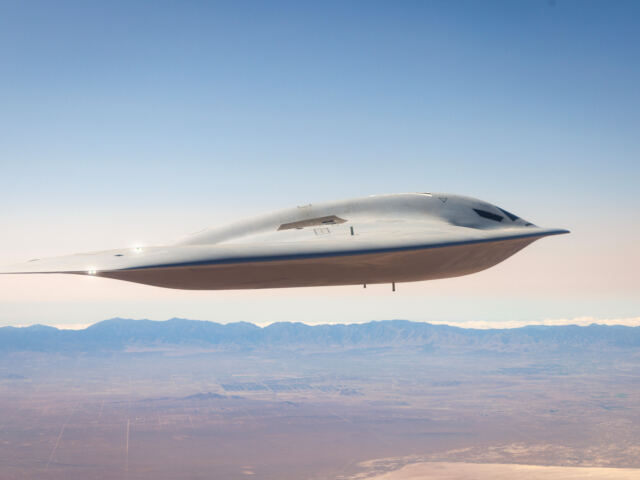
Representative photo: U.S. Navy · USN Article photo: U.S. Navy · USN This is a work of the United States Federal Government and is in the public domain. The use of U.S. Department of Defense visual materials does not imply endorsement by the U.S. Department of Defense.