- A mortar shell fell from a drone inside the warehouse.
- Why did the Army choose to use existing ammunition instead of new ammunition?
- Drone deployment is not a new tactic, but rather a tactic that the military is standardizing.
- There is still a gap between successful testing and actual deployment.
- Who will gain, and who will be at greater risk?
- The next challenge is not an explosion, but repeated operation.
- Frequently Asked Questions.
A mortar shell fell from a drone inside the warehouse.
A mortar round, previously fired from a ground-based mortar launcher, was this time dropped from a moving drone. The U.S. Army stated that it attached the MALET detachable kit to an existing 60mm mortar round and dropped it, and that the round exploded within the target area after being properly aligned.
Here is the question that readers are most likely to ask first: So, is MALET already an operationally fielded weapon? The conclusion I have reached is clear. While it has successfully passed live-ammunition drop tests, as of November 6, 2026, MALET is still in the testing and soldier feedback collection phase. The timing of its actual fielding has not been disclosed.
This new bomb was not created from scratch.
Why did the Army choose to use existing ammunition instead of new ammunition?
MALET is a Munitions Air-dropped Lethal Effects Tool developed by the U.S. Army DEVCOM Armaments Center. It is a device that is attached to 60mm and 81mm mortar rounds and provides the necessary fuze functions and aerodynamic stability when dropped from a drone.
Conventional mortar rounds are designed to be fired from a mortar barrel. If simply dropped from the air, it is difficult to guarantee the round’s orientation and the functioning of the fuze. The MALET is a device designed to address this limitation. The Army explained that the kit is designed to be attached and detached without damaging the round, and that rounds that have not been dropped can be reused as standard mortar rounds.
The advantage of this system is evident in the logistics warehouse. It allows existing ammunition to be connected to different delivery methods without the need to procure a large quantity of new, dedicated drone bombs. An official from the Army stated that soldiers can use 60mm and 81mm mortar rounds, which are already in sufficient supply, instead of having to procure separate ammunition specifically designed for drones.
Rather than creating new ammunition, this amounted to expanding its uses.
However, it is premature to call this a direct cost reduction. The prices of the MALET key kits, the drones that will incorporate them, and the communication, training, and maintenance costs have not been disclosed. Simply using existing inventory does not necessarily mean that the overall project cost has decreased. It is not uncommon for inexpensive ideas in defense procurement to evolve into expensive systems.
Drone deployment is not a new tactic, but rather a tactic that the military is standardizing.
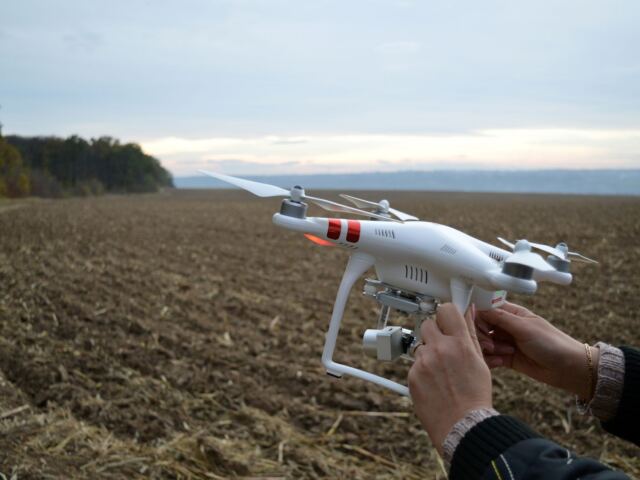
The tactic of dropping explosives from drones was not invented by the U.S. Army. The Islamic State (IS) attached and dropped small explosives, including grenades, from commercially available drones during the 2016–2017 Battle of Mosul. A U.S. Army professional journal explained that this method was also used in the war in Ukraine, with small unmanned aerial vehicles dropping grenades and mortar shells.
An interesting point is that the spontaneous methods that initially spread among non-state armed groups on the battlefield are now becoming candidates for standardization within the military. In September 2025, the U.S. Army conducted a test at the Grafenwoehr training ground in Germany, using a Skydio X10 Delta drone to drop 117 live M67 grenades. The MALET project is part of a broader effort to expand this concept to larger, existing mortar rounds.
In my opinion, the key issue is not the performance of a single explosive device. It is how quickly, safely, and repeatedly drones can be connected with various payloads. MALET is an example of the Picatinny Common Lethality Integration Kit (CLIK) concept, which aims to connect various lethal payloads to low-cost, expendable unmanned aerial vehicles.
CLIK aims to standardize the mechanical attachment, electrical connections, and communication/safety commands between drones and their payloads. This approach seeks to reduce the burden of having to re-integrate payloads from scratch each time a drone model changes, and to address the issue of being tied to specific vendors. It is more akin to a project to create standardized interfaces for swapping out weapons, rather than a project to create another weapon itself.
The era of modularity on the battlefield is dawning.
There is still a gap between successful testing and actual deployment.
The Army has tested the MALET system in various facilities, and recently, it dropped a live 60mm mortar round from a moving unmanned aerial vehicle. According to the Army’s announcement, the projectile was properly aligned and exploded within the designated target area. Based on this demonstration alone, it appears to have crossed a technical threshold.
However, a single successful live-fire test and the overall operational capability of the unit are not the same thing. Based solely on publicly released photos and statements, it is impossible to independently verify the actual accuracy, the reliability of repeated drops, performance in adverse weather conditions, and whether it functions under jamming. It is also yet to be evaluated how easily a soldier can mount and dismount the system in the field.
The Army announced that it plans to deploy the MALET system in major military training exercises this fall to collect feedback and user experiences from soldiers. This indicates that the system is not simply a piece of equipment that has already been deployed, but rather a tool that soldiers must use directly to identify any issues.
As of November 6, 2026, the actual date of operational deployment has not been disclosed. It is not yet confirmed which units will receive how many sets, or which drone models will be officially integrated. It is also not yet known what types of ammunition, besides 60mm and 81mm, the MALET system can be used with.
Testing has begun, but deployment is still at the threshold.
Who will gain, and who will be at greater risk?
From the perspective of a combat unit, the advantages are clear. There is a possibility of utilizing existing mortar rounds without waiting for newly developed, dedicated ammunition. If a drone can approach a target further than a mortar crew, it could be linked to concepts such as the 20 km and 40 km operational ranges that the Army has proposed for related unmanned aerial vehicle systems.
However, this figure does not necessarily mean that the MALET system was actually operated at that distance. It is simply the desired figure stated in the relevant requirements and procurement documents. Drones can be vulnerable to jamming, anti-aircraft weapons, and weather conditions, and there are also limitations on payload and flight time. There is currently no evidence to suggest that it is inherently more accurate or efficient than launching from a mortar.
Defense contractors face both opportunities and pressure. As common interfaces become more widespread, the market for combining drones and payloads from multiple companies could grow. Conversely, specific companies’ proprietary integration methods could lose their influence. Standards widen the door, but this is unwelcome news for those who monopolized the key.
For civilians, the issue is even more serious. If smaller drones can carry larger ammunition, the threat not only on the battlefield but also to civilians and infrastructure in conflict zones could increase. While the military can refine tactics already seen in existing conflicts into systems with safety measures and standardized specifications, this can improve military efficiency but also lower the barrier to technological proliferation.
I believe that this duality should not be taken lightly. As the combination of drones and ammunition becomes easier, the response speed of the defending side becomes increasingly important, but the verification of how to manage misdirected strikes, duds, and communication errors is just as crucial as the weapon’s performance.
The next challenge is not an explosion, but repeated operation.
The next steps for the MALET system are more likely to be revealed in a typical training environment rather than in a flashy live-fire exercise. The key questions are whether soldiers can actually mount the system quickly, whether the combination of ammunition and drones functions reliably repeatedly, and whether safety procedures are maintained even when weather and communication conditions change.
Furthermore, it must be determined how much time and cost the Army can actually save by utilizing existing ammunition. It is not enough to simply look at the unit price of the kits and the price of the drones. The procurement performance must take into account communication equipment, maintenance systems, training, and inventory management.
MALET is not yet a weapon deployed in actual combat. It is a test system that successfully delivered live ammunition, and the Army is gathering feedback from soldiers during major training exercises. This difference may seem small, but it is the most significant distinction in weapons news. There is always a time lag between the capabilities that are announced and the capabilities that a unit can actually utilize.
Ultimately, what MALET demonstrates is not just the transformation of a single mortar shell, but the direction of military technology. It represents a trend of rapidly deploying to the battlefield a combination of existing ammunition, inexpensive drones, and a common interface, rather than relying on a single, expensive, specialized weapon. I believe that the key to future success lies not in greater explosive power, but in how safely and reliably this combination can be implemented.
The true test of MALET begins not at the moment it is dropped from the sky, but when each unit consistently achieves the same results.
Frequently Asked Questions.
Has the MALET system already been deployed to the U.S. military?
No. While the live-fire drop test was successful, as of November 6, 2026, the program is currently in the stage of collecting feedback from soldiers during major training exercises. The actual date of operational deployment has not been disclosed.
What types of ammunition can be used with the MALET system?
The U.S. Army stated that the system was designed to be used with existing 60mm and 81mm mortar rounds. Whether it will be applied to other types of ammunition has not been disclosed.
Can a mortar shell with a MALET attachment also be used as a regular mortar shell?
The Army explained that after removing the kit, the unused rounds can be reused as standard mortar rounds.
Is the MALET mortar more accurate than existing mortars?
It has not yet been confirmed. The Army stated that the projectile exploded within the target area, but it is not possible to independently verify the actual hit rate or the rate of errant strikes based solely on publicly available information.
What are the prices of the MALET and the drone?
The prices of the MALET kit and the accompanying drone have not been disclosed. Even when using existing ammunition, the actual cost-effectiveness can only be determined by including communication, training, and maintenance costs.