- The unmanned underwater vehicle, Hunter, is still in the proposal stage.
- Why are anti-submarine sensors being installed on commercial ships?
- The Arctic Hunter’s weapons systems are designed for rapid production.
- The Risks Remaining Behind the Advantages of Unmanned Surface Vessels.
- Confirmed items and items that have not yet been finalized.
- The next step is the selection and evaluation process.
- Frequently Asked Questions.
The unmanned underwater vehicle, Hunter, is still in the proposal stage.
An unmanned surface vessel, capable of performing missions for up to 60 days without a crew, has emerged as a candidate for the next-generation anti-submarine warfare platform for the British Royal Navy. Its name is Arctic Hunter.
However, the British Royal Navy has not finalized the purchase of this vessel. Thales and Kongsberg only proposed the Arctic Hunter as a Type 92 candidate during the technical cooperation and memorandum of understanding phase. The British Ministry of Defence also stated that the quantities to be procured and the construction schedule for the Type 92 and Type 93 have not yet been determined.
The vessel has been unveiled, but there is no purchase order.
The key point of this announcement is not the birth of a new warship. Rather, it is that the companies have proposed design and production cooperation frameworks, targeting the future unmanned military systems market in the United Kingdom. In the defense industry, design disclosure may seem like a contract, but there are still budget allocations, testing, and evaluations required before actual adoption.
It is not yet in the introductory stage.
Why are anti-submarine sensors being installed on commercial ships?
Type 92 is an unmanned platform included in the British Atlantic Bastion concept. It is proposed to connect manned warships, submarines, and aircraft with unmanned surface and underwater systems to monitor underwater threats and seabed infrastructure in the North Atlantic. Instead of one vessel covering a large area, the system uses multiple platforms that share sensor information.
The British government also announced a separate Atlantic Net project. This project utilizes unmanned systems, sensors, and artificial intelligence to monitor underwater cables and energy grids, and to detect submarines. The initial investment amount is £90 million. The new skilled jobs that are expected to be supported by this investment are almost 200.
Subsea cables are not just a concern for military experts. The British government has stated that subsea communication cables carry approximately 99% of the United Kingdom’s international data traffic. Problems with these cables can disrupt internet, financial, and communication services.
Problems in the ocean are becoming part of everyday life on land.
Therefore, the Arctic Hunter proposal is not simply a story about a ship searching for submarines. It is also linked to a plan to increase the number of surveillance assets for monitoring underwater infrastructure even during peacetime. However, this plan does not necessarily mean the confirmed adoption of the Type 92.
The Arctic Hunter’s weapons systems are designed for rapid production.
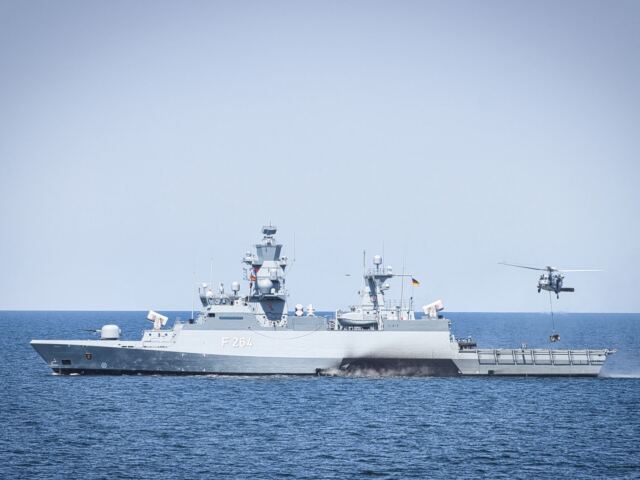
The Arctic Hunter is a proposed platform based on existing commercial Arctic-class ship designs. The reported design specifications indicate a length of 56 meters. It is proposed to operate on missions of up to 60 days without a crew.
However, these figures do not represent the military requirements confirmed by the British government. They are the specifications proposed by the company and the figures reported in the press.
Kongsberg will be responsible for the hull and remote/autonomous navigation technology. Thales aims to combine sonar, military communication systems, artificial intelligence, and planning tools. The approach involves integrating military-grade sensors and autonomous navigation systems onto the hulls of commercial vessels.
Instead of developing a dedicated warship from the beginning, utilizing existing commercial shipbuilding capabilities can be expected to increase production speed and cost competitiveness. On the other hand, there is a possibility that the schedule and costs may increase during the process of integrating military-grade sonar, secure communication systems, and autonomous navigation systems.
A commercial vessel does not become a warship.
Kongsberg has proposed a plan to collaborate with the British company Balaena Maritime to promote production within the United Kingdom. If selected for the project, the plan involves building the vessels at the Birkenhead shipyard. If this leads to a real contract, it could create opportunities in the British shipbuilding and defense industries. At the same time, it would place a burden on British taxpayers in terms of defense spending.
The Risks Remaining Behind the Advantages of Unmanned Surface Vessels.
Unmanned vessels offer the possibility of not having to send people directly into dangerous waters. They can reduce the risk to crews during long-duration surveillance missions, while manned forces can focus on other tasks.
It is important to note that “unmanned” does not necessarily mean “risk-free.” Remotely operated systems require communication networks and maintenance/support facilities. New cybersecurity vulnerabilities also arise. Even if artificial intelligence assists in detection and planning, issues of mistaken identification, human control, and international law remain.
Removing people does not remove responsibility.
The issue of undersea cables must be viewed objectively. According to publicly available data from the British government, most cable failures are caused by non-hostile factors such as fishing boats or anchor dragging. All damage should not be interpreted as the result of deliberate attacks by Russia.
Thales UK CEO Phil Siveter stated that the future “hybrid navy” will be defined by the connectivity of platforms, the sharing of information, and the speed at which information is translated into operational advantage. However, whether a direction is correct and whether the actual equipment functions as planned are separate issues.
Confirmed items and items that have not yet been finalized.
Currently, what is confirmed is the cooperation and proposal between the two companies. Thales and Kongsberg announced that they will combine Thales’ sonar, military communication, artificial intelligence, and planning tools with Kongsberg’s Arctic Hunter hull, remote operation, and autonomous navigation technologies. This is intended to align the Arctic Hunter with the Type 92 candidate requirements.
Kongsberg also proposed production plans within the United Kingdom. The British government announced an investment of £90 million in Atlantic Net. However, these facts do not necessarily mean that the British Royal Navy will purchase ships.
It has not been confirmed whether the British Royal Navy selected the Arctic Hunter as the final design for the Type 92. The final number of Type 92 vessels, the total project cost, the start date of construction, and the date of operational deployment have also not been confirmed.
The type of Thales sonar to be installed has not been disclosed. The detection range and accuracy, as well as underwater communication performance, are also unknown. The 56 meters and up to 60 days specifications for the Arctic Hunter are not confirmed military requirements.
The documents are inconsistent regarding whether “Type 92” refers to an unmanned surface vessel or includes an unmanned underwater surveillance platform. Furthermore, the existing unmanned operation technology of Kongsberg and the overall certification of the Arctic Hunter military configuration are not the same thing.
The candidate design has not been adopted.
Therefore, the accurate description at the current stage is not “the British Royal Navy has adopted an unmanned anti-submarine warfare platform.” The correct statement is “Thales and Kongsberg proposed the Arctic Hunter as a candidate for the Type 92.”
The next step is the selection and evaluation process.
The British Ministry of Defence announced that it will further refine the Type 92 and Type 93 projects during the concept and evaluation phases. The shape, mission, operating methods, and acquisition scale may be reviewed. The Arctic Hunter must demonstrate that its sonar, communication, and autonomous navigation systems function correctly in actual maritime conditions.
What is more challenging than a beautiful hull photograph is the task of sensors distinguishing meaningful signals from the noise of the ocean. While commercial designs can reduce production speed and costs, anti-submarine warfare cannot be achieved with a single ship.
The communication network, maintenance system, operational personnel, and human decision-making systems must be interconnected. If any one of these elements is weak, the unmanned vessel could become an isolated platform on the vast ocean.
A test is required before the contract.
If the United Kingdom proceeds with the actual project, the key points to verify are the quantity to be procured, the total project cost, and the testing schedule. Currently, these figures are unavailable. Whether the Arctic Hunter will become a submarine hunter for the British Royal Navy will be determined not by an announcement, but by evaluation, budget allocation, and testing.
Frequently Asked Questions.
Has the British Royal Navy actually entered the stage of adopting this unmanned anti-submarine warfare vessel?
Not yet. Thales and Kongsberg only proposed the Arctic Hunter as a Type 92 candidate during the technical cooperation and memorandum of understanding phase. The British Ministry of Defence stated that the quantities to be procured and the construction schedule for the Type 92 and Type 93 have not yet been determined.
Is the Arctic Hunter a ship that the British Royal Navy has officially purchased?
It is not. The Arctic Hunter is a proposed platform based on existing commercial Arctic-class ship designs. The final selection by the British Royal Navy or a construction contract has not been confirmed.
How many Type 92 vessels are being procured?
The details have not been finalized. The British Ministry of Defence stated that the quantities to be procured and the construction schedule for the Type 92 and Type 93 vessels have not yet been determined.
How long can the Arctic Hunter perform its mission?
According to proposals from companies and news reports, it is suggested that the system could operate for up to 60 days without crew. This is not a military requirement confirmed by the British government.
Can this type of ship actually detect submarines?
The company plans to combine Thales’s sonar systems, military communication equipment, artificial intelligence, and planning tools. However, the detection range, accuracy, and actual military performance have not been disclosed or verified.
What is the reason that seabed cable monitoring is important to the general public?
The British government states that submarine communication cables carry approximately 99% of the United Kingdom’s international data traffic. Damage to these cables can affect internet, financial, and telecommunications services.