- Even if the satellite signal is lost, the nuclear submarine must continue to operate.
- What is changing is not the nuclear weapons themselves, but the reliability of their operation.
- Reasons for simultaneously replacing submarines, missiles, and Rafale aircraft.
- The contract amount was not disclosed.
- Confirmed figures and numbers that are still pending.
- The next crucial step is the actual deployment.
- Frequently Asked Questions.
Even if the satellite signal is lost, the nuclear submarine must continue to operate.
Underwater, satellite navigation signals such as GPS cannot be received. French nuclear submarines must navigate covertly for long periods in such environments and, if necessary, prepare to launch M51 missiles. The moment they lose their position, the operational reliability of the nuclear deterrent could be undermined.
This is why an inertial navigation system is necessary. It uses gyroscopes and accelerometers to calculate position, direction, and speed. It tracks movement independently, without relying on satellite signals.
This is a fundamental capability of the nuclear forces.
Safran Electronics & Defense announced on November 2, 2026, that it has been selected for three inertial navigation programs to support France’s strategic nuclear deterrence. The programs will be applied to the next-generation third-generation ballistic-missile nuclear submarine SNLE 3G, the M51.4 missile, and the Rafale combat aircraft.
What is changing is not the nuclear weapons themselves, but the reliability of their operation.
This announcement does not concern the development of new nuclear warheads. It is a project to modernize the delivery systems and guidance/navigation equipment of nuclear weapons. Therefore, there is no evidence to suggest that this selection alone directly increases the range or destructive power of French nuclear weapons.
It is also difficult to consider navigation equipment as a secondary component. Submarines must continuously determine their position underwater. Missiles need to calculate flight conditions before and after launch, and fighter jets must be able to perform their missions even in situations where satellite navigation is disrupted or communication is lost.
It prioritizes enhancing operational reliability over destructive power.
The SNLE 3G will feature a new Global Navigation System (SGN). This system will replace Safran’s SGN-3EV, which is currently used on the Triomphant-class submarines. The M51.4 will include the CI4 inertial navigation system.
Safran announced that it plans to apply its HRG Dual Core technology to the CI4 for the M51.4, aiming to improve accuracy within a smaller package. The company is also scheduled to supply inertial navigation systems for the Rafale. This structure allows a single HRG-based technology to be applied to different platforms.
The key is not simply to make it smaller.
The key is to incorporate higher navigation performance into the same space.
Reasons for simultaneously replacing submarines, missiles, and Rafale aircraft.
France’s nuclear deterrence consists of two pillars: a sea-based component and an air-based component. The sea-based component is comprised of SNLE submarines and M51 missiles. The air-based component consists of Rafale fighter jets and an air-launched nuclear missile system.
It is not possible to replace only one side’s platform. This is because the navigation and operational capabilities of submarines, missiles, and fighter jets are interconnected. This selection is linked to a generational change of the entire nuclear deterrence system, rather than the supply of a single piece of equipment.
France is replacing its current Triomphant-class SNLEs with the SNLE 3G. According to a report from the French Senate, the SNLE 3G project entered the implementation phase in 2021, and the construction and detailed design phase for the first submarine began in November 2025. France currently operates four submarines of the current generation of SNLE.
The M51 is being gradually upgraded. According to the French Department of Defense, the contract for the development and production of the M51.4 was notified on August 28, 2025. The M51.4 is scheduled to be installed on the next-generation SNLE and the current Triomphant-class SNLE.
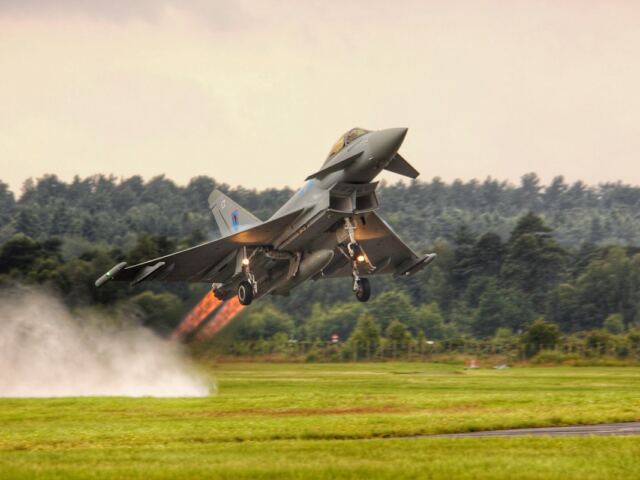
The French Senate stated that the M51.4 is a version designed to counter future missile defense systems, with delivery expected in the mid-2030s. In the air domain, the Rafale F5 will be equipped with the next-generation air-launched nuclear missile, ASN4G, and is scheduled to be deployed in the 2030s.
The three systems are all subject to the same modernization process.
The contract amount was not disclosed.
The most important question in this selection process is the contract size. The answer has not yet been disclosed. Safran announced that it was selected for 3 programs, but it did not reveal the specific contract amount, contract duration, delivery quantity, or the exact date the contract was signed.
Therefore, this announcement should not be interpreted as a contract announcement with the complete price list. What has been confirmed is the selection. The contract terms and the overall project cost remain undisclosed.
The price list is currently empty.
Instead, Safran has disclosed the amount of industrial investment. The company announced that it invested €120 million in 2026 to expand its HRG production capacity in France. Currently, the company produces 10,000 HRGs annually in France, and its target is to reach 30,000 units by 2032.
These figures do not represent the contract amounts for the three programs. They are separate investments and goals aimed at expanding the HRG production foundation. While expanding production capacity may affect the French defense supply chain and the maintenance of a highly skilled manufacturing base, it is not possible to determine the extent of job creation or cost savings based solely on this announcement.
Safran announced that it has been cooperating with the French Defence Procurement Agency (DGA) in the field of navigation and time synchronization since 1972. This selection reflects France’s emphasis on establishing a domestic foundation for core navigation technology and achieving technological independence.
Industrial investment and contract prices are different figures.
Confirmed figures and numbers that are still pending.
The confirmed information is clear: Safran has been selected for three programs: the SGN for the SNLE 3G, the CI4 for the M51.4, and the navigation system for the Rafale. For the CI4 intended for the M51.4, the company plans to apply the HRG Dual Core technology to achieve miniaturization and improved accuracy.
On the other hand, the specific accuracy, navigation error, operational lifespan, and jamming resistance performance of the new SGN and CI4 systems have not been disclosed. The production batches, standards, and detailed schedule for the HRG Dual Core system used in the Rafale have also not been confirmed.
It is necessary to distinguish between the performance claims made by the company and the results of independent verification. This presentation alone is not sufficient to determine whether HRG is the most advanced inertial sensor in the world. In fields such as nuclear forces, where the cost of failure is high, the fact of selection and performance verification cannot be considered the same thing.
This selection does not provide evidence that it directly increases the number of French nuclear warheads, the actual range of the M51, or the nuclear attack capabilities of the Rafale. While improvements in navigation accuracy and reliability may increase operational reliability, this cannot be directly translated into an increase in destructive power.
Improving navigation does not necessarily mean increasing destructive power.
The next crucial step is the actual deployment.
The following points need to be confirmed: the contract amount and the delivery schedule. Furthermore, it is necessary to determine when the equipment will be deployed on the SNLE 3G and M51.4, and which production batches and operational standards of the Rafale it will be applied to. Currently, the exact delivery quantities for the three programs and the total project cost have not been disclosed.
The French Senate assessed that the modernization of nuclear deterrence is a long-term project that simultaneously updates submarines, missiles, fighter aircraft, and warheads. This process entails technological, personnel, and financial burdens. In the French 2026 defense budget, 6.12 billion euros were allocated to equipment dedicated to nuclear deterrence.
The Senate proposed that approximately 13% of the defense mission budget be allocated to nuclear deterrence in the long term. These figures do not represent Safran’s contract price. However, they indicate the context in which France views nuclear deterrence not as a one-time purchase, but as a continuous national project.
The equipment changes will not be immediately noticeable to ordinary citizens. However, this project aims to maintain the operational reliability of nuclear forces even in situations such as satellite navigation disruption or communication outages during wartime. At the same time, it will involve a long-term commitment of national budget, and concerns may arise regarding a deepening reliance on nuclear weapons.
The significance of this selection lies more in the realignment of navigation systems than in the rapid increase of nuclear weapons. It involves providing technologies of the same family to ensure that next-generation submarines, M51.4 missiles, and Rafale fighter jets do not lose their way.
The real test is not the announcement itself.
This is the actual deployment of validated equipment.
Frequently Asked Questions.
What is the exact amount of the contract that Safran is receiving this time?
The details have not yet been disclosed. Safran announced that it has been selected for 3 programs, but it has not revealed the specific contract amount, duration, delivery quantity, or the exact date the contract was signed.
Which system receives the navigation equipment?
The SGN (Système de Navigation et de Guidage) for the next-generation SNLE 3G submarine, the M51.4 missile’s CI4 inertial navigation system, and the navigation system for the Rafale fighter jet. The SGN for the SNLE 3G will replace the SGN-3EV currently used on the Triomphant-class submarines.
Why is inertial navigation important for nuclear submarines?
Submarines cannot receive GNSS (Global Navigation Satellite System) signals, such as those from satellites, while underwater. Inertial navigation systems use gyroscopes and accelerometers to calculate position, direction, and speed, providing navigation and missile launch preparation capabilities even without satellite signals.
Does this selection increase the range or destructive power of French nuclear weapons?
There is no confirmed evidence to support such a conclusion. This announcement concerns the modernization of delivery vehicles and guidance/navigation equipment, rather than the new nuclear weapon itself.
When will the new equipment actually be deployed?
The exact delivery schedules for the three programs have not been disclosed. However, the French Senate report indicated that the M51.4 is expected to be delivered in the mid-2030s, while the Rafale F5 and ASN4G are scheduled to be operational in the 2030s.
Is €120 million the amount of this contract?
No. That is the amount that Safran announced it invested to expand its HRG (Human Resources Group) production capacity in France in 2026. There is no confirmed figure for the contract amount for these three programs.