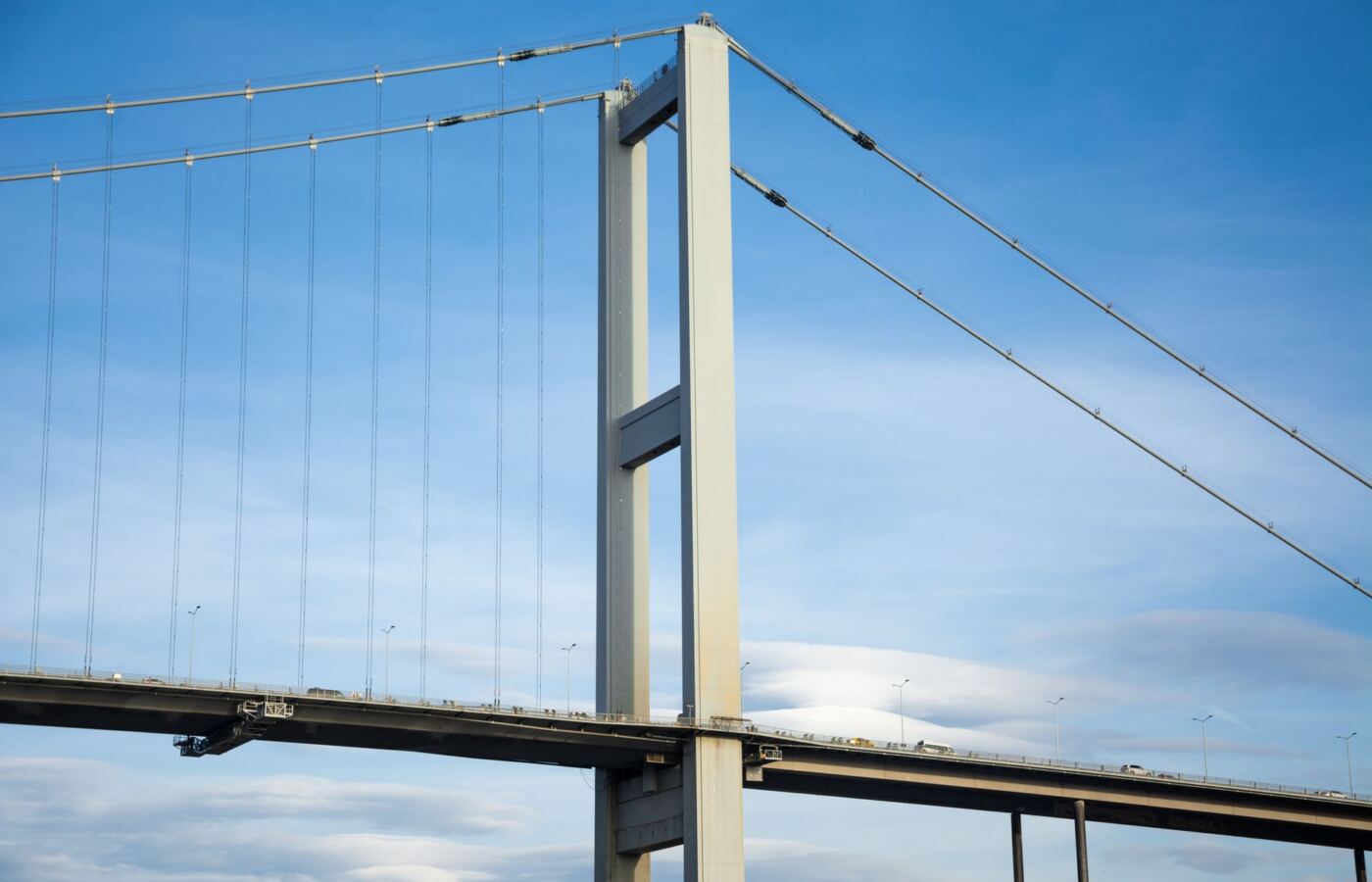
- A 19-kilometer-long bridge had a section of its roadway collapse into the sea.
- How will the supply lines of the Russian military change if roads are cut off?
- For the residents of Crimea, the legacy remains: a bill labeled “circumvention.”
- What did Ukraine gain, and what did Russia lose?
- The next crucial point is not just the restoration, but whether it will be blocked again.
- Frequently Asked Questions.
A 19-kilometer-long bridge had a section of its roadway collapse into the sea.
A section of the road arch and span of the 19-km (12-mile) Kerch Bridge, which connects the Russian mainland and the Crimean Peninsula, collapsed into the sea. The Ukrainian General Staff announced that on November 17, 2026, it used missiles and drones to attack the road section. Reuters verified, through video and photos released by President Zelensky, that the central road arch had collapsed.
The problem is not simply that a large hole has appeared in the middle of the bridge. This bridge served as a vital route for transporting fuel, ammunition, equipment, and troops to the Crimean Peninsula, while also being a passage for civilians. The moment the road was cut off, the logistics of the war and the daily lives of the residents were both affected by the same bottleneck.
The vehicle has stopped, but the resupply is not yet complete.
In my opinion, the key aspect of this attack is not the “bridge destruction” itself, but rather the subsequent reorganization of the transportation network. While some railway operations have been resumed, Russia will need to rely more on ferries and land routes that pass through the southern part of the occupied territory. However, it is important to note that saying “there is an alternative” is very different from saying “the alternative has the same capability.”
How will the supply lines of the Russian military change if roads are cut off?
The Kerch Bridge is a separate structure with a road and a railway running parallel. The attack rendered the road section impassable to vehicles, and it was announced that the railway section also suffered arch damage. Sergei Aksyonov, the Russian-appointed head of Crimea, stated that railway operations have partially resumed, but it has not yet been confirmed to what extent the transport of heavy goods is possible.
This difference is not insignificant from a military perspective. While vehicles can carry fuel and ammunition and move directly to the required location, trains and ferries involve additional hurdles such as transshipment, timetables, and loading limits. The moment cargo is unloaded from a train and reloaded onto a truck, logistics lose both speed and cost-effectiveness.
Ukraine described this attack as the final blow of a seven-stage operation that has been ongoing for several weeks. The claim is that the air defense network, radar systems, and electronic warfare equipment were weakened first, and then the attack was carried out using Ukrainian-made weapons. While it has not been independently verified exactly which weapons caused what damage, it is clear that Ukraine intended to disrupt not only the bridge itself but also the defensive systems protecting it.
The target of this battle was the bridge, but the key to victory lies in controlling the flow.
Russia claimed to have shot down 1,336 Ukrainian drones one day and 1,441 drones the next. However, these figures were released by the Russian Ministry of Defense and have not been independently verified. Announcing a large number of shoot-downs is not the same as successfully protecting strategically important facilities. This case clearly illustrates the difference between the two.
For the residents of Crimea, the legacy remains: a bill labeled “circumvention.”
Residents and travelers who were planning to travel between the Crimean Peninsula and mainland Russia by vehicle must now use rail, ferry, or alternative land routes. Transportation companies are likely to face delays, additional transfers, and higher transportation costs. While the alternative routes appear as a single line on a map, in reality, they involve waiting times, fuel costs, and the risk of cargo damage.
The Russian central government is not taking this issue lightly. Deputy Prime Minister Marat Khusnullin chaired a government committee to discuss damage assessment, restoration, and alternative routes for cargo transportation to the Crimean Peninsula. Kremlin spokesman Dmitry Peskov stated that the bridge will be repaired and will be better than before.
However, the will to rebuild is not the same as the rebuilding schedule. The exact time of complete restoration and the associated costs have not been announced, and it has not been confirmed how the debris from the collapsed structure will affect the shipping lane connecting the Azov Sea and the Black Sea. While ferries and land corridors can partially substitute for the functions of the bridge, it is difficult to fully replicate the speed and continuity that the bridge provided.
In this regard, I believe that the burden on civilians should not be treated as an afterthought to military achievements. When roads are cut off, not only is the supply of the front lines delayed, but also commuting, travel, cargo transport, and safety plans are disrupted. While war may draw lines on a map, for those who cross those lines every day, it changes their daily routines and their finances.
What did Ukraine gain, and what did Russia lose?
Ukraine has achieved pressure on Russian supply lines and raised questions about the security of the rear areas in the Crimean Peninsula. The Crimean Peninsula, occupied by Russia, can no longer be simply described as a safe rear area completely protected from attacks. The Kerch Bridge was again struck, following a truck bomb attack in October 2022 and an attack in July 2023, and these repeated attacks increase the burden of defense and repair.
Russia has lost more than just the ability to use a single road. Military transport now faces detours and bottlenecks, and civilian traffic has become more uncertain. However, it is an exaggeration to call this an immediate collapse of supply to the Crimean Peninsula. The Russian military can still utilize some railway lines, ferries, and a land corridor through the southern part of the occupied territory.
Therefore, it is more accurate to interpret this incident not as a matter of “supply being cut off,” but rather as a question of “how expensive and slow the supply process has become.” In war, the transportation network is similar to water pipes. Even if the water supply does not completely stop, problems will arise first in the most distant locations due to decreased pressure and increased leakage.
Ukraine stated that this was a response to Russia’s attacks on its infrastructure. President Zelensky said that Russia is attacking Ukraine’s infrastructure every day and that it will return to the place where the war began. On the same day, reports emerged that two major bridges in Kyiv were damaged by attacks from the Russian military on a bridge connecting Russia and Ukraine, and that at least two people were killed. The conflict surrounding the bridge once again demonstrates the difficulty in separating military targets from civilian casualties.
The next crucial point is not just the restoration, but whether it will be blocked again.
Russia will begin repairing the bridge, but the repair period and the risk of renewed attacks remain. It is necessary to determine the extent to which damage to the railway section restricts the transportation of heavy goods, how road debris removal affects ship navigation, and to what extent ferries and land routes can absorb the actual volume of goods.
From Ukraine’s perspective, this attack must not be a one-time event. If the explanation that Russia weakened air defense systems, radar, and electronic warfare equipment before striking key facilities is accurate, then Russia will inevitably have to strengthen defenses around the Kerch Bridge. On the other hand, if Russia deploys more defensive assets to the Kerch Bridge, it is possible that the defensive burden in other regions will increase. This is the broad effect that a multi-stage operation aims to achieve.
It is also important not to portray all outcomes as a victory for Ukraine. The actual number of weapons used, the accuracy of their deployment, the extent to which Russian supply lines have been disrupted, and the timing of bridge repairs have not yet been confirmed. In war reporting, I believe the most dangerous moment is when we fill in the gaps with assumptions. While confirmed damage should certainly be reported, we should not present unconfirmed effects as if they were established facts.
Currently, the roads in the Crimean Peninsula are closed, and the railway is partially operational. Therefore, the supply of goods and the movement of people from Russia are not completely stopped, but rather are severely restricted. What needs to be observed is how quickly Russia can resolve this bottleneck, and whether Ukraine can disrupt the same transportation network in a future attack. While bridges can be repaired, vulnerabilities that have been exposed cannot simply be covered up with concrete.
Frequently Asked Questions.
Has the road section of the Kerch Bridge been completely severed?
The Ukrainian General Staff announced that the arches and spans of a road section had collapsed, making it impossible for vehicles to pass. Videos and photos verified by Reuters showed that the central road arch had collapsed into the sea.
Has the operation of the railway also been suspended?
While the railway section remains, there have been reports of damage to the arch. The Russian-appointed head of the Crimean administration stated that some railway operations have been partially resumed. However, it is not yet confirmed whether the transportation of heavy goods is possible.
Will the supply lines to the Russian military in the Crimean Peninsula be completely cut off?
It is not possible to make such a definitive statement. Russia could utilize some railway lines, ferries, and land routes that pass through the southern part of the occupied territory. However, the blockage of vehicle bridges could likely cause transportation delays, increased costs, and bottlenecks.
How do residents of Cream typically travel?
Since vehicle traffic is suspended, transportation must be accomplished using railways, ferries, or alternative land routes. This may result in travel delays, transfers, and increased costs for cargo transportation.
When will the bridge be repaired?
Russia has stated that it will restore the facility, but the timeline for complete restoration and the associated costs have not yet been announced.