- A drone that does not shoot down missiles protects vessels.
- Why is France planning to deploy another shield, in addition to the vessels?
- The true strength of the DAUPHIN lies not in its drones, but in its electronic warfare capabilities.
- A cost-saving option: using interceptor missiles sparingly, but if it fails, revert to the original defense system.
- The core transmitter was demonstrated, but the date for its installation on a warship has not been determined.
- The next test will determine whether or not the deception was real.
- Frequently Asked Questions.
A drone that does not shoot down missiles protects vessels.
The new drone designed to protect the French Navy does not shoot down missiles. Instead, it serves as a decoy that missiles mistake for a larger vessel. Thales explained that a single DAUPHIN can replicate the radar cross-section of an FDI frigate or a larger vessel.
So, can this drone actually save warships? Currently, the answer is that it is in the “stage of testing its feasibility.” The high-power transmitter block, which is designed to deceive missile radar signals, has already been demonstrated. However, the first flight test of the aerial transport vehicle is scheduled for 2027.
It has not yet been confirmed whether it will be deployed for actual use, nor whether its actual defensive performance has been verified.
Why is France planning to deploy another shield, in addition to the vessels?
The French Defence Procurement Agency (DGA) is developing the DAUPHIN Off-Board Active Decoy project, in collaboration with Thales and Lacroix, based on the requirements of the French Navy. DAUPHIN is an acronym for “Drone d’Autoprotection Projeté et Héliporté d’Interception Navale.”
The project began at the end of 2024. The goal is not to change the existing defense system, but to add an additional layer of defense at a greater distance for the vessel’s hard-kill and soft-kill defense. Hard-kill defense directly destroys threats, such as with interceptor missiles. Soft-kill defense disrupts the missile’s search and guidance through jamming and deception.
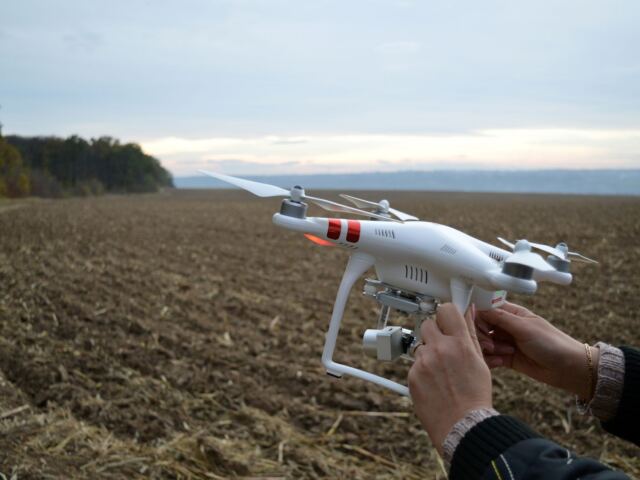
DAUPHIN is an OBAD system that deploys electronic warfare decoys at a location away from the vessel. The multi-rotor unmanned aerial vehicle moves towards the direction of the threat and then positions itself in front of the missile radar beam. The intention is to make the missile perceive the drone as a stronger target than the vessel.
It makes the missile target the decoy instead of the vessel.
The system uses an antenna to calculate the direction from which a threat signal is approaching, and algorithms to adjust the position of the drone. It is designed to operate autonomously without a data link to the mother ship after deployment. Even if communication is lost during an engagement, its structure allows it to autonomously track the direction of the threat.
The true strength of the DAUPHIN lies not in its drones, but in its electronic warfare capabilities.
Thales and Lacroix have distinct roles. Thales is responsible for electronic warfare and jamming systems. Lacroix is developing aerial transport systems, including pyrotechnic ejection devices and multi-rotor unmanned aerial vehicles.
Drones are a means of transporting electronic warfare equipment close to the target. The key factor is the signal that is sent to the missile’s radar.
The Thales system includes DRFM technology and a high-power amplifier. DRFM is a technology that collects and records incoming radar signals, then modifies them to create false reflected signals. This technology sends signals to missile seekers that can confuse them about the location and size of the vessel.
If this technology works well enough, anti-ship missiles may mistake the DAUPHIN for a larger target rather than an actual vessel. Naval News reported, citing an explanation from Thales, that a single DAUPHIN can simulate the radar cross-section of an FDI frigate or a larger vessel.
However, this capability is not the result of an independent public test. It is a claim based on the company’s description.
The effectiveness of electronic warfare decoys can vary depending on the performance of the missile seeker, the electronic defense capabilities, and the attack tactics. There is also a condition that the drone must be precisely positioned in front of the missile radar beam. The stability of its operation in adverse weather conditions, close-quarters combat, and against threats coming from multiple directions simultaneously has not been disclosed.
There is still insufficient evidence that the missiles were deceived.
A cost-saving option: using interceptor missiles sparingly, but if it fails, revert to the original defense system.
The advantage of the DAUPHIN lies in its ability to “defeat missiles without firing missiles.” If the active decoy can first alter the direction of the attack, the vessel can disperse the threat from a greater distance. This also has the potential to reduce the use of expensive interceptor missiles.
This is not simply a technological trend. A warship’s job is not finished after stopping just one attack. What matters is how long it can maintain its defensive capabilities and ammunition in the face of repeated threats.
However, DAUPHIN does not replace the existing defense network. OBAD does not directly destroy threats. If electronic warfare fails, the vessel’s existing interceptor missiles and close-in defense systems are still necessary.
The new shield will not replace the existing shield.
France and the United Kingdom have previously researched active remote decoy technologies. The ACCOLADE technology demonstration program concluded in 2016. In 2020, Lacroix responded to a request for proposals from the French Defense Innovation Agency and unveiled the VESTA concept, which utilizes unmanned aerial vehicles for active remote decoys.
Thales utilized some technologies associated with the ACCOLADE system. However, Naval News reported that the DAUPHIN’s design is completely new and separate from the ACCOLADE. France did not suddenly begin work in this area; rather, it has entered a phase of integrating existing technologies into a new system.
The core transmitter was demonstrated, but the date for its installation on a warship has not been determined.
The most advanced confirmed achievement is the high-power transmitter module, which has already been demonstrated. However, the first prototype of the LaCroix transport vehicle is scheduled to be manufactured and flight-tested in 2027.
There is a difference between electronic warfare equipment operating in a laboratory and an actual drone in flight. After being catapult launched from a vessel, it must locate the direction of the threat. It must establish a stable position in front of the missile’s radar beam. It must also disrupt the seeker’s judgment with a high-power signal.
The first flight is yet to be conducted.
The integrated contract for the vessel’s equipment is scheduled to be signed separately after the development phase is completed. The launch system has not yet been selected. Whether the DAUPHIN drone will be recovered and reused has not yet been decided.
Therefore, the actual operating costs, the burden of vessel modification, and the ability to conduct repeated deployments are currently difficult to determine. It has also not been confirmed that the French Navy has officially adopted the DAUPHIN or signed a purchase contract for it.
It has not yet been determined how many drones will be deployed on each class of vessel. The unit price, total development costs, procurement quantity, and mass production schedule have also not been disclosed.
2027 will not be the year of deployment, but rather the year to confirm the first flight.
In the defense industry, the unveiling of a prototype is often perceived as similar to an announcement of operational deployment. However, there are several steps in between, including flight tests and verification of electronic warfare performance. There are also remaining tasks such as vessel integration, selection of launch systems, and definition of operational concepts. If even one aspect fails to meet expectations, the design may be altered.
The next test will determine whether or not the deception was real.
The next challenge for the DAUPHIN does not end with whether the drone can fly. It must accurately detect threat signals. It must position itself quickly enough in front of the missile’s radar beam. It must actually disrupt the seeker’s judgment with a high-power signal.
The results must be made public as independent test data. Only then can we answer the question of “can it protect vessels” with figures and examples.
Naval News reports that the radar cross-section simulation capabilities and defensive effects are based on information provided by Thales. Specific figures or independent test data are currently unavailable. The results may vary depending on the missile’s electronic defense capabilities and operational tactics.
This also signifies the French defense industry’s effort to secure its own electronic warfare technology. However, the main point of this article is not about industrial expectations. The key issue is whether the equipment designed to enhance the survivability of vessels has actually demonstrated its defensive effectiveness.
The DAUPHIN is not a “complete shield,” but rather an “electronic warfare drone that can serve as a shield.” It does not replace the electronic warfare equipment or anti-aircraft interceptor missiles of vessels. It is a long-range soft-kill layer that is added to the existing defense network.
The actual performance capabilities have not yet been tested.
Frequently Asked Questions.
What is the difference between the DAUPHIN and existing interceptor missiles?
Interceptor missiles are hard-kill systems that directly destroy anti-ship missiles. The DAUPHIN is an unmanned aircraft deployed in the air, which emits radar signals to disrupt the search and guidance of missiles, acting as a long-range soft-kill system. It is described as an additional layer of defense, not a replacement for existing defense systems.
How effectively can the DAUPHIN actually deceive missiles?
Thales explained that a single system can simulate the radar cross-section of an FDI frigate or a larger vessel. However, independent publicly available test results and operational performance data have not yet been verified.
Is the DAUPHIN drone a single-use item, or can it be recovered and reused?
It has not yet been decided. Because it is not yet determined whether the equipment will be recovered and reused, it is also difficult to assess the actual operating costs and the ability to conduct repeated missions.
When will French Navy vessels begin to be equipped with it?
The details have not yet been finalized. The first transport-vehicle prototype is scheduled to be built and flight-tested in 2027. The vessel integration contract is planned to be signed separately after the development phase is complete.
What are the development costs and unit price of the DAUPHIN?
There is no publicly available information regarding development costs, unit prices, procurement quantities, or mass production schedules.
Can the DAUPHIN effectively protect vessels in actual combat?
Currently, this has not been confirmed. While the core transmitting module has been demonstrated, the first flight test, integration with a vessel, and independent defensive performance verification remain to be completed.