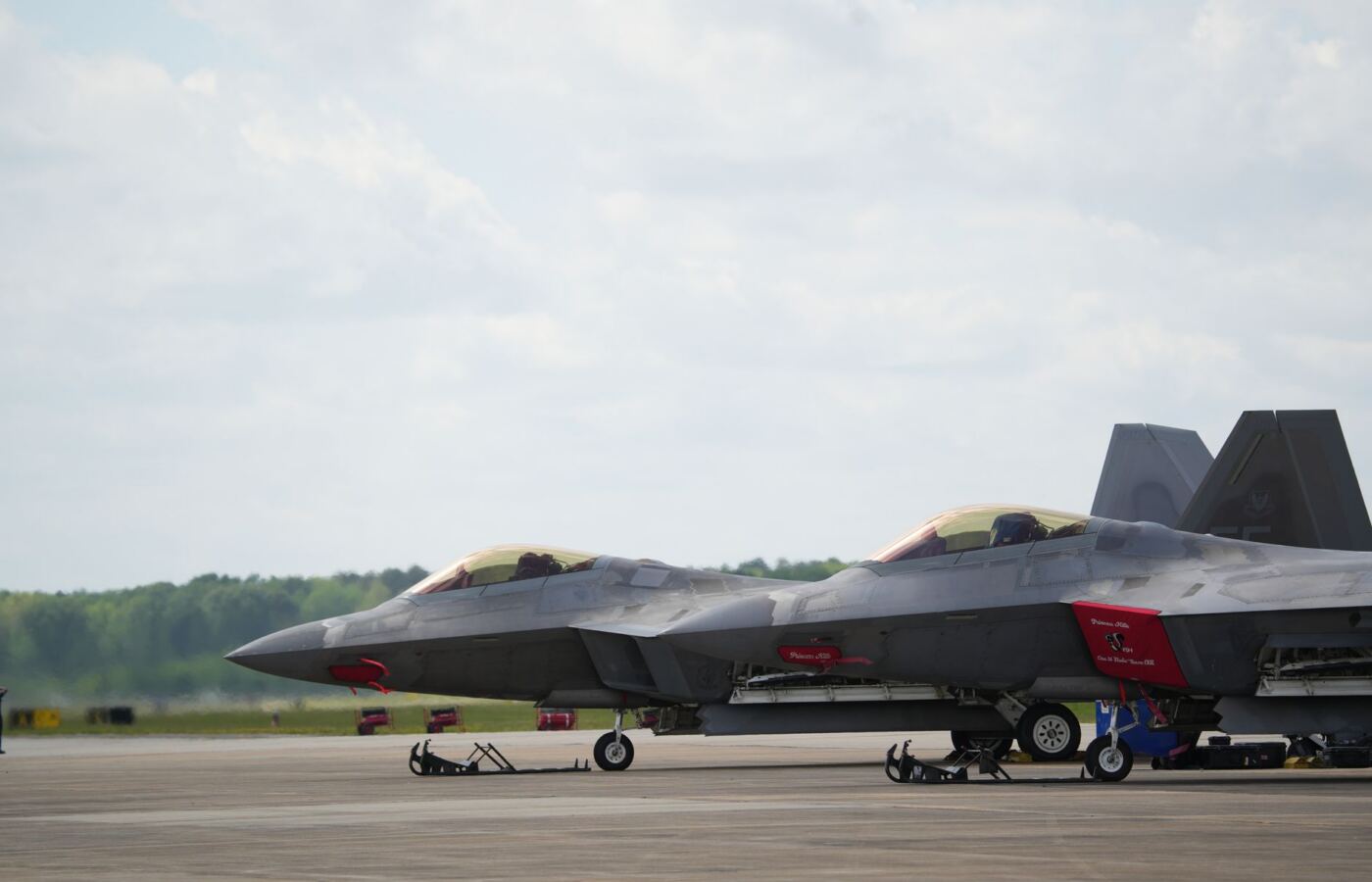
- The F-22 pilot did not fly the drone; he commanded the battlespace
- This test showed something more complex than remote control
- Why is the Air Force trying to give pilots more wings?
- Combat power is increasing, but so is the pilot’s mental workload
- Separate confirmed achievements from what remains unknown
- The next milestone is not a single demonstration but real force integration
- Frequently Asked Questions
The F-22 pilot did not fly the drone; he commanded the battlespace
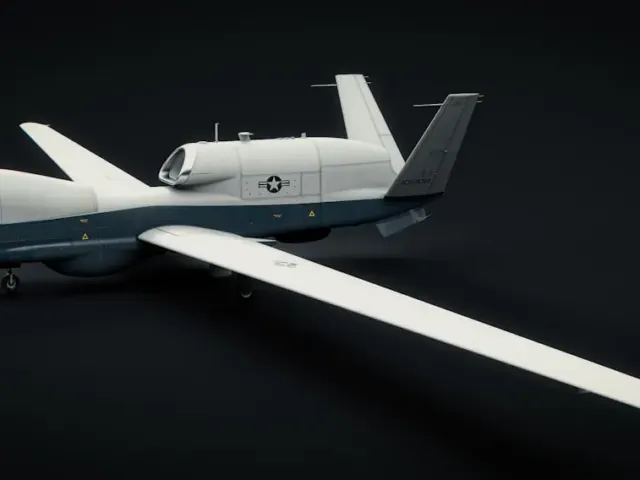
An F-22 and the unmanned combat aircraft Fury took off separately over California and rendezvoused in the air. But the F-22 pilot was not flying Fury directly like a video game. The pilot sent an updated mission plan over a tactical data link, and Fury’s onboard autonomous software interpreted the instructions to execute flight maneuvers and simulated combat tasks.
The key distinction is not the pilot’s fingers but the authority they exercised. This was not remote control, with a human entering every movement. Instead, the human set the high-level tactical direction while the machine handled the details of flight. In my view, “airborne command” is a far more accurate description of this test than “drone piloting.”
Put simply:
The F-22 had the stick; Fury had some of the decision-making.
This test showed something more complex than remote control
On October 16, 2026, the U.S. Air Force disclosed a test in which an F-22 pilot sent high-level tactical instructions to an Anduril YFQ-44A Fury while airborne. The actual flight test took place in early October 2026—according to Anduril, during the week of Oct. 5. The exact date and flight time were not disclosed, but the mission lasted multiple hours.
The Air Force’s description of the pilot’s role is closer to that of an “airborne quarterback.” Just as a quarterback does not run every play for every player on the field, the F-22 pilot did not manually enter every turn Fury made. Instead, the pilot updated the mission plan and issued tactical instructions, while Fury’s autonomous software interpreted them in real time and directed the aircraft’s movements.
This is not merely a matter of word choice. If “control” is taken to mean that the pilot directly operated every aspect of the aircraft’s flight, the test will be mistaken for something far more advanced than it actually was. But leaving out the role of autonomous software in interpreting and carrying out the mission reduces the collaboration between the crewed and uncrewed aircraft to an overly simplistic remote-control model.
It would also be inaccurate to say that the F-22 “controlled a drone for the first time.” In 2025, an F-22 had already conducted a test controlling General Atomics’ MQ-20 Avenger, an alternative CCA test aircraft. What was new this time was the airborne tactical-control test involving an F-22 and the pre-production-stage YFQ-44A Fury.
Why is the Air Force trying to give pilots more wings?
The Air Force’s Collaborative Combat Aircraft program involves semiautonomous uncrewed aircraft designed to extend the operating range and combat capacity of crewed fighters. The public focus of Increment 1 is currently air-to-air missions. The Air Force has moved Anduril’s FQ-44 and General Atomics’ FQ-42 into production, assigning the two aircraft the official names Fury and Vengeance, respectively.
The concept is straightforward: rather than asking a crewed fighter to bear every risk alone, the Air Force wants to send uncrewed aircraft ahead of it or operate them alongside it across a wider battlespace. In the long term, the plan is for a single fighter pilot to control multiple CCAs. Only one uncrewed aircraft was controlled in this test, but the Air Force ultimately envisions scaling up to formations.
The numbers make the ambition clear. The Air Force has cited a goal of acquiring 500 CCAs by 2032, while also discussing a long-term fleet of 1,000 or more aircraft. The target price is $20 million apiece, excluding sensors and weapons.
That price tag comes with an asterisk. Sensors and weapons, along with maintenance, communications and support systems, would be additional costs. A low airframe price does not make the overall force inexpensive. The headline number may look like a sale price, but the bill is often hidden behind it—and that is especially true in defense procurement.
Combat power is increasing, but so is the pilot’s mental workload
If the CCA program succeeds, it could reduce the need for crewed pilots to enter dangerous airspace themselves. It could also strengthen U.S. deterrence by putting more aircraft in the sky and extend the operational reach of each crewed fighter. This is not simply about adding wings to a fighter; it is about expanding the network of decision-making.
But some of what is gained may also be lost. A single-seat F-22 pilot must already fly the fighter while managing an uncrewed aircraft’s mission and status. If several uncrewed aircraft each demand different instructions or behave unexpectedly, the pilot’s cognitive workload could rise sharply. An increase in combat power could show up inside the cockpit as an increase in workload.
That is one reason the Air Force has been testing tablet-like control interfaces for the F-22 cockpit. It has not been confirmed whether a tablet was actually used in this test. An interface can be a convenient tool, but it can also place another demand on the eyes, hands and judgment of a single-seat fighter pilot.
As Mark Shushnar, vice president of Anduril’s autonomous airpower division, has said, what is needed is more than a simple capability demonstration. The company and the Air Force must validate operating procedures and build trust between operators and semiautonomous wingmen. I see this as more important than the technical specifications. On the battlefield, it may be a machine that breaks, but misplaced trust can delay human judgment.
Separate confirmed achievements from what remains unknown
The confirmed facts are clear. While airborne, the F-22 pilot sent an updated mission plan to a single YFQ-44A via tactical data link. Fury used autonomous software to carry out dynamic flight maneuvers and simulated combat missions. Anduril described it as the first airborne tactical-control test between an F-22 and a pre-production Fury.
That does not mean live weapons were used. It has not been confirmed whether Fury carried or fired weapons during the test, and the public description is limited to simulated combat tasks. The event should not be portrayed as a real-world validation against enemy electronic warfare, communications jamming or an integrated air-defense network.
Nor was this a demonstration involving multiple uncrewed aircraft. It has not been established how many CCAs a single F-22 could control simultaneously. The announcement also does not reveal whether the autonomous software is responsible for engagement authorization, weapons employment or target selection.
That is where the question of responsibility arises. If communications fail or the autonomous software makes a bad decision, who makes the final call—and who is accountable for the result? This test did not resolve those questions. Rather, it brought them into the language of real-world operations.
The next milestone is not a single demonstration but real force integration
Fury and Vengeance are scheduled to take part in their first major force-integration exercise with crewed fighters during the large-scale Emerald Flag exercise planned for December 2026. Lt. Col. Lyndon “OTTO” Bartlett, director of operations for the Air Force’s Experimental Operations Unit, said the service had not yet conducted large-scale operational training involving CCAs and that Emerald Flag would be the first such exercise.
So the next thing to watch is not whether Fury flew. It is how much information a pilot can process in an environment crowded with crewed and uncrewed aircraft, how the aircraft continue their missions when communications are unreliable, and where human approval remains as autonomy expands.
The Air Force’s goal of 500 aircraft and its long-term vision of a force numbering 1,000 or more should also be viewed with a distinction between plans and committed procurement. It has not yet publicly settled what proportion of FQ-42s and FQ-44s it will buy, whether both types will be maintained over the long term, or when and where Fury and Vengeance will be deployed—and in what numbers.
This test is not a sign that the era of the fighter is ending. It is closer to a sign that the fighter’s role is changing, with crewed aircraft taking charge of more uncrewed systems. But for that shift to become a real combat capability, restraint and accountability in the cockpit must be designed alongside autonomy in the sky.
What Fury received this time was not the pilot’s touch but a command. The question going forward is not how well the machine follows orders, but how much responsibility humans are willing to delegate—and when they can take it back.
Frequently Asked Questions
Did the F-22 pilot fly Fury directly?
No. The pilot sent high-level tactical instructions and an updated mission plan over a tactical data link, and Fury’s autonomous software interpreted them to carry out flight maneuvers and simulated combat tasks.
Did Fury use live weapons during the test?
That has not been confirmed. The public description is limited to simulated combat tasks, and no information has been released on whether Fury carried or fired live weapons.
Was this the first test in which an F-22 controlled a drone?
It was not the first time an F-22 had controlled an uncrewed aircraft in the air. In 2025, an F-22 conducted a test controlling the MQ-20 Avenger. The significance of “first” here is that it was the first airborne tactical-control test involving an F-22 and the YFQ-44A Fury.
How many CCAs can a single F-22 control?
There is no confirmed figure. The F-22 controlled one uncrewed aircraft in this test, while the Air Force is pursuing a long-term concept in which one pilot controls multiple CCAs.
When will Fury enter operational service?
It has not been publicly determined when or where Fury will be deployed, or in what numbers. Fury and Vengeance are scheduled to participate in the Emerald Flag exercise planned for December 2026.