- Two of the three new patrol vessels will be completed in Saudi Arabia.
- Why is Saudi Arabia now trying to acquire industries along with oil companies?
- Sarawat and Tuwaek represent the same modernization, but through different approaches.
- HAZEM is a symbol, but the grades have not yet been released.
- Who received something, and who has not yet received their bill?
- It is necessary to distinguish between confirmed progress and areas where there is still a gap.
- The next test subject will be the second vessel of Saudi Arabia.
- Frequently Asked Questions.
Two of the three new patrol vessels will be completed in Saudi Arabia.
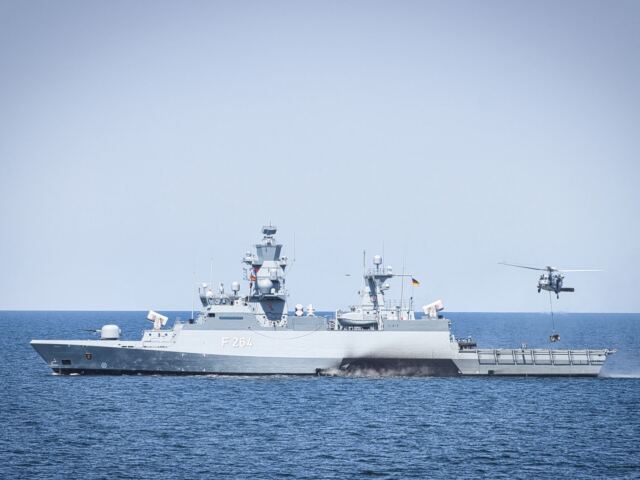
An era is dawning where warships purchased from Spain are being completed in Saudi Arabia. Saudi Arabia, having secured 5 Avante 2200 patrol vessels through the Sarawat project, signed an additional contract with the Spanish company Navantia in December 2024 for 3 more vessels. The first of the additional vessels will be delivered from Spain, while the remaining 2 are planned to be completed in Saudi Arabia.
I believe this scene accurately reflects the core of the modernization of the Saudi Arabian Navy. This is because it is an attempt to establish a comprehensive system within Saudi Arabia, encompassing not simply the purchase of more vessels, but also the manufacturing of vessel blocks, the integration of combat systems, maintenance, and personnel training, all as a unified package.
We are moving from buying warships to building a domestic warship capability.
According to the Saudi Press Agency (SPA), the first phase of the Sarawat project included the construction of five Avante 2200 patrol vessels. Navantia states that all five vessels have been launched. While Saudi Arabia is operating these vessels, it cannot be definitively stated from publicly available information that all five are fully operational and deployed for combat.
Despite this, the direction of the change is clear. The additional contract for 3 vessels includes the training of more than 100 Saudi engineers and the manufacturing of vessel blocks within Saudi Arabia. These are items that would be unlikely to be included in a simple contract for the delivery of finished products. It is highly probable that the design, production, and maintenance experience built up through the project, rather than the vessel’s external appearance, is the true value of this project.
Why is Saudi Arabia now trying to acquire industries along with oil companies?
The challenges faced by the Saudi Arabian Navy extend beyond the number of vessels. Crude oil, gas, and international maritime logistics pass through the Red Sea and the Arabian Gulf. New ships are needed to protect maritime routes and strategic facilities, but if ships continue to be purchased exclusively from abroad, dependence on overseas suppliers will follow whenever they require maintenance or upgrades.
The Ministry of National Defense of Saudi Arabia and the General Authority for Military Industries (GAMI) are pushing for the localization of military spending for this reason. According to GAMI, the rate of localization of military spending increased from 24.89% in 2024 to 27.30% in 2025. The goal is to exceed 50% by 2030.
To increase the localization rate from 27.30% to over 50%, simple assembly is not enough. I see the Sarawat additional project as an experiment to bridge that gap. The process of building vessel blocks, integrating combat systems, and training local engineers must accumulate to transform the localization rate from a slogan into a reality.
Localization is a process, not just a matter of applying paint.
The Royal Saudi Navy’s HMS Jazan is the fourth vessel in the Sarawat program, and it is the first vessel to undergo completion and acceptance trials within Saudi territory and territorial waters. This record indicates that Saudi Arabia has entered at least some areas of vessel completion and testing. However, this does not mean that Saudi Arabia can independently design and build warships. The transfer of technology and knowledge through a contract, and the ability to repeatedly produce warships using that technology without external assistance, are entirely different tests.
Sarawat and Tuwaek represent the same modernization, but through different approaches.
While the Sarawat project focuses on expanding local production and integration capabilities in Saudi Arabia, the Tuwaiq project is more strongly oriented towards building up military capability in conjunction with the United States. According to the foreign military sales contract signed with the United States in May 2017, Saudi Arabia will acquire 4 MMSC (Multi-Mission Surface Combatant) vessels. The MMSC is a multi-purpose surface combatant based on the hull of the U.S. Navy’s Littoral Combat Ship (LCS) Freedom class, and the Saudi Arabian version will incorporate anti-ship, anti-air, and electronic warfare equipment.
However, the construction sites for the four MMSC vessels are not located in Saudi Arabia. The construction is taking place at the Fincantieri Marinette Marine shipyard in the state of Wisconsin, USA, and Lockheed Martin is the prime contractor. The lead ship was launched into the water for the first time in Wisconsin on December 20, 2025.
This passage puts the brakes on the term “localization.” While the Tuwaiq project serves as a means to rapidly enhance the capabilities of the Saudi Arabian Navy and supports the training and integration of crews and support personnel, confirmed public information indicates that the core hull construction is not being carried out in Saudi Arabia.
One side is a laboratory for localization, while the other is a highway for overseas procurement.
Therefore, if one says that Saudi Arabia produces all its warships domestically by lumping Sarawat and Tuwaiq together, it is an overstatement. The accurate description is as follows: Saudi Arabia is bringing some vessel completion, combat systems, and personnel training from Sarawat to the country, while in Tuwaiq, it is securing U.S.-made equipment to enhance support and integration capabilities.
HAZEM is a symbol, but the grades have not yet been released.
The Saudi telecommunications company SPA reported that the SARAWAT vessel will be equipped with the HAZEM combat management system, which was developed by Saudi Arabia. The combat management system serves as the “brain” of the vessel, connecting sensors, weapons, and command decisions. Therefore, HAZEM can be seen as a symbol of Saudi Arabia’s self-reliance in the naval industry.
However, symbols and verification must be distinguished. The actual operational performance of the HAZEM, or the results of any independent combat evaluations, have not been confirmed in publicly available data. It is also unknown whether it is 100% developed and produced in Saudi Arabia, what the percentage of domestically produced components is, and to what extent it relies on foreign technology.
I believe that, in this aspect, the actual test results are more important than promotional statements. The fact that a system has been installed on a vessel is only the starting point, not the finish line. Actual operational stability, maintainability, interoperability with other weapon systems, and the level of training that allows crews to repeatedly operate the system are all necessary for the “indigenous combat system” to truly earn its name.
The launch ceremony is a moment of celebration, but it is not the end of the verification process.
Who received something, and who has not yet received their bill?
The most direct beneficiaries are the Saudi Arabian Navy and defense industry personnel. The new patrol vessels and MMSC (Multi-Mission Support Cutter) will enhance the ability to monitor and protect the Red Sea and the Arabian Gulf, as well as protect strategic facilities. For the merchant shipping and energy transportation industries, the potential for strengthened protection of maritime traffic routes is welcome news. However, quantitative data on how much these two projects actually reduce maritime risks has not yet been presented.
For Saudi citizens, both security and their financial well-being are at stake. If local construction and maintenance reduce import costs and maintenance costs, and create jobs and high-skilled positions, then military spending can be transformed into industrial investment. Conversely, if reliance on foreign equipment persists and localization remains at the assembly level, then while large contracts may be secured, technological independence will be lost. Warships sail on the sea, but ultimately, the costs affect the national economy.
Companies also have different interests. Navantia will be responsible for the supply of additional patrol vessels, as well as block manufacturing, training, and the transfer of design intellectual property. Saudi Arabian industrial entities will have the opportunity to expand their capabilities in HAZEM integration and vessel assembly and maintenance. In contrast, U.S. companies Lockheed Martin and Fincantieri Marinette Marine will be responsible for the design, construction, and integration of the four MMSC vessels, with the core hull production remaining in the United States.
The calculations regarding regional security are more complex. While increased capabilities in protecting maritime traffic routes can be beneficial for the safety of merchant ships, the expansion of Saudi Arabia’s naval forces also carries the potential to provoke additional build-ups and military tensions in neighboring countries. An increase in military power can serve as a deterrent, but it can also be a signal of competition. In the ocean, there is only one wave, but the interpretations can diverge in many directions.
It is necessary to distinguish between confirmed progress and areas where there is still a gap.
The confirmed facts are clear. Five vessels were included in the first phase of the Sarawat project, and all have been launched. In December 2024, a contract was signed for an additional three Avante 2200 vessels. The first vessel will be delivered from Spain, and the other two are planned to be completed in Saudi Arabia. The contract also includes training for more than 100 engineers and the manufacture of vessel blocks.
In Tuwaik, four MMSC corvettes are being built in the United States. The lead ship was launched in the United States on December 20, 2025. It was also confirmed that Saudi Arabia aims to exceed a 50% localization rate for military spending by 2030, and the 2025 figure was 27.30%.
However, the total project cost and the exact delivery schedule for the 4 MMSC vessels to Saudi Arabia have not been confirmed. The extent to which local construction, maintenance, and high-value-added jobs will be created within Saudi Arabia as part of the Tuwaiq project was also not independently verified through the publicly available contract details. The 27.30% figure represents the overall military industry sector, and it does not indicate how much of that percentage is attributable to the Sarawat and Tuwaiq projects.
Omitting this distinction can mislead people with numbers. The launch of a warship is different from its full entry into service, and a technology transfer clause is not the same as independent operational capability. I believe that in the military field, “contract signing,” “launch,” “delivery,” “completion of training,” and “operational deployment” should be considered as distinct events.
The next test subject will be the second vessel of Saudi Arabia.
In the future, two additional patrol vessels will be actually completed in Saudi Arabia. If these vessels are completed as planned, undergo testing, and are then commissioned into the Saudi Navy, Saudi Arabia will move one step further from being a simple purchaser to becoming a partial production partner. Furthermore, if the operational stability and maintenance system of HAZEM are proven, the persuasiveness of the localization policy will also increase.
Conversely, if schedule delays, reliance on foreign technology, and the overseas procurement of maintenance parts continue, the gap between the 50% target and the actual capabilities will not easily narrow. The delivery of the four MMSC corvettes and the training of the crews are also points that the Saudi Arabian Navy must verify in the process of transforming new assets into actual operational capabilities.
The significance of this project lies not only in the number of vessels added, but in whether Saudi Arabia can transform military technology imported from abroad into a repeatable capability for its own industry. So far, the initial step has been taken. However, the true test of the naval industry will not be in the contract itself, but in how many subsequent vessels can be completed independently.
Frequently Asked Questions.
How many corvettes is Saudi Arabia acquiring through the Sarawat project?
The total number of Avante 2200 corvettes in the Sarawat project is stated to be 8 vessels. In addition to the initial order of 5 ships, a contract for an additional 3 ships was signed in December 2024.
Are the additional three additional corvettes all being built in Saudi Arabia?
No. The first vessel will be delivered by Navantia from Spain, and the remaining two will be completed in Saudi Arabia.
Where are the four MMSC vessels for the Tuwaiq project being built?
The four ships are being built at the Fincantieri Marinette Marine shipyard in the state of Wisconsin, USA. Lockheed Martin is the prime contractor.
Has HAZEM been validated in actual combat?
The Saudi telecommunications company SPA reported that the HAZEM system would be installed on the Sarawat vessel, but the actual operational performance or the results of any independent combat evaluations have not been confirmed in publicly available documents.
What is the percentage of Saudi Arabia’s military spending that is localized?
According to GAMI, the localization rate of military spending in 2025 is 27.30%, an increase from 24.89% in 2024. Saudi Arabia aims to exceed 50% by 2030.