- What can be prevented by the end of 2029?
- Reasons why it is not a weapon specifically designed for drones.
- It is used both for loading and unloading vehicles.
- Is the end of 2029 a confirmed date?
- What is the difference between the existing SGT STOUT and the new one?
- The actual effectiveness has not yet been confirmed.
- Frequently Asked Questions.
What can be prevented by the end of 2029?
The U.S. Army does not intend to restrict air defense weapons to a single vehicle type. Instead, they will be designed to be loaded and unloaded onto vehicles such as the JLTV, ISV, and robotic vehicles, similar to how a pallet or “sled” is used. The system is named M-SHORAD Increment 4.
The Army’s goal is to provide this system to the first battalion-sized unit by the end of 2029. However, this is not a finalized delivery schedule, and the timeline may be subject to change depending on development, testing, and safety approvals.
The answer is clear.
Increment 4 is being developed to counter small drones, swarm drones, rotorcraft, fixed-wing aircraft, and certain ground targets. If current plans hold, it will be deployed to the first unit by the end of 2029.
Reasons why it is not a weapon specifically designed for drones.
The requirements released by the Army include capabilities to counter Groups 1-3 unmanned aerial vehicles, as well as rotary-wing and fixed-wing aircraft. Direct fire capabilities against ground targets are also required. This indicates that the system is not intended to be a single weapon solely for targeting drones.
This system will be used by the maneuver brigade combat teams and for joint forced entry operations. The goal is to provide air defense capabilities to dismounted maneuver units. This is intended to reduce the air defense vulnerability that can occur when troops dismount from vehicles.
It does not perform only one mission.
The problem is drone swarms. At the time, Major General Sean Gainey, commander of the U.S. Army Space and Missile Defense Command, stated, “Right now, there is not one system that’s going to be able to defeat that swarm.” This does not mean that a single system can stop all drones in a swarm.
Therefore, the Army chose this approach. It requires a reconfigurable multi-effect mission equipment package that integrates kinetic energy weapons, such as missiles and direct-fire guns, with non-kinetic energy weapons. The final sensor and weapon combination has not yet been determined.
The direction is towards a layered air defense system.
It is used both for loading and unloading vehicles.
The core of Increment 4 is SLED, which stands for Self-Loading Equipment Dock. It must be mountable on the JLTV, ISV-U, ISV-H, and future robotic ground platforms. It must also be operable without a towing trailer.
The equipment is not limited to use only on vehicles. The Army stipulated that the system must be loadable onto a C-130 aircraft without special equipment, and must be capable of airdrop and sling loading. It also requires the ability to be operated while detached from a vehicle.
Load, unload, and reuse.
Colonel Marc Pelini, who was then the military deputy director at the U.S. Army’s Fires Future Capability Directorate, explained, “Think of it like a pallet or a sled that I could put in the back of any vehicle – whether it’s an ISV, a Humvee, a JLTV, or even a technical vehicle like a Toyota truck – and I can have that self-contained capability that allows the maneuver commander to have a menu of options.”
This structure aims to provide maneuver unit commanders with options. It can be mounted on vehicles for air defense during movement, and can be deployed from the vehicle and operated from a fixed position when necessary. This approach differs from existing systems that are permanently integrated into specific armored vehicles.
There is a price to be paid for being lightweight.
The Army requires the system to operate for 72 hours without external support, and to be capable of operating semi-independently from support personnel for 3 to 7 days. To simultaneously meet the requirements of C-130 transport, airdrop, vehicle mounting, disembarkation operation, and long-duration missions, a compromise is necessary between weight, power, and ammunition capacity.
A pallet is not a universal solution.
Is the end of 2029 a confirmed date?
According to information gleaned from recent briefing materials by The War Zone, the target is to achieve operational status in the calendar year 2029. Furthermore, an initial operational capability (IOC) target has been set for Fiscal Year 2030. The first quarter of Fiscal Year 2030 is from October 1 to December 31, 2029.
According to this, the target date for the battalion-level First Unit Equipped (FUE) is stated to be between October and December 2029. However, the publicly released briefing text also mentions a separate initial FY29 Initial Operational Capability (IOC) target, in addition to the FY29 FUE phase. The exact dates for IOC and FUE cannot be definitively determined based on publicly available information alone.
The schedules are conflicting.
The GAO report from 2025 stated that the Army was in the process of developing the requirements for Increment 4 at that time. It also indicated that the plan was to identify a minimum viable product by March 2028. Therefore, this program is a development effort focused on testing and integrating prototypes and technologies, rather than a deployment program for a finished product.
The U.S. Army, in publicly released materials, also requested support from the industry regarding the launcher concept and the acquisition of safety and material operation approvals. This indicates that the government has not yet secured all the necessary technical solutions. The final specifications of the product and the selected company have not yet been disclosed.
Goals and guarantees are different.
In 2025, GAO recommended that the Department of Defense apply an iterative product development approach to Increment 4 and Increment 5, and the Department agreed. An approach of testing and fixing can increase development flexibility. However, frequent changes to components can complicate integration, training, and maintenance.
What is the difference between the existing SGT STOUT and the new one?
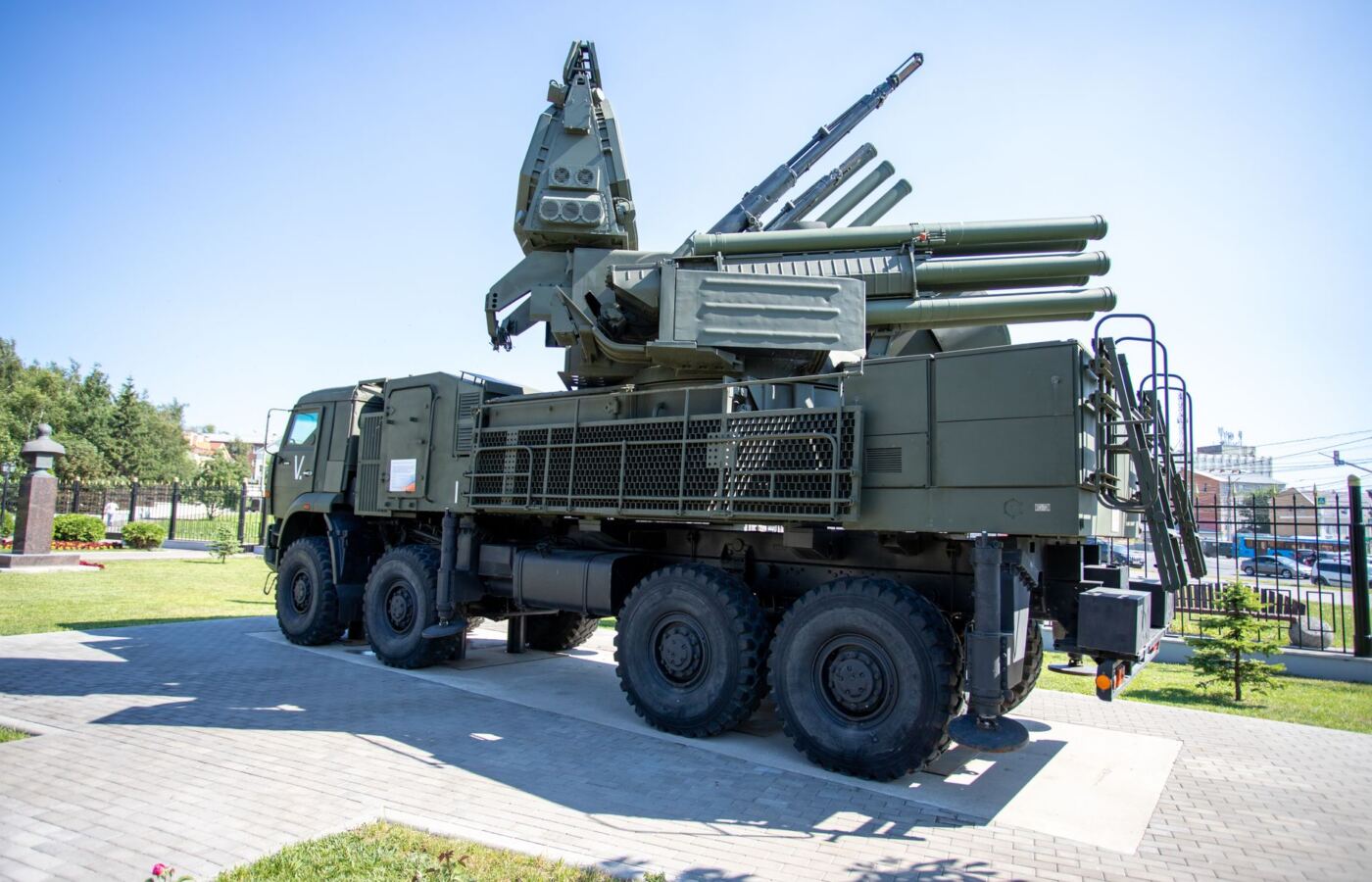
The existing M-SHORAD Increment 1 is a system based on the Stryker platform and is currently known as SGT STOUT. According to the Congressional Research Service, the first system was delivered to a unit in April 2021, and the unit was fully equipped by the end of 2022.
Currently, one M-SHORAD battalion is equipped with 36 vehicles of the SGT STOUT type. The total number of Increment 1 systems initially planned by the Army is 144. While the existing systems are based on a wheeled platform, Increment 4 aims for a modular structure that can be mounted on various vehicle and robotic platforms.
The focus is not on vehicles, but on modules.
The Congressional Research Service stated that the Army issued an Increment 4 information request in May 2024, focusing on providing air defense capabilities to dismounted maneuver units. This is different from simply replacing existing systems with new vehicle types.
Defense contractors have the opportunity to propose integrated systems that combine pallet-type launch platforms, sensors, cannons, missiles, lasers, and electronic warfare equipment. However, the final contractor, the number of units to be deployed, the production cost per unit, and the total project cost have not been disclosed.
Testing still precedes the contract.
Here is another point that the U.S. Congress and taxpayers will be watching closely. It is necessary to confirm whether the cost of integrating multiple effects into a single platform actually translates into improved combat effectiveness. Changes in the schedule could also affect the order prospects of related defense contractors and the prioritization of defense budgets.
The actual effectiveness has not yet been confirmed.
The requirement to focus Increment 4 on unmanned aerial vehicles for Groups 1-3 has been confirmed. However, publicly available performance data demonstrating the ability to defend a drone swarm of a certain size and under specific conditions has not been verified.
“Simply stopping drones” is not enough.
The final armament has not yet been determined. It is not yet decided which of the following will actually be installed: Stinger, APKWS II, Hellfire, a 30mm autocannon, electronic warfare equipment, or a laser. Currently, the direction being pursued is the integration of kinetic energy weapons and non-kinetic energy weapons.
Putting counter-drone missions, helicopter and fixed-wing aircraft defense, and ground direct firepower on a single pallet could potentially reduce specialization. On the other hand, if the sensors and effectors can be changed to suit the mission, it can provide flexibility that is not limited to specific types of platforms.
Flexibility comes with complexity.
Ultimately, the key issue is not just the number “end of 2029.” The crucial factor is whether the Army completes the testing and safety approvals, and how easily actual units can operate this module. What is clear at this point is that the Army intends to provide Increment 4 to the first battalion-sized unit by the end of 2029, but the schedule and final configuration are still subject to change.
The targets to be blocked are not limited to drones.
Frequently Asked Questions.
When will the U.S. Army’s M-SHORAD Increment 4 be deployed?
The Army has set a goal to equip the first battalion-sized unit by the end of 2029. However, the schedule is subject to change, and the exact dates for Initial Operational Capability (IOC) and Full Operational Employment (FUE) are inconsistent in publicly available information.
What does the M-SHORAD Increment 4 system defend against?
Groups 1-3 unmanned aerial vehicles, rotary-wing aircraft, fixed-wing aircraft, and ground targets are identified as engagement targets. Direct fire capabilities are also required for engaging ground targets.
What is the difference between this and the existing SGT STOUT?
The SGT STOUT is a system based on the Stryker platform. Increment 4 aims for a modular structure that can be mounted on or operated off the JLTV, ISV, and future robotic platforms.
Ultimately, what kind of weapon will be mounted?
It has not yet been finalized. Only the direction of integrating kinetic energy weapons, such as missiles and direct-fire guns, with non-kinetic energy weapons has been proposed.
Is it possible to completely block a swarm of drones?
It is not possible to make such a definitive statement. A U.S. Army official stated that it is currently impossible to defeat a drone swarm with a single system. The actual scale of Increment 4’s swarm defense capabilities, as demonstrated in public live-fire exercises, has not been confirmed.