- The legacy of the Cold War collapses before the challenge of climate change.
- The unvarnished truth about military equipment.
- Who will be ahead in this competition?
- Between what has been confirmed and what remains unknown.
- If technology advances quickly, the environment changes even faster.
- Frequently Asked Questions.
The legacy of the Cold War collapses before the challenge of climate change.
Since the 1970s, the U.S. Navy has relied on acoustic maps of the Arctic for over half a century. This was because it was necessary to precisely understand how low-frequency sound waves propagate in order to detect submarines operating at great depths. However, these maps are now becoming obsolete. This is because the warming of the Arctic waters is changing the paths of sound waves. In my opinion, this is not simply a technical issue, but rather evidence that climate change is disrupting defense strategies.
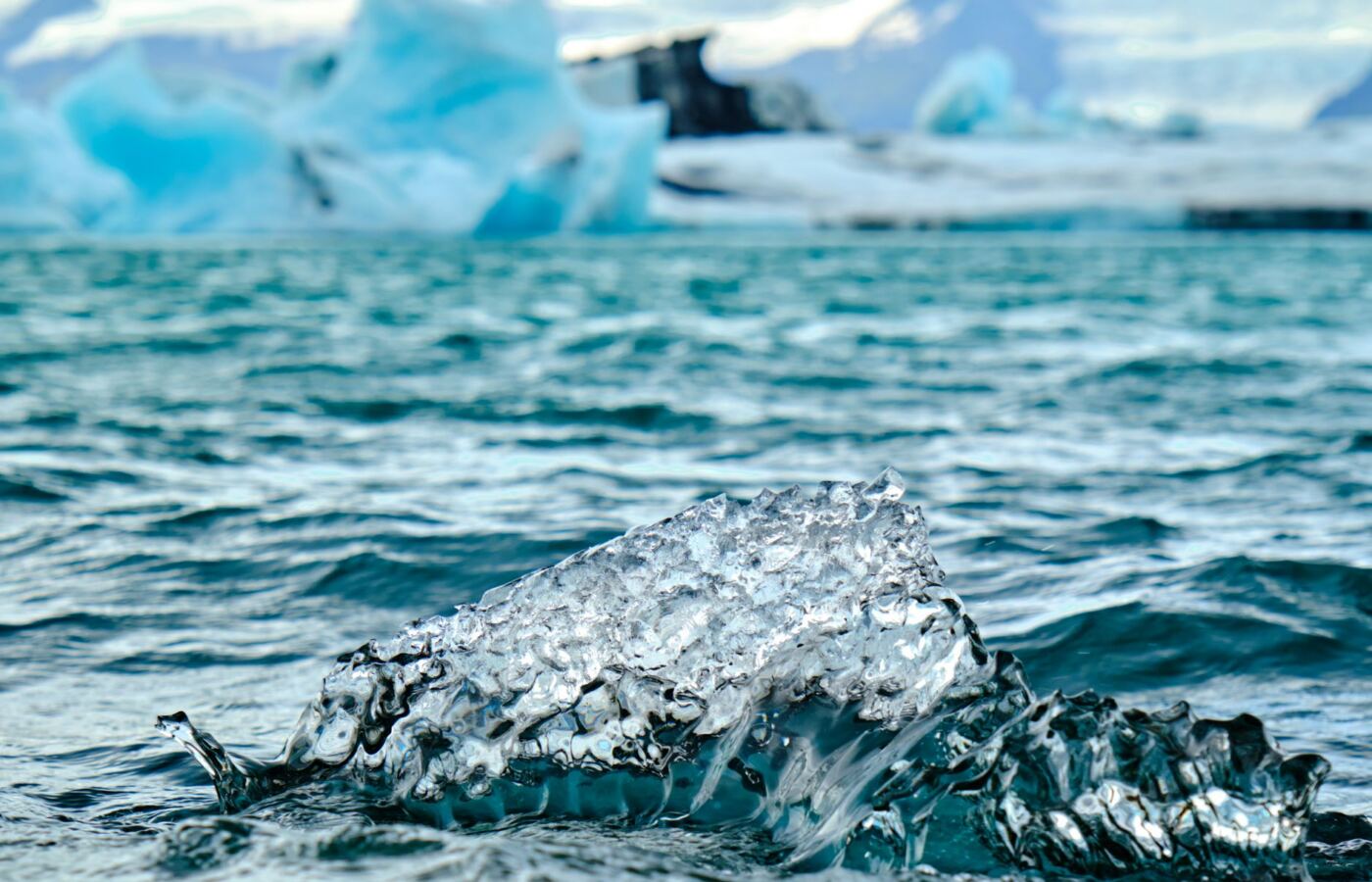
Over the past 50 years, the surface temperature of the Arctic has risen more than twice the global average. As warm water flows up from the North Pacific and the North Atlantic, the temperature and salinity of the seawater are mixing. Sound waves travel along these layered structures, and the fact that these structures are changing rapidly indicates a significant shift. Scientists have been paying close attention to this. If the water temperature in the Beaufort Sea has risen by 1.5 degrees Celsius since the 1970s, it means that the “sound wave highway” must also be redesigned.
The unvarnished truth about military equipment.
The problem was straightforward: if the acoustic acoustic map becomes unreliable, then all detection systems that rely on it also become questionable. Detecting submarines is like searching in the dark ocean using only sound waves as a flashlight; what would happen if the angle of that flashlight suddenly changed? This uncomfortable truth was realized by the U.S. Navy and its partner nations.
In 2024, a team from the MIT Lincoln Laboratory deployed commercial sensors on the ice in the Arctic. They recorded the sounds of ice breaking, whale vocalizations, and ship engine noise. This was not enough. Last year, they took a further step during the annual Operation Ice Camp exercise. The research team drilled through the ice and sent a robot downwards. They successfully transmitted real-time data by passing through 3.6 feet of ice, using a special modem developed by the Norwegian startup Havguard.
The secret of that modem was fascinating. It transmitted information using a changing magnetic field, not radio waves. The transmitter was located under the ice, and the receiver was on top of the ice. Data was transferred at a speed of 1.2 kilobytes per minute. This is extremely slow by modern internet standards, but MIT engineer David Whelihan described it as “very encouraging.” That is the nature of scientific research in extreme environments. Under unusual conditions, even small advances represent a significant achievement.
Who will be ahead in this competition?
It was not only the United States that recognized the problem. Last year, Operation Ice Camp brought together Australia, Canada, France, the United Kingdom, Norway, and Japan. These were all countries that understood that the Arctic region presented both a common threat and an opportunity. As the ice melts, the volume of traffic in the Arctic Ocean is increasing. This means that new shipping routes are opening up. At the same time, it also means that new areas are becoming available for submarine operations. A sense of obligation to secure these technologies in order to gain a military advantage united these nations.
The MIT team is already targeting the year 2028. They have set goals to develop sensors that can be deployed from the air and to improve the practicality of the modem. The time until a distributed sensor network enables real-time acoustic modeling is not long.
Between what has been confirmed and what remains unknown.
The undeniable fact is this: environmental changes in the Arctic have already occurred, and existing detection methods are being forced to adapt. Distributed sensors, unmanned underwater vehicles, and real-time monitoring are no longer optional; they are essential.
However, there are still many unanswered questions. The transmission speed of 1.2 kilobytes is still being tested to determine if it is sufficient for the scale of military operations. Deploying sensors in extreme environments remains expensive. And the biggest mystery is this: How much progress have Russia and China made? How far behind are we in this technological competition to push the limits of memory? I believe that the answer to this question is likely to determine the future of the Arctic.
If technology advances quickly, the environment changes even faster.
A paradoxical situation is unfolding. While scientists and the navy are attempting to respond with specialized technologies, the Arctic ice is disappearing faster than anticipated. The technology, which uses high-fidelity geophones to capture the vibrations of the ice and magnetic induction modems to transmit data, is undoubtedly innovative. However, by the time all of this technology is developed, the Arctic may have already changed significantly.
The point I am focusing on is this. The core of this article is not simply a technology news item stating that “acoustic maps are outdated.” Rather, it is evidence that a macroscopic phenomenon, climate change, is simultaneously redesigning national defense strategies, the international order, and even the paradigm of science and technology. A country’s sensor network competes with another country’s sensor network. Environmental data becomes military intelligence. Extreme scientific and technological advancements determine the strategic interests of each country.
The next Operation Ice Camp is scheduled for 2028. At that time, what will we be able to confirm? It seems that the time has come to ask a deeper question than simply “how much technology has advanced,” namely, “who is preparing to dominate the Arctic?”
Frequently Asked Questions.
What does it mean that the acoustic acoustic map of the Arctic is not accurate?
During the Cold War, the U.S. Navy relied on a “acoustic map” that precisely detailed how low-frequency sound waves propagate at various depths in the Arctic. This map was essential for locating submarines hidden underwater. However, as the Arctic water temperature has increased more than twofold over the past 50 years, the propagation paths of sound waves have fundamentally changed. Consequently, the old maps have become obsolete.
So, how does the Navy plan to address this issue?
Instead of the existing fixed surveillance system, we aim to monitor the real-time acoustic environment using a distributed autonomous sensor network. The MIT research team is currently testing robots and specialized communication modems for data collection under the ice, and plans to develop air-dropped sensors by 2028.
Why does only the United States have this? What about other countries?
It is not only the United States. Last year, Australia, Canada, France, the United Kingdom, Norway, and Japan also participated in the training. As the ice cover decreases, the Arctic sea routes are opening up, and their strategic importance is increasing. All major maritime powers understand that they must secure this technology at this time.
Can this technology also be used in the civilian sector?
It is entirely possible. Autonomous sensor technology in extreme environments can be applied to basic sciences such as climate change monitoring, marine life tracking, and oceanographic research. However, currently, as this technology is primarily for military applications, there are restrictions on information disclosure and international cooperation.
Will this resolve the issue?
Not yet. The data transmission speed of the modem is still limited to 1.2 kilobytes per minute, and deploying sensors in extreme environments is expensive. Moreover, there is a possibility that the rate of environmental change in the Arctic may be faster than the rate of technological development.
Are Russia and China also developing the same technology?
Specific information has not been disclosed. However, considering the strategic importance of the Arctic, it is highly likely that major military powers have engaged in similar technological competitions. It is expected that the entity that develops a reliable acoustic monitoring system first will be a key factor in determining military superiority in the Arctic.