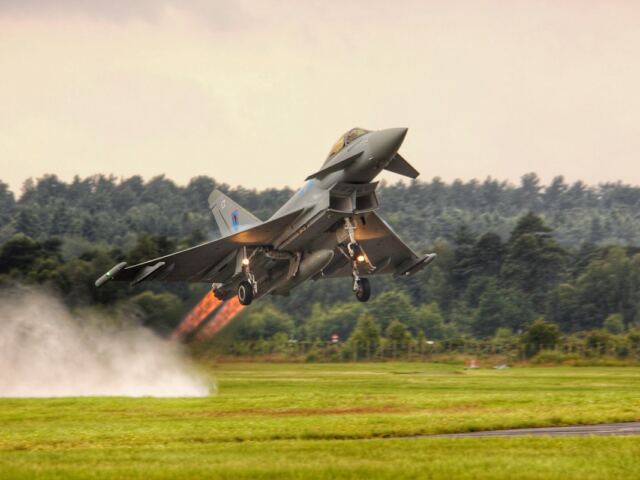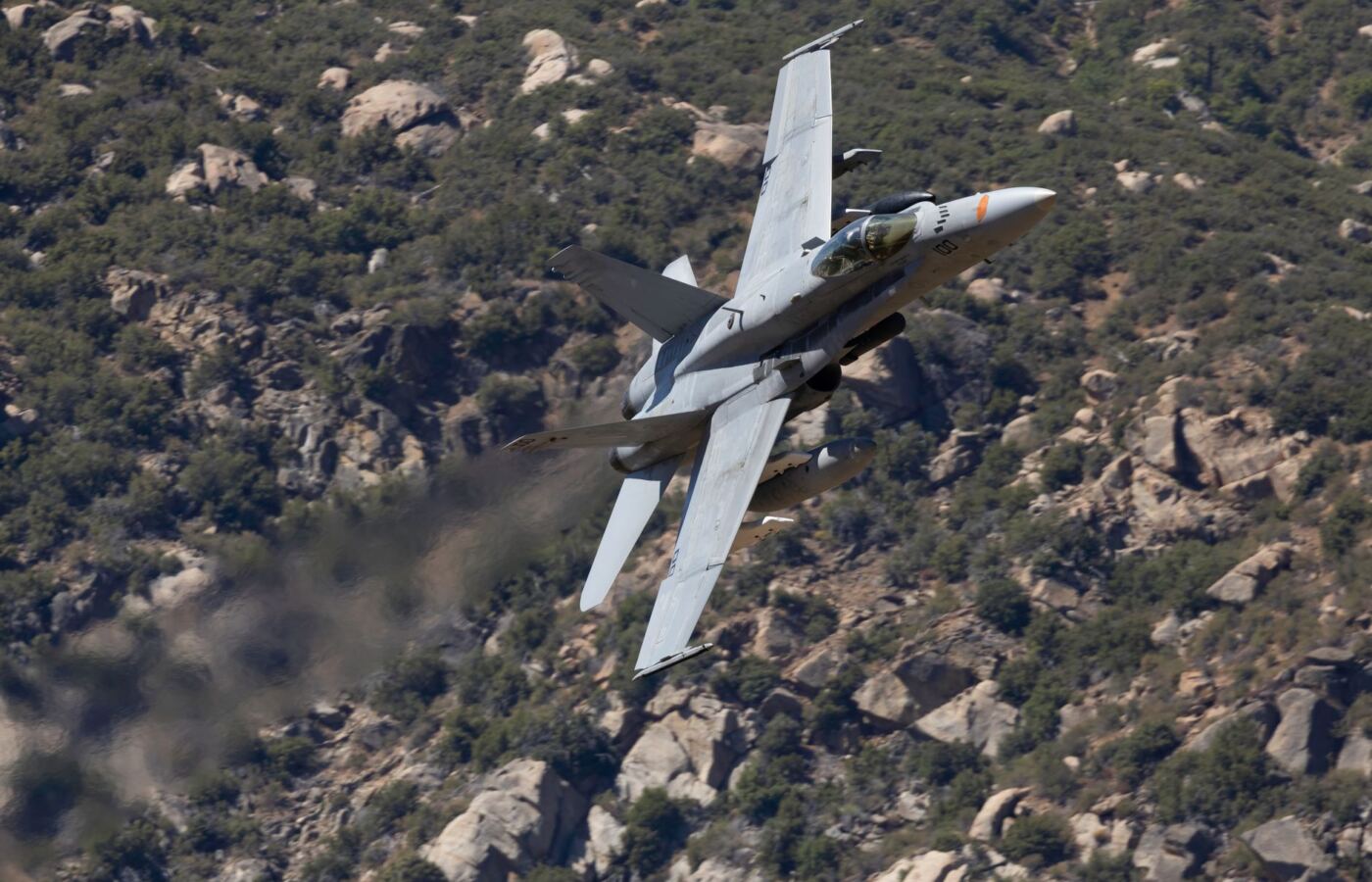
- Two F-15EX aircraft, originally designed for air-to-air combat, have begun carrying bombs and fuel simultaneously.
- Why was a conformal fuel tank installed now?
- What is the difference compared to an external fuel tank?
- Are these two deployments a test, or the beginning of fielding?
- The air-to-ground capabilities are expanding, but the areas where definitive statements can be made remain limited.
- The next key point to watch is not the tanks themselves, but the standardization.
- Frequently Asked Questions.
Two F-15EX aircraft, originally designed for air-to-air combat, have begun carrying bombs and fuel simultaneously.
Two F-15EX aircraft, initially designed for air-to-air combat, have now begun flying with bombs and fuel tanks attached to their fuselage. Two F-15EX Eagle II aircraft belonging to the 142nd Wing of the Oregon Air National Guard have entered flight operations in an approved configuration, equipped with conformal fuel tanks.
This tank, attached to the side of the fighter jet, is not simply a “fuel tank”. Each tank holds 750 gallons of fuel and provides six additional pylons for each tank. This means that it can carry more fuel while also allowing the space under the wings to be used for weapons. This equipment makes the fighter jet’s choice between fuel and bombs a little less harsh.
In my opinion, the key aspect of this scene is not the tank itself, but the changing identity of the F-15EX. Initially, it was intended as an air superiority and national air defense platform to replace the F-15C/D, but now it appears to be a multi-role fighter with long-range air-to-ground capabilities in mind.
Why was a conformal fuel tank installed now?
The U.S. Air Force did not initially plan to equip the F-15EX with conformal fuel tanks as a standard feature. The program, established from FY20 to FY23, was designed to directly replace F-15C/D aircraft in air superiority and homeland defense missions, and existing F-15C/D aircraft typically did not operate with conformal fuel tanks. This is the reason why the budget for the tanks was not included in the initial operational deployment of the F-15EX.
The F-15EX is designed to be compatible with conformal fuel tanks. The test aircraft have been flying with these tanks for several years, and the aircraft was originally designed with expandability in mind. Features that were previously omitted from the budget have now been reintroduced to meet the demands of the operational environment.
In the Pacific Ocean, the distance between a base and an aerial refueling support point can be significant. At this point, a fighter’s loiter time and forward operational range are not merely decorative features; they are variables that determine survival and mission continuation. Conformal fuel tanks increase the likelihood that the F-15EX will be able to travel further and remain airborne for a longer duration. While the exact increase in actual operational range or loiter time has not yet been publicly disclosed, the direction is clear.
To go far, one must first endure for a long time.
What is the difference compared to an external fuel tank?
The F-15EX can use a 600-gallon external auxiliary fuel tank instead of a conformal fuel tank. However, a single conformal fuel tank holds 150 gallons more fuel than this. Furthermore, due to its close-fitting design, the conformal fuel tank allows for the use of pylons under the wings for weapons or other payloads, which is a difference.
This combination is particularly significant for air-to-ground missions. The 142nd Wing dropped 500-pound and 2,000-pound training bombs from F-15EX aircraft at Mountain Home Air Force Base in Idaho in May 2026. Subsequently, from the end of August to the beginning of September 2026, the first live bombs were dropped by operational F-15EX aircraft at Nellis Air Force Base in Nevada. Conformal fuel tanks, which increase fuel capacity and payload capacity, are well-suited to this trend.
However, it should not be presented as an all-purpose equipment. Conformal fuel tanks cannot be jettisoned during flight and can affect speed and maneuverability. For missions primarily focused on air combat, external auxiliary fuel tanks that can be jettisoned when needed may be a more flexible option. Carrying more fuel does not guarantee an advantage in every engagement. The principle that “excess weight hinders performance” also applies to fighter aircraft.
Therefore, this upgrade should be viewed not as a one-size-fits-all solution for all missions, but rather as a measure to expand the options for long-range and air-to-ground missions. In this regard, I believe that the F-15EX is not simply a new version of the older F-15C/D, but rather a platform that is evolving to adapt its capabilities to different missions.
Are these two deployments a test, or the beginning of fielding?
The 142nd Wing, from Air Combat Command, has received conformal fuel tanks and is using them on two F-15EX aircraft. A Wing official stated that the aircraft have been flown for the past two weeks with the approved configuration. This means that actual operational flights have been conducted, not just photographic sessions in the hangar.
However, it would be premature to call this a standard for permanent equipment or the entire operational capability. It is not yet confirmed how long the two aircraft will be used for tank operations, or whether they will continue to be maintained as regular operational equipment. Currently, what has been confirmed is the existence of “two approved operational configurations,” not the “standard equipment for all F-15EX aircraft in the U.S. Air Force.”
The numbers indicate the direction of the next steps. The U.S. Air Force included the procurement of conformal fuel tanks for 24 F-15EX Lot 8 aircraft in its FY2027 budget proposal. However, the inclusion in the budget proposal does not guarantee final approval or completion of delivery. There are still hurdles to overcome, including the contract and production schedule.
As of September 2026, the U.S. Air Force has taken delivery of 22 F-15EXs, including test aircraft. The overall plan calls for 267 aircraft, while 129 had been proposed in the past. As the number increases, so does the burden of equipment standardization and the pressure on the budget. For U.S. taxpayers, deciding who will have the tanks installed and when is a question just as directly tied to their wallets as why the tanks are being installed in the first place.
Two of them are signals, but they are not yet the rule for the fleet.
The air-to-ground capabilities are expanding, but the areas where definitive statements can be made remain limited.
The 142nd Wing is the first unit in the U.S. Air Force to operate the F-15EX operationally, having received its first F-15EX in June 2024. With this unit successively deploying training bombs and live ammunition, and also operating conformal fuel tanks, the trend of expanding the F-15EX’s mission scope from air-to-air combat to multi-role operations has become clear.
Colonel Joshua Hovanas, commander of the 142nd Wing Operations Group, described this as another major step in transforming it from an air-superiority organization into a truly multirole air-superiority force. The wording may sound grand, but the changes shown in the training scenes are clear. The F-15EX is expanding its operational scope beyond simply being an aircraft that engages enemy aircraft, operating instead as a platform for attacking ground targets.
It is not possible to equate the dropping of training bombs and live ammunition with actual combat operations. There is still insufficient evidence to definitively state that complete multi-purpose operational capabilities have been secured. Air-to-ground training demonstrates the expansion of capabilities, but it is not a certification that those capabilities have been validated under all operational conditions.
The existing F-15C/D aircraft at the Kadena Air Base in Japan are scheduled to be replaced by F-15EX aircraft, with the first deliveries expected to begin in fiscal year 2027. It has not yet been confirmed whether the Pacific deployment aircraft will be equipped with conformal fuel tanks as a standard feature. However, given that this is a region where long-range operations and extended loiter time are highly valued, it is difficult to say that this equipment selection is unrelated to future deployment discussions.
In my opinion, the most important thing to be wary of here is the exaggeration that “since it is equipped with tanks, it will now perform all missions well.” On the other hand, dismissing it as “meaningless because there are only two units” also misses the point. The actual change lies not in the middle, but in the process of incorporating long-range and air-to-ground missions into the force design through the operation of these two units.
The next key point to watch is not the tanks themselves, but the standardization.
There are three things to check going forward. First, whether the conformal fuel tanks for 24 Lot 8 aircraft included in the FY2027 budget proposal receive final approval and lead to actual procurement. Second, whether the same equipment will be applied to the F-15EX aircraft already deployed, as well as to aircraft bound for Kadena, Japan. Third, whether the conformal fuel tanks will remain part of the approved configuration for specific units or become standard equipment selected according to the type of mission.
It has not been confirmed whether these changes have had any impact on noise levels or civilian air traffic around Portland Air Force Base. It is not yet possible to say that there has been an immediate change in the daily safety of local residents. However, if the aircraft’s mission expands, it is necessary to monitor the base’s operations, budget, and training accordingly. A single piece of equipment may not change the world, but the direction of operational capability is often first reflected in the equipment list.
The F-15EX began as a replacement for aging fighter aircraft. Now, conformal fuel tanks and air-to-ground training show that this aircraft is not merely a replacement, but a force intended to go farther and do more. For now, however, the only confirmed figures are two aircraft and a budget proposal for 24. The future of all 267 aircraft is still on the numbers table, and how many tanks will be included in that table depends on the U.S. Air Force’s next choice.
The true transformation of the F-15EX is determined not by photos of the installation, but by the procurement table.
Frequently Asked Questions.
What is the reason for equipping the F-15EX with conformal fuel tanks?
This is to secure additional fuel and increase the aircraft’s payload capacity. A single conformal fuel tank can store 750 gallons of fuel and provides six additional hardpoints.
How many F-15EX aircraft are equipped with conformal fuel tanks?
Two operational F-15EX fighter jets from the 142nd Wing of the Oregon Air National Guard flew with conformal fuel tanks.
Does every F-15EX aircraft in the entire U.S. Air Force fleet of 267 have a conformal fuel tank?
It has not yet been confirmed. The FY2027 budget includes conformal fuel tanks for 24 F-15EX aircraft in Lot 8, but whether this applies to the entire force is yet to be determined.
Are conformal fuel tanks better than external auxiliary fuel tanks?
Conformal fuel tanks provide 150 gallons more fuel than a 600-gallon external auxiliary fuel tank, and the pylons under the wings can be used for carrying weapons. However, they cannot be jettisoned during flight, and they can affect speed and maneuverability, so they are not always advantageous for every mission.
Will the F-15EX fighter jets deployed to Kadena, Japan, also be equipped with this system?
The F-15EX is scheduled to replace the existing F-15C/D aircraft at Kadena, but it has not yet been confirmed whether the conformal fuel tanks will be standard equipment on the aircraft deployed at Kadena.