- The reason why eight shotguns are positioned behind the missile defense system.
- The final approach problem that long-range air defense systems cannot solve.
- More important than the number of guns is who spots the drone first.
- Benelli is not selling shotguns; it is selling the right to secure a position in the final defensive layer.
- Next time, instead of focusing on promotional slogans, you should pay attention to these three things.
- Frequently Asked Questions.
- Is the Rivet M4 a system purchased by the Danish military?
- What is the official effective range of the Benelli M4 A.I. drone, Guardian?
- Does the Rivet M4 fire autonomously?
The reason why eight shotguns are positioned behind the missile defense system.
It is a weapon that works best only after a drone enters within 50 meters of the defended object. The key takeaway from the demonstration by the Italian company DUALEE, which showcased the LIVET M4 Remote Controlled Weapon Station equipped with eight Benelli M4 A.I. Drone Guardian shotguns in front of the Danish military, is not the number of barrels.
Denmark is already a country that invests more than 6,000,000,000 Danish kroner in ground-based air defense systems with a range of several to tens of kilometers. However, it is now considering introducing a close-in/terminal-layer defense system based on shotguns. This means that even though the range of air defense has increased, the remaining vulnerability within the last tens of meters has not disappeared.
DUALEE conducted a live demonstration of the Rivet M4 for the Danish military at a private location in Denmark in mid-November 2026. The Rivet M4 boasts automatic target tracking and remote engagement capabilities. However, details regarding the purchase contract, price, actual firing tests, and shootdown results have not been disclosed. For now, it is closer to a testbed for gauging the market’s pain points than a sales effort.
The final approach problem that long-range air defense systems cannot solve.
The Rivet M4 appears to be a remotely controlled weapon station that mounts a large number of shotguns. Shotguns fill the drone’s flight space with a spread of pellets rather than relying on a precise hit. This is also an answer to the economics of war, in which it is difficult to repeatedly fire expensive missiles at cheap first-person-view attack drones.
The actual problem is not the gun itself, but the time. Benelli specifies an optimal effective range of 0 to 50 meters, with an extended maximum range of up to 100 meters under extreme conditions. While the Benelli defense sector claims an average range of approximately 100 meters for individual firearms, and some demonstrations have claimed shootdowns at 140 meters, this is different from the repeatable performance of the completed Rivet M4 system.
Therefore, this system is not an air defense weapon designed to intercept drones from a distance. It is a last-resort physical defense against small quadcopters or FPV drones that have bypassed electronic warfare systems, jammers, and missile defense layers. Ideally, insurance is not needed, but by the time a claim is filed, the building is likely already too close.
The reason Denmark provided the demonstration site is clear. In September 2025, the Danish military publicly announced that drones had been observed over various military facilities, including air force bases and army units. Prior to that, in June 2025, they urgently pursued a short-term, ground-based air defense package consisting of systems from Diehl, MBDA France, and Kongsberg. Long-range air defense and close-range shotgun turrets are not competitors; they are complementary systems that rely on each other’s limitations.
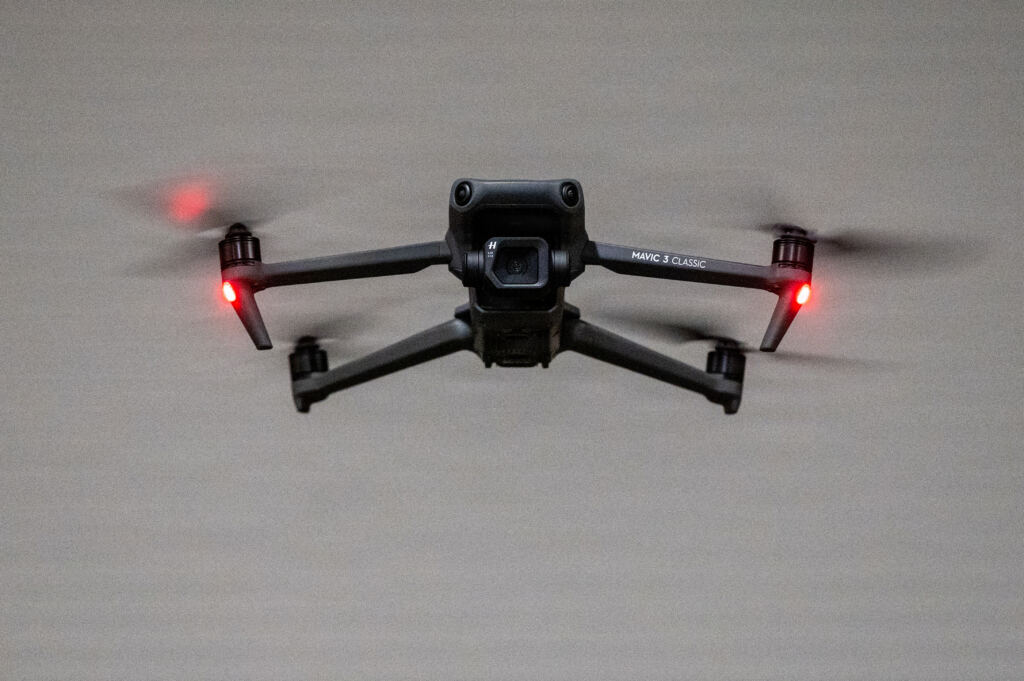
More important than the number of guns is who spots the drone first.
The DUALEE system boasts AI-based detection, identification, and tracking capabilities, as well as the ability to simultaneously track up to 5 targets. However, many specifications remain undisclosed. The detection range, hit/kill rates for different target types, ammunition consumption, reload time, performance in adverse weather conditions, and performance in a jamming environment have not yet been confirmed.
This omission is not insignificant. In a system with an optimal effective range of 0 to 50 meters, the time it takes for the radar or RF sensor to detect the target, the time it takes for the command and control system to transmit target information to the turret, and the time it takes for the gunner to approve the firing within a few seconds are more critical than the number of barrels. Eight guns increase response opportunities but do not create time.
DUALEE suggested the possibility of integrating with external RF and radar sensors, but did not disclose its own sensor configuration or detection range. Furthermore, the company’s description indicates that automated detection, tracking, and aiming alongside the gunner’s final firing decision. It is unclear to what extent these functions are automated, and who is responsible for triggering the firing mechanism. The operational concept is not clearly defined.
At this point, there is a difference between Turkey’s Dron Kalkanı system and the Rivet M4. The Dron Kalkanı emphasizes vehicle-mounted dual-barreled shotguns and unmanned combat operations. In contrast, the Rivet M4 leaves room for human final approval. This is not simply a matter of technological superiority, but rather a question of who will be responsible for mistaken identifications and legal liabilities in the defense of bases and the security of critical infrastructure.
The direct impact on South Korea is not significant. The introduction, contract, and testing results of the Rivet M4 system for the South Korean military have not been publicly confirmed. However, in the context of the South Korean government’s plan to discover public demand and establish a national anti-drone system with an investment of approximately 2,000,000,000,000 won over five years, physical terminal-defense examples for cases where jamming fails or is difficult to implement can serve as useful references. The maximum detection range of 8 km and jamming capabilities of the radar integration solution currently being tested by the South Korean military are not substitutes for the Rivet M4’s defense capabilities, which are in the tens of meters range.
Benelli is not selling shotguns; it is selling the right to secure a position in the final defensive layer.
I believe the purpose of this demonstration is not simply to sell eight shotguns to the Danish military. What Beretta Defense Technologies and Benelli are aiming for is to transform individual firearm sales into a system-level project that includes AI target classification, sensor integration, remote weapon modules, and comprehensive support.
There are two reasons for this. First, Denmark is already pursuing a short-term, ground-based air defense package worth more than 6,000,000,000 Danish kroner, while also testing countermeasures against close-range drones. Second, the competition is not only limited to the Rivet M4, but also includes the drone Kalkan’s two-gun configuration, and Milrem and Frontline Robotics’ four-gun prototype for an unmanned ground vehicle (UGV), indicating that the competition is expanding from multi-barreled shotguns to sensor and platform integration.
In my opinion, the success or failure of this market depends not on a single video of a downed aircraft, but on which system can most easily integrate itself between the existing air defense network and the base security network. While gun manufacturers may enter the air defense industry starting with barrels, the contracts usually become more substantial in the areas of software and maintenance support.
If my assessment is incorrect, it would be because the Rivet M4, when subjected to public testing, demonstrates a high rate of repeated shootdowns and low ammunition consumption, thereby creating independent demand for the complete product. Currently, the publicly available demonstrations lack sufficient data to prove this possibility, as the dates, locations, targets, and firing results are not disclosed.
Next time, instead of focusing on promotional slogans, you should pay attention to these three things.
- It remains to be seen whether the Danish Ministry of Defense or the Danish Defence Acquisition and Procurement Agency will announce testing and evaluation, information requests, bidding, or contracts within the next 6 to 18 months. This will indicate whether the demonstration has progressed to an actual acquisition program.
- In the next defense exhibition or subsequent demonstrations, it is necessary to confirm whether DUALEE and Benelli will disclose information such as the type and speed of targets, detection range, engagement range, hit/kill rate, and ammunition consumption. These figures are essential for distinguishing between promotional videos and actual operational performance.
- It remains to be seen whether South Korea’s 2027 counter-drone acquisition plan and its standard certification details include physical terminal defense in addition to jamming. This will indicate whether the final layer of defense for critical infrastructure is formally recognized.
Frequently Asked Questions.
Is the Rivet M4 a system purchased by the Danish military?
No. While a demonstration for the Danish military was made public, the purchase review, contract, and test evaluation results have not been announced.
What is the official effective range of the Benelli M4 A.I. drone, Guardian?
Benelli specifies an optimal effective range of 0 to 50 meters, with an extended range of up to 100 meters under extreme conditions.
Does the Rivet M4 fire autonomously?
DUALEE promotes its capabilities for automatic detection, tracking, and aiming, but it states that the final firing decision remains with the operator. The extent of the automation has not yet been clearly disclosed.
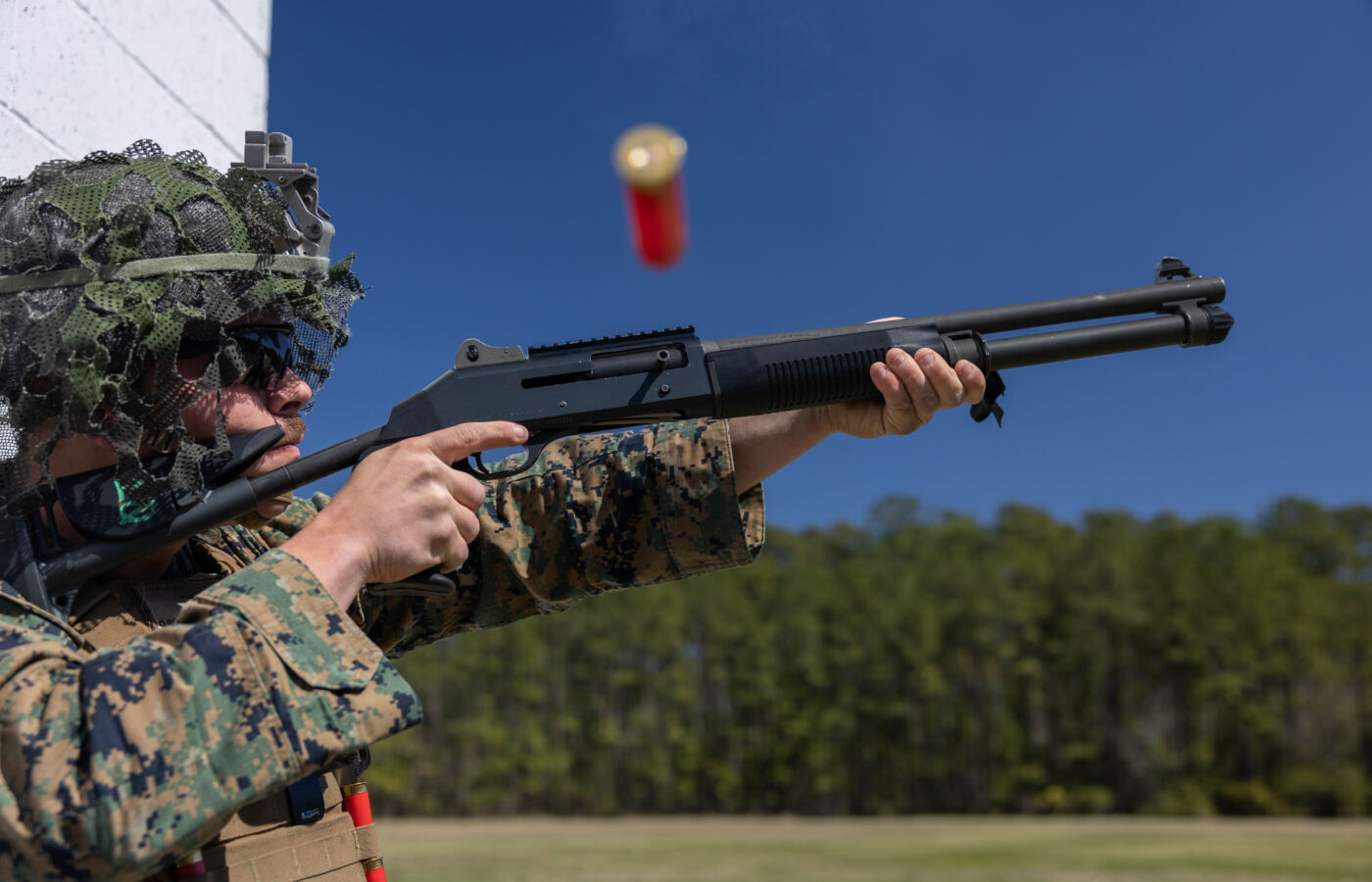
Representative photo — U.S. Marine Corps · Cpl
Article photo — U.S. Air Force · Airman 1st Class Theodore Gowdy
This is a work of the U.S. federal government (public domain). The use of U.S. Department of Defense visual materials does not imply endorsement by the Department of Defense.