- The name of the nuclear bomb was leaked from the budget document, not from an official announcement.
- The moment the comprehensive account was split, the business gained a name and negotiating power.
- The intention was to bring the opponent, who had moved underground, back into the targeting range.
- The key to success for the B94 lies not in its bomb design, but in the shortcomings of its production system.
- The objective of the B94 is not to penetrate deeper, but rather to make the opponent’s calculations more expensive.
- Here are three key indicators to watch for in the upcoming budget:
- Frequently Asked Questions.
- Is the B94 already a nuclear bomb deployed for actual use?
- Are B94 and NDS-A the same business?
- Is the B94 a weapon targeting South Korea or North Korea?
The name of the nuclear bomb was leaked from the budget document, not from an official announcement.
The designation of the United States‘ new nuclear bomb appeared not in a Department of Defense briefing or a presidential speech, but in a single line of a Senate budget table. The nuclear weapons modernization table in the fiscal year 2027 budget recommendation separately listed an item for the B94 nuclear bomb and $77,108,000.
It has not yet been officially confirmed whether this name is the official designation for the new air-delivered nuclear bomb, or whether it is the same as the project previously known as the Nuclear Deterrent System-Air-delivered (NDS-A). However, in U.S. nuclear weapon nomenclature, the letter “B” typically denotes air-delivered bombs, and the NDS-A has been described as a new nuclear option targeting hardened and deeply buried targets (HDBT).
The core of the matter is not that a single bomb suddenly appeared. Rather, it lies in the fact that the initial development project, which the executive branch had kept tied to a general account, was moved by the Senate Appropriations Committee to an independent budget line called B94. In the world of nuclear weapons, budget items are both accounting labels and political lifelines.
The moment the comprehensive account was split, the business gained a name and negotiating power.
On the surface, this appears to be a new weapons program worth $77,108,000. However, this money is not for a mass-production contract or operational deployment costs; rather, it is primarily for early-stage development, still designated as Phase 1. Its explosive yield, penetration depth, guidance system, launch platform, production quantity, and deployment timeline have all not been disclosed.
In fact, the administration’s FY2027 request bundled two production evaluations for NDS-A and the Rapid Capability Team (RCT) and sought $99,794,000 for Future Programs. In contrast, the Senate Appropriations Committee separately recommended $77,108,000 for B94 and set aside an additional $122,892,000 for Future Programs. Rather than concealing the existence of the program, this shows Congress beginning to exercise clearer control over which programs receive funding and how much.
This difference is not insignificant. Projects within a comprehensive account may quietly lose priority if the priorities change, but businesses that have gained a specific name become units for parliamentary inquiries and budget negotiations. In other words, the budgetary allocation precedes the design of the weapon and shapes its political profile.
The spokesperson for the National Nuclear Security Administration (NNSA) stated that this project is being aggressively pursued, and that additional information will be released at a time strategically advantageous to the United States. However, a strategically advantageous time for release is not the same as the technically ready deployment time. In nuclear weapons programs, these two timelines often differ.
The intention was to bring the opponent, who had moved underground, back into the targeting range.
The military logic is straightforward. Including China and Russia, potential adversaries such as North Korea and Iran are moving their command structures, nuclear forces, and nuclear fuel cycle facilities underground and dispersing them. As investments in protection against conventional precision strikes increase, the United States faces a growing need to target more resilient and deeply buried assets.
The NNSA has stated that the NDS-A provides the President with an additional nuclear option for destroying hardened and deeply buried targets. The only publicly known U.S. specialized earth-penetrating aerial nuclear bomb is the B61-11 nuclear gravity bomb. If the B94 is the same as the NDS-A, the value of the program may lie not in its actual usability, but in deterring the adversary from considering underground facilities as an absolute safe haven.
However, it is important not to jump to conclusions about its performance. It has not yet been confirmed how deeply the B94 penetrates, whether it reuses existing nuclear explosive devices, or whether it will replace the B61-11 or B83-1 nuclear bombs. Underground bunkers are not made of concrete alone. The opponent’s miscalculations and our own overconfidence also contribute to making those walls thicker.
This is about as far as the connection to South Korea goes. Considering North Korea’s underground command centers, missiles, and nuclear-related facilities, the United States’ ability to destroy deeply buried targets could, in the long term, serve as an underpinning capability for extended deterrence. However, there has been no public confirmation of B94’s inclusion in operational plans for the Korean Peninsula, its deployment in South Korea, its linkage to South Korean military operations, or whether the B-2A or B-21 Raider carries nuclear missions related to South Korea. Calling it a weapon dedicated to countering North Korea or a reinforcement of U.S. Forces Korea is an interpretation that gets ahead of the evidence.
The key to success for the B94 lies not in its bomb design, but in the shortcomings of its production system.
The new name is attention-grabbing, but the larger problem with the U.S. nuclear modernization program lies not in the name itself, but in the factories and certification systems. The NNSA is conducting seven modernization projects in the 2027 fiscal year, including the mass production of the B61-13 nuclear gravity bomb and the development of the W80-4, W87-1, W80-5, and W93 warheads.
The B61-13 is a high-yield derivative that utilizes the B61-12 production infrastructure. The existing explanation is that this reduces the production volume of the B61-12, thereby not increasing the overall stockpile. The fact that even the initial stages of the B94 project have been allocated a separate budget indicates that competition is intensifying in areas such as design personnel, non-nuclear components, high-explosive charges, assembly and disassembly, transportation, and certification capabilities.
The NNSA’s budget request for Weapons Activities is $27,441,000,000. This large number does not directly translate to production capacity. Nuclear weapons are not a product that can be manufactured simply by investing money; they will not be shipped out in the next quarter. Especially in a system that requires verification through computational science, non-nuclear experiments, component testing, and historical data from past nuclear tests, a single bottleneck can hold up the entire schedule.
B83-1 has not yet been retired. The Senate recommendation still allocates $20,686,000 to maintain that stockpile system. With it still unclear even whether B94 will replace B61-11 or B83-1, the United States is pursuing a costly dual-track approach, discussing new options while retaining existing high-yield options.
The objective of the B94 is not to penetrate deeper, but rather to make the opponent’s calculations more expensive.
I believe that the B94 is not a revolutionary weapon that will immediately change the battlefield, but rather a project that aims to restore uncertainty to the adversary who is trying to limit the United States’ options for attack by going underground. First, the publicly available information focuses on a separate budget line and the start of Phase 1, rather than on its power and penetration capabilities. What is currently confirmed is not the capabilities of the completed bomb, but rather a signal from the Congress that the United States will not abandon those capabilities.
Secondly, the United States is already simultaneously pursuing seven nuclear weapon modernization programs, and has also retained funding for the maintenance of the B83-1. This is not simply a matter of replacing old weapons; rather, it is a strategy to maintain multiple nuclear options, which complicates the adversary’s defensive and dispersal investments, as well as their plans for the survival of command structures. The true cost of nuclear deterrence is not just the price of the bombs themselves, but also the additional tunnels that the adversary must dig and the increased security personnel they must employ.
If my assessment is incorrect, it is likely because B94 has moved beyond the initial risk reduction program and has rapidly secured concrete production schedules and a clear plan to replace B61-11 or B83. In that case, B94 should be understood not as a label for a deterrent signal, but as a real generational change in the United States’ air-delivered nuclear forces.
Here are three key indicators to watch for in the upcoming budget:
- If the NNSA or the Department of Defense officially confirms that B94 and NDS-A are identical, that will mean that the name listed in the budget documents is linked to the actual official designation.
- For fiscal year 2027 and beyond, if disclosed, the timing of entry into Phase 2 or Stage 6.2, the conceptual design review, prototype testing, and the target year for the First Production Unit (FPU) will indicate that the initial concept has moved into an acquisition project. If disclosed, this indicates that the initial concept has transitioned into an acquisition project.
- Whether the budgets for the 2027-2029 fiscal years include reductions in the maintenance costs of the B61-11 and B83-1, or mention their decommissioning and replacement, will provide insights into the actual missions of the B94 and the direction of its generational replacement.
Frequently Asked Questions.
Is the B94 already a nuclear bomb deployed for actual use?
It is not. According to publicly available information, the B94 only had a recommended budget amount for fiscal year 2027, and the production quantity, operational deployment schedule, and launch platform have not been disclosed.
Are B94 and NDS-A the same business?
While the possibility is high, neither the NNSA nor the Department of Defense has officially confirmed it. The Senate document did not describe the mission of the B94, and the Department of Energy‘s budget document listed the NDS-A as a Phase 1 project within the Future Programs.
Is the B94 a weapon targeting South Korea or North Korea?
There is no confirmed information to support that. While it may have an indirect connection to North Korea’s underground facilities and long-term extended deterrence discussions, there is no publicly available information regarding its inclusion in operational plans for the Korean Peninsula or its deployment to South Korea.
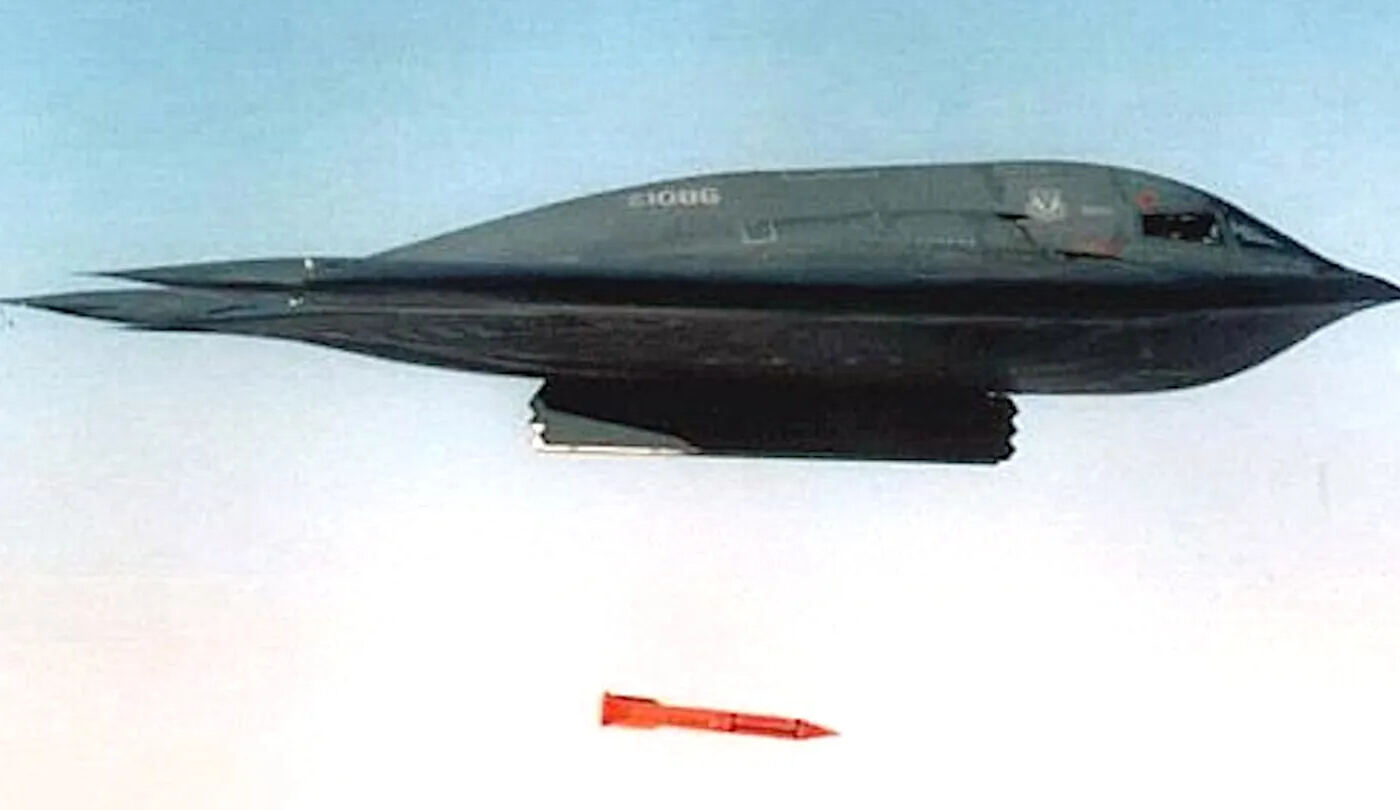
Representative photo — U.S. Air Force · USAF
This is a work of the U.S. federal government (public domain). The use of U.S. Department of Defense visual materials does not imply endorsement by the Department of Defense.