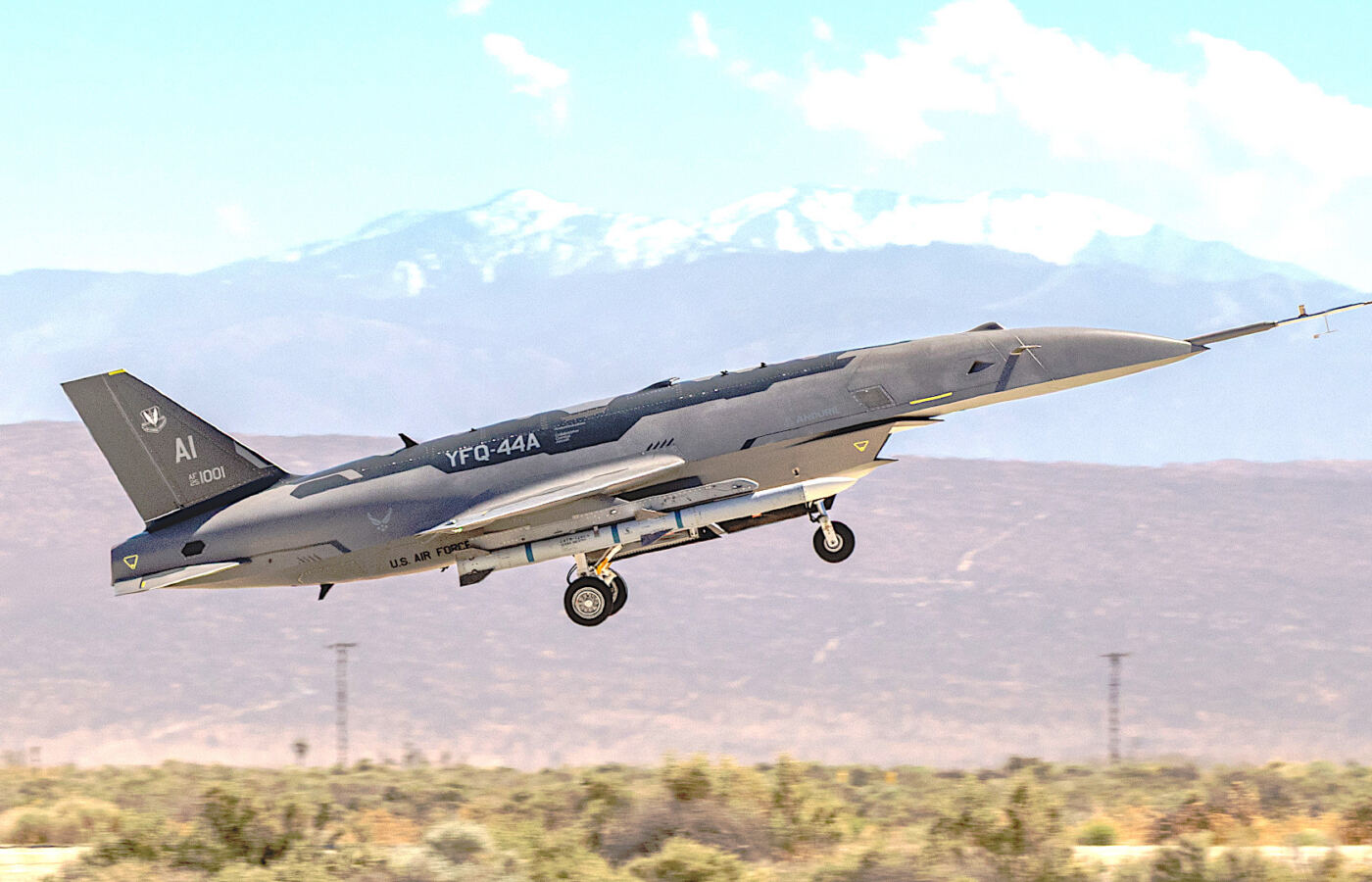
Over Edwards, the Pilot Wasn’t Flying Just One Fighter
In early October, over California’s Edwards Air Force Base, the pilot sitting in an F-22 Raptor cockpit was flying more than his own fighter. He was issuing tactical commands to an unmanned YFQ-44A Fury flying alongside him, and the Fury’s autonomous flight software understood and carried them out. It was as if the pilot’s hand on the controls extended across two fighters.
The U.S. Air Force and Anduril Industries jointly announced the demonstration on October 16. In the event, which involved the 412th Test Wing, the 422nd Test and Evaluation Squadron and the 309th Software Engineering Group, the F-22 became the first crewed fighter to command a pre-production YFQ-44A. The Air Force aims to acquire 500 Collaborative Combat Aircraft, or CCAs, by 2032, and in June awarded Anduril and General Atomics an initial production contract for 150 aircraft. The target unit price is below $30 million—about one-third the cost of an F-35A, which runs roughly $82 million.
But doesn’t this scene look familiar? As it happens, almost the same picture was already in the sky a year ago.
How Long Does “World First” Last?
On the surface, the announcement looks like a clean new record. Mark Shushnar, Anduril’s vice president of autonomous air power, said: “The U.S. Air Force’s CCA program is the fastest-moving and most mature CCA program in the world, and it will be the first to deploy operational aircraft.” That is not wrong. But the word “first” comes with an invisible qualifier.
In fact, the concept of an F-22 controlling a drone in flight was first demonstrated by rival General Atomics on October 21, 2025, at the Nevada Test and Training Range. Instead of an operational CCA, the company used an MQ-20 Avenger surrogate aircraft, along with a tablet-based pilot-vehicle interface, the F-22’s GRACE module, and L3Harris’s BANSHEE datalink and Pantera radio. At the time, a General Atomics spokesperson said, “We already know that the F-22 will play a critical role in manned-unmanned teaming operations, and General Atomics is uniquely positioned to begin that work now.” The wording Anduril itself confirmed directly to TWZ this time was similarly qualified: this was the first demonstration involving an F-22 and a pre-production YFQ-44A.
When the Fury flew in formation with an F-35 last month, the F-35 was not the aircraft issuing commands, either. In other words, this demonstration was a relatively modest test: one F-22 controlling one Fury. The ability to command multiple CCAs simultaneously has not yet been disclosed in numerical terms.
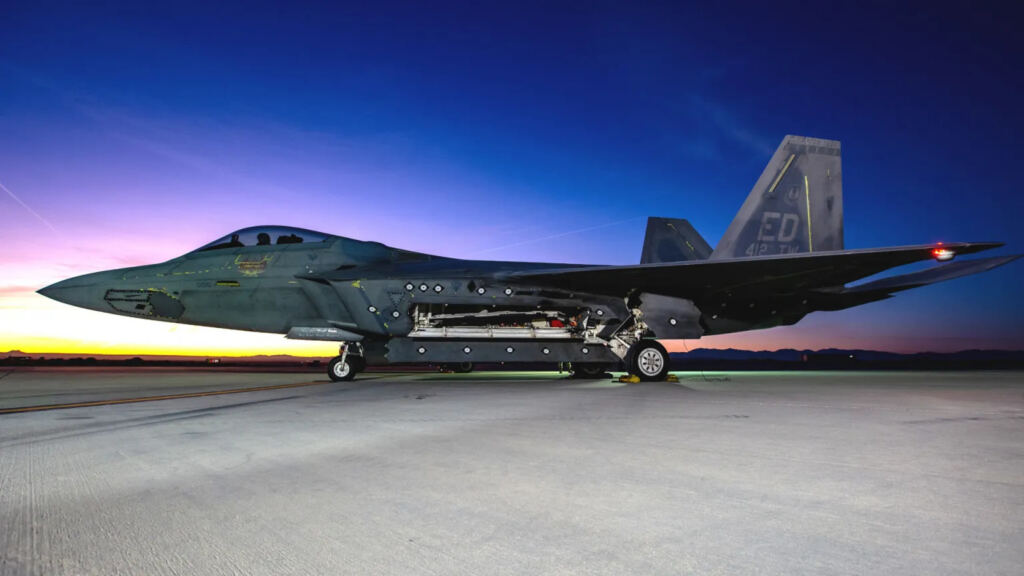
The Undisclosed Cockpit
The announcement presents a success story. The pilot issued commands, the drone understood them, and that result takes center stage. But the key question—how the F-22 cockpit was actually configured—remains unanswered by both sides. The announcement does not explain how a single-seat fighter pilot is expected to manage the workload of conducting his own combat mission while simultaneously directing another aircraft.
Past Air Force budget documents have mentioned the need to integrate a tablet, cables and related equipment for drone control into the F-22. In General Atomics’ demonstration a year ago, the configuration of the tablet-based PVI and datalink module was disclosed in considerably more detail. This time, those details quietly disappeared. Showing the success while concealing what that success demands of the pilot is a familiar form of stagecraft in promotional videos.
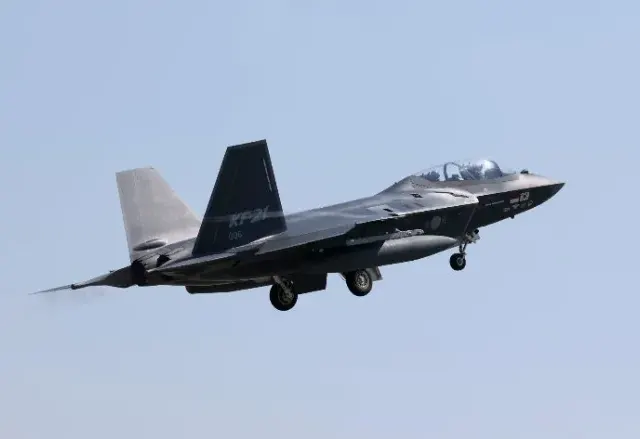
This lack of disclosure is not a challenge unique to the United States. South Korea’s Korea Aerospace Industries is designing a similar cockpit-to-drone control architecture through its KF-21-based Next-generation Air Combat System, or NACS. Korean Air is pursuing a comparable concept through the Royal Wingman, or KUS-LW, and the LOWUS unmanned formation aircraft. Both programs are aiming for pilot-control tests involving operational aircraft around 2027, but neither has reached that stage yet. The undisclosed cockpit details in the U.S. demonstration are precisely what countries following behind will want to know most. One point should be clear, however: this U.S. demonstration is not at a stage that would alter the contracts or timelines of South Korea’s programs.
Anduril Is After the Next Contract, Not the Pilot’s Trust
My view is that the announcement’s real audience was not an adversary on the battlefield, but the U.S. Air Force budget office and competing software companies. There are two reasons.
First, follow the money. Even after winning a 150-aircraft production contract in June, Anduril remains in competition with General Atomics, Lockheed Martin, Northrop Grumman, Collins and Shield AI for the role of prime contractor for CCA autonomy software. Demonstrating an F-22’s ability to command an operational aircraft is the cheapest way to turn “maturity” from an abstract claim into a vivid image. Second, consider the timing. The announcement comes ahead of Exercise Emerald Flag in December, when the Fury and the Vengeance, or FQ-42A, are scheduled to undergo their first large-scale force-integration test. The parties that need to build confidence before then are not the military, but the companies that have yet to establish a decisive lead in the competition over software standards.
Air Force Secretary Troy Meink said, “This achievement demonstrates what is possible when we move in step with industry, sharing a common goal—to deliver combat capability to the warfighter at unprecedented speed.” Air Force Chief of Staff Gen. Ken Wilsbach added that “this flight demonstrates the power of manned-unmanned teaming and the benefits it provides to our warfighters.” Neither statement is wrong, but the audiences they appear to target are closer to congressional budget hearings and investor briefings than to the battlefield.
If my assessment is wrong, it will be because December’s exercise actually reveals a number: the simultaneous control of multiple CCAs. If Emerald Flag shows an aircraft commanding several drones at once—going beyond the level of a single F-22 directing a single drone—this announcement should be reread not as publicity, but as the beginning of genuine operational deployment.
What to Watch
- Results from Exercise Emerald Flag: In December 2026, the Fury and Vengeance are scheduled to undergo their first large-scale force-integration test. The turning point will be whether the CCAs demonstrate the reliability needed to be called an “operational force.”
- Whether the F-22 demonstrates simultaneous control of multiple CCAs: Expected before 2027, this would be the first time the number of aircraft a single crewed fighter can command is revealed.
- Final selection of the prime contractor for CCA autonomy software: Expected within the next several months, the outcome of the competition among Anduril, Collins and Shield AI will reveal who truly benefits from this demonstration.
Frequently Asked Questions
Was this really the world’s first demonstration?
It was the first involving an operational CCA aircraft, the YFQ-44A, but the concept of an F-22 controlling a drone was demonstrated earlier by General Atomics on October 21, 2025, using an MQ-20 Avenger. Anduril also confirmed that its claim was limited to being the first involving “an F-22 and a pre-production YFQ-44A.”
How many CCAs does the Air Force plan to acquire?
Under Increment 1, the Air Force aims to acquire 500 aircraft by 2032. In June 2026, it placed an initial production order for 150 aircraft with Anduril and General Atomics. Some estimates also anticipate the procurement of an additional 2,350 aircraft under Increment 2.
How far along are South Korea’s comparable programs?
Korea Aerospace Industries is developing the KF-21-based Next-generation Air Combat System, or NACS, while Korean Air is pursuing the Royal Wingman, or KUS-LW, and the LOWUS unmanned formation aircraft. Both programs are targeting pilot-control tests involving operational aircraft around 2027. No contract or timeline changes directly linked to the U.S. demonstration have been confirmed.
Featured photo — U.S. Air Force · USAF
Article photos — U.S. Air Force · USAF
U.S. federal government work (public domain). Use of Department of Defense visual materials does not imply DoD endorsement.