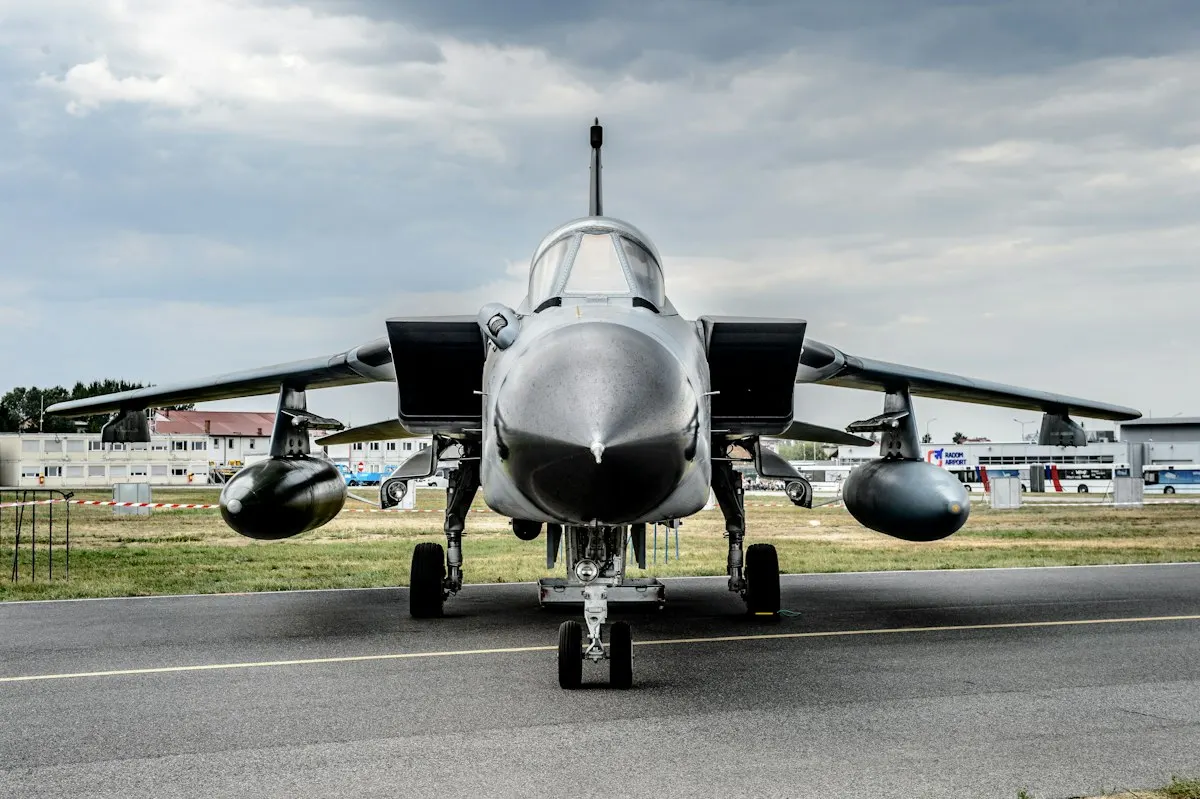
Engine production partnership and space budget impasse emerge on day two of AFA 2026
On Sept. 15, 2026, the second day of the AFA 2026 Air, Space & Cyber Conference in National Harbor, Maryland, industry collaboration aimed at expanding the fighter-engine production base and delays to the U.S. Space Force budget emerged as the leading themes. The conference runs from Sept. 14 to 16 and covers airpower, space capabilities and defense technology across more than 40 sessions and roughly 300 exhibit booths.
According to Breaking Defense, the day’s headline development was a partnership between Pratt & Whitney and Hermeus. In the space sector, Douglas Sims, commander of the U.S. Space Force’s Space Operations Command, warned that temporary funding could delay new initiatives.
Pratt & Whitney licenses Hermeus to produce F100 engines
Pratt & Whitney has agreed to license aerospace startup Hermeus to produce the F100-PW-229 turbofan engine. The arrangement is an unusual example of a U.S. company helping another manufacturer produce the same engine already made by an established engine producer.
The F100-PW-229 has been in service since 1992 and powers some variants of the F-15 and F-16. Hermeus is using the engine in its high-speed unmanned aircraft, Quarterhorse. Under the partnership, the company will serve as a second production source to support Pratt & Whitney’s engine output.
Unmanned-aircraft demand drives expansion of the defense production base
The partnership comes as the U.S. Air Force and defense industry face rising demand for engines. In a request for information released in August 2026, the Air Force said annual engine demand could exceed 180 units in fiscal 2034 for platforms including the F-15EX and F-16, as well as the Collaborative Combat Aircraft.
Hermeus initially plans to prepare for production using existing manufacturing facilities. Rather than developing an entirely new engine from scratch, the company says it will focus on producing the proven F100 and improving manufacturing efficiency. The effort is viewed as a move to strengthen supply-chain resilience while expanding production capacity.
Concerns grow that a continuing resolution could disrupt 10% of Space Force programs
In the space sector, officials warned that a continuing resolution could restrict new U.S. Space Force initiatives. According to Breaking Defense and Air & Space Forces Magazine, Douglas Sims, commander of Space Operations Command, said roughly 90% of the Space Force’s programs could continue under the current funding arrangement, while the remaining 10% would be difficult to launch without a new budget agreement or separate congressional approval.
The continuing resolution passed by Congress maintains spending at prior-year levels after the new fiscal year begins on Oct. 1, 2026. Under that arrangement, new programs and initiatives requiring increased funding generally cannot get underway until regular appropriations legislation is enacted.
FY2027 budget request and plans to expand capabilities
The U.S. Space Force has requested roughly $71.1 billion for fiscal 2027. That would represent a substantial increase from approximately $31.6 billion the previous year, supporting plans to expand satellite capabilities, space surveillance and space operations, as well as the service’s organizational growth.
Sims emphasized that budget delays could slow the pace of new programs, but threats in the space domain would not wait. Missions such as space control and space superiority, which have taken on greater importance, cannot be addressed simply by extending existing programs, officials and experts noted.
Two challenges for the defense industry highlighted at AFA 2026
The central message from the second day of AFA 2026 was the uncertainty surrounding production capacity and funding. In the engine sector, established manufacturers and startups are exploring manufacturing partnerships to broaden the supply base. In the space sector, the discussions underscored the need for stable, long-term funding to build new capabilities.
Ultimately, the competitiveness of air and space forces depends on more than technological development. The forum highlighted the need for an industrial base capable of producing engines and platforms when they are needed, along with a budget framework that can support new programs without interruption.
Frequently asked questions (FAQ)
When and where is AFA 2026 being held?
The AFA 2026 Air, Space & Cyber Conference is being held from Sept. 14 to 16, 2026, in National Harbor, Maryland.
What was the main engine-related news on the second day of AFA 2026?
The main development was Pratt & Whitney’s agreement to license Hermeus to produce the F100-PW-229 fighter engine.
Which aircraft use the F100-PW-229 engine?
The F100-PW-229 is a turbofan engine used in some variants of the F-15 and F-16. It is also being used in Hermeus’ high-speed unmanned aircraft, Quarterhorse.
What was the key point of the U.S. Space Force budget warning?
Under a continuing resolution, roughly 10% of the Space Force’s planned programs could not move forward until a new budget agreement or separate congressional approval is secured.
How much did the U.S. Space Force request for fiscal 2027?
The U.S. Space Force requested roughly $71.1 billion for fiscal 2027, a substantial increase from approximately $31.6 billion the previous year.