- It has entered the water, but it is not yet ready for combat.
- The four-month reduction is more indicative of the shipyard’s performance than of the fleet deployment.
- The question for taxpayers is not u0022how quickly?u0022 but u0022what will they receive?u0022
- The Spanish Navy is replacing its aging vessels, and Ferrol is betting on job creation.
- There are also capabilities that are still only in the design phase.
- What needs to be reviewed next is the test results, not the launch ceremony.
- Frequently Asked Questions.
It has entered the water, but it is not yet ready for combat.
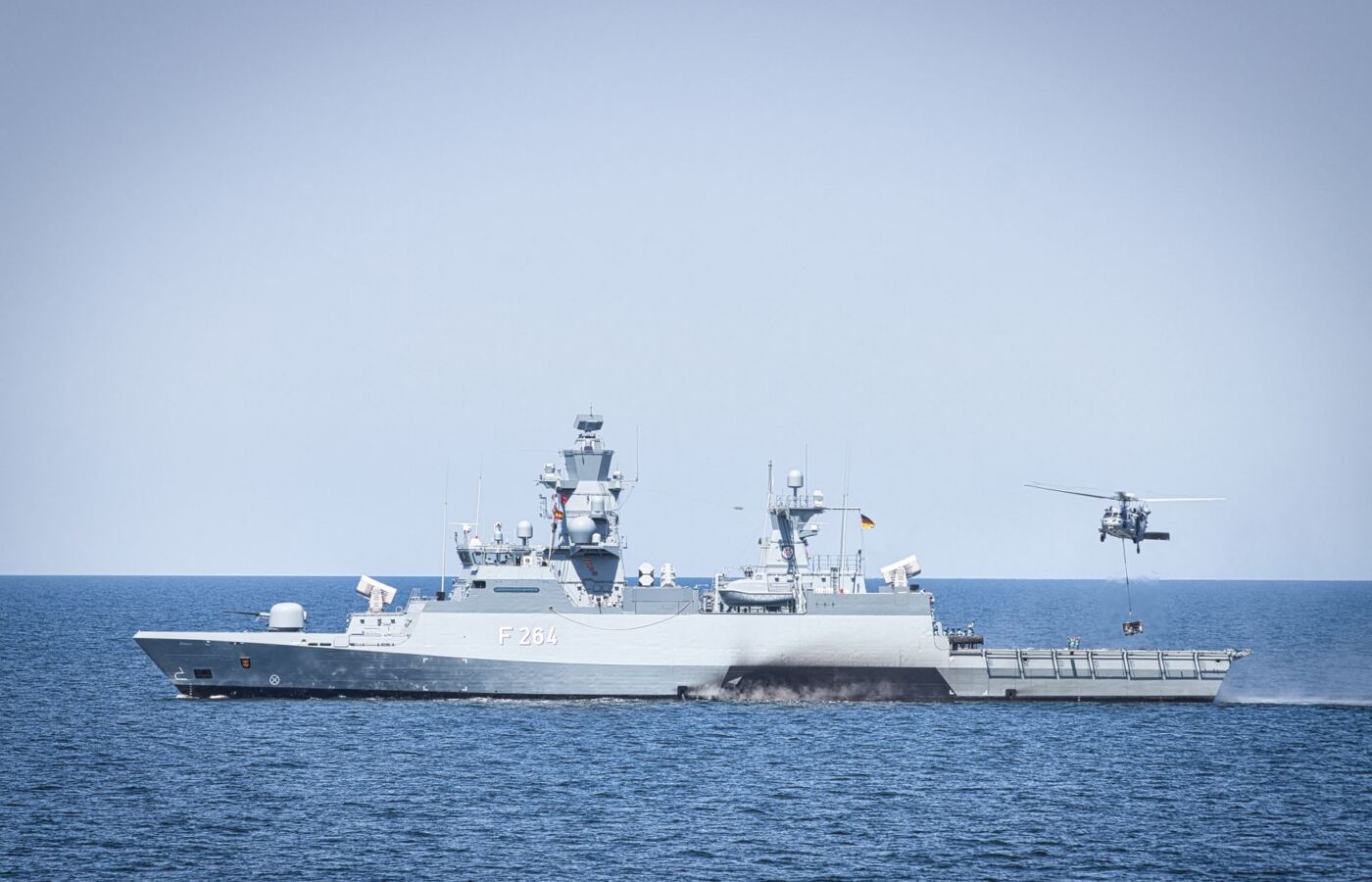
The F-112 “Roger de Lauria” was launched into the water at the Ferrol shipyard on October 27, 2026. However, the delivery of this vessel to the Spanish Navy is scheduled for 2029. The ship has been afloat, yet it is not yet an operational warship, demonstrating that the shipbuilding timeline is considerably longer than the time it takes to board a ship.
The launch of this vessel has been expedited by approximately 4 months, moving it from the originally planned date of early 2027. The F-112 is the second of five F-110-class frigates. However, the most important distinction for the reader is this: the launch is not completion, and the delivery is not deployment.
After the launch, internal equipment and electronic/combat systems must be installed and integrated. Anti-submarine warfare equipment must be connected, and actual sea trials must be conducted before the Spanish Navy can operate the vessel. In my opinion, the key point of this news is not “the ship was launched quickly,” but rather “the preparations to move to the next stage were faster than planned.”
The four-month reduction is more indicative of the shipyard’s performance than of the fleet deployment.
The early launch of the F-112 does not mean that the Spanish Navy has immediately acquired a new escort ship. What has been confirmed is that the launch schedule has been accelerated, not that the final delivery or operational deployment schedules have also been advanced. Combining these two aspects in a single sentence can create the misleading impression that the shipyard’s progress directly translates into an increase in the fleet’s combat capabilities.
Despite this, four months is not a short period. Navantia is introducing digital manufacturing and maintenance technologies, such as digital twins and Ferrol Digital Block Factory, in the F-110 project. The reduction in the schedule can be interpreted as the results of tests demonstrating how effectively these technologies and the network of collaborating companies are functioning in the actual construction site.
The Spanish Secretary of State for Defense, Amparo Valcarce, assessed that this project includes the development of industrial capabilities for shipbuilding in Spain and technological advancements. Ricardo Domínguez, Chairman of Navantia, also described the F-110 as a national industrial and technological project, going beyond defense projects. While the explanations from companies and the government may contain elements of promotion, at the very least, this launch provides Ferrol shipyard with an opportunity to demonstrate its project management capabilities.
The launch is not the starting point for a fleet, but rather the starting point for integrated testing.
The question for taxpayers is not u0022how quickly?u0022 but u0022what will they receive?u0022
Five F-110-class ships will be built to gradually replace the Spanish Navy’s existing F-80 Santa María-class frigates. The new ships are designed to conduct anti-submarine, anti-air, and anti-surface warfare, combining Navantia’s SCOMBA combat system, Lockheed Martin’s SPY-7 radar, and Aegis-related technologies. They are also slated to carry a 16-cell vertical launch system and a 127-millimeter gun.
The meaning of this combination is an attempt to create a vessel that is not specialized for a single mission, but rather integrates multiple operations into one platform. The concept is to create an escort vessel that can search for submarines, monitor aerial threats, participate in surface operations, and operate alongside multinational naval formations. While the actual detection range, engagement range, and combat effectiveness cannot be determined based solely on the publicly available descriptions, it is clear that the design direction represents a project to modernize the Spanish Navy’s aging vessels.
The issue is the price. The initial budget for the F-110 program, approved in 2019, was reported to be 4.325 million euros. The total budget, including technical improvements planned for the end of 2025, was reported as 4.768 million euros. Another report stated the total project cost as 4.896 million euros. Because the figures vary, it should not be presented as a single, definitive final amount. The final construction cost for a single F-112 has not been confirmed.
From the perspective of a taxpayer, I believe this point is even more important than the launch ceremony. While the launch, four months ahead of schedule, is a welcome achievement, the ultimate measure is how the costs have changed and whether the 2029 delivery date is maintained. Even if there is applause in the shipyard, there is no separate section for applause in the budget.
The Spanish Navy is replacing its aging vessels, and Ferrol is betting on job creation.
The Spanish Navy is seeking more than just a new ship. It aims to acquire modern frigates to replace the F-80 class and establish the foundation for conducting anti-submarine, anti-air, and anti-surface warfare missions, as well as joint operations. The emphasis by Antonio Piñeiro, Chief of Staff of the Spanish Navy, that Ferrol must continue to remain a secure base for the Navy also demonstrates the link between its industrial and military foundations.
There are also benefits for the local community. Navantia stated that through this program, it will create approximately 9,000 direct and indirect jobs over 10 years, and that 500 Spanish companies will participate. For the Ferrol shipyard, local workers, and partner companies, a continuous flow of construction projects is a matter of livelihood and industrial infrastructure.
However, these figures are projections provided by Navantia. It is necessary to independently verify how many jobs are actually sustained and the net positive impact on the local economy. Directly interpreting the company’s figures as the region’s confirmed profits is similar to mistaking a promotional brochure for a financial statement.
Therefore, the early launch of the F-112 is seen as a positive signal for both the Spanish Navy and the Ferrol region. However, whether this signal translates into actual capabilities and a sustainable industry will be determined after overcoming the next challenges, which include equipment integration, testing, and budget execution.
There are also capabilities that are still only in the design phase.
The Spanish Navy and Navantia are also designing an F110 IAMD variant to complement the existing F-110, as of October 2026. While the intention to strengthen air defense and anti-ballistic missile defense capabilities has been confirmed, the final number of additional vessels, the contract, and the delivery schedule have not been finalized.
In this section, it is important to distinguish between expectations and actual facts. We cannot definitively state the actual performance of the F-110 class in real-world operations, the number of IAMD variants that will be built, or the specific schedule for the F-112’s sea trials. The moment we present planned capabilities as if they are already deployed assets, military reporting becomes propaganda rather than informative analysis.
Currently, the situation is as follows: The F-112 is entering a phase of integrating and testing equipment and combat systems while in a floating state, with a target delivery date of 2029. The first vessel, F-111 Bonaventure, was launched in September 2025 and is also in the same integration phase. The results from these two vessels are likely to be a key indicator of how quickly and stably the entire F-110 program will proceed.
What has been moved forward is the launch date, not the time for verification.
What needs to be reviewed next is the test results, not the launch ceremony.
This news marks a significant achievement for the Spanish shipbuilding industry. The launch of the F-112, originally scheduled for early 2027, has been moved forward to October 2026. The F-110 project is also testing digital manufacturing capabilities and the integration of combat systems. For the Spanish Navy, this represents a further step in the process of acquiring modern frigates to replace the aging F-80 class.
However, the moment when it truly matters to the Spanish Navy and taxpayers has yet to arrive. It remains to be seen whether the equipment is properly integrated, whether it passes sea trials, whether the 2029 delivery commitment is honored, and within what range the project cost is finalized. A launch four months ahead of schedule is a good start, but a warship proves its worth only when it carries out its mission, rather than when it first takes to the water.
My criteria for evaluating this matter are simple: I want to see the results of the follow-up tests, not just the applause for the launch ceremony. When the F-112 is actually delivered as a combat vessel in 2029, it will be determined whether this 4-month period was simply an accelerated schedule or a reflection of the capabilities of the Spanish shipbuilding industry.
Frequently Asked Questions.
The F-112 has been launched, but why will it take until 2029 for its delivery to the Navy?
Launching is the stage when a vessel floats on water. Subsequently, equipment and combat systems must be installed and integrated, and various systems, including anti-submarine warfare equipment, must be tested. After this, the vessel must undergo sea trials and the delivery process.
If the launch of the F-112 is accelerated by 4 months, will the deployment of the navy also be accelerated?
It is not possible to make such a definitive statement. What has been confirmed is that the launch, originally planned for early 2027, has been moved forward to October 2026. Information regarding whether the final delivery and operational deployment schedules have also been moved forward has not been confirmed.
What missions does the F-110 class perform?
It is designed to perform anti-submarine, anti-air, and anti-surface warfare missions. It will incorporate the SCOMBA combat system, the SPY-7 radar, and Aegis-related technologies, and will be equipped with a 16-cell vertical launch system and a 127-millimeter naval gun.
What is the total project cost for the F-110 program?
The reported figures vary. The initial budget for 2019 was 4.325 million euros, and subsequently, figures of 4.768 million euros or 4.896 million euros were presented. It is difficult to definitively state a single figure as the final confirmed project cost.
Will any more F110 IAMD vessels be built?
There has been an announcement that a modified version of the F110 IAMD, which enhances air defense and anti-ballistic missile defense capabilities, is under development. However, the quantity of additional vessels, the formal contract, the budget, and the delivery schedule have not yet been finalized.