SPACECOM Moves to Strengthen Responses to Space Adversaries
U.S. Space Command (USSPACECOM) is working to expand its operational capabilities to detect, track and, when necessary, respond to hostile actors in space. Commander Gen. Stephen Whiting stressed that space domain awareness, real-time battlespace awareness and space command-and-control capabilities form the foundation of space operations.
According to Breaking Defense, Whiting said at the AMOS 2026 conference in Hawaii on Sept. 16, 2026, that Space Command still does not possess every capability it needs to target hostile space systems.
Space Domain Awareness Is the Starting Point for Response Operations
Whiting said responding to threats in space requires the ability to detect hostile activity, determine its location, track it continuously and turn that information into an actionable operational target. Space Command currently lacks the same level of sophisticated targeting information systems available in other operational domains, according to the assessment.
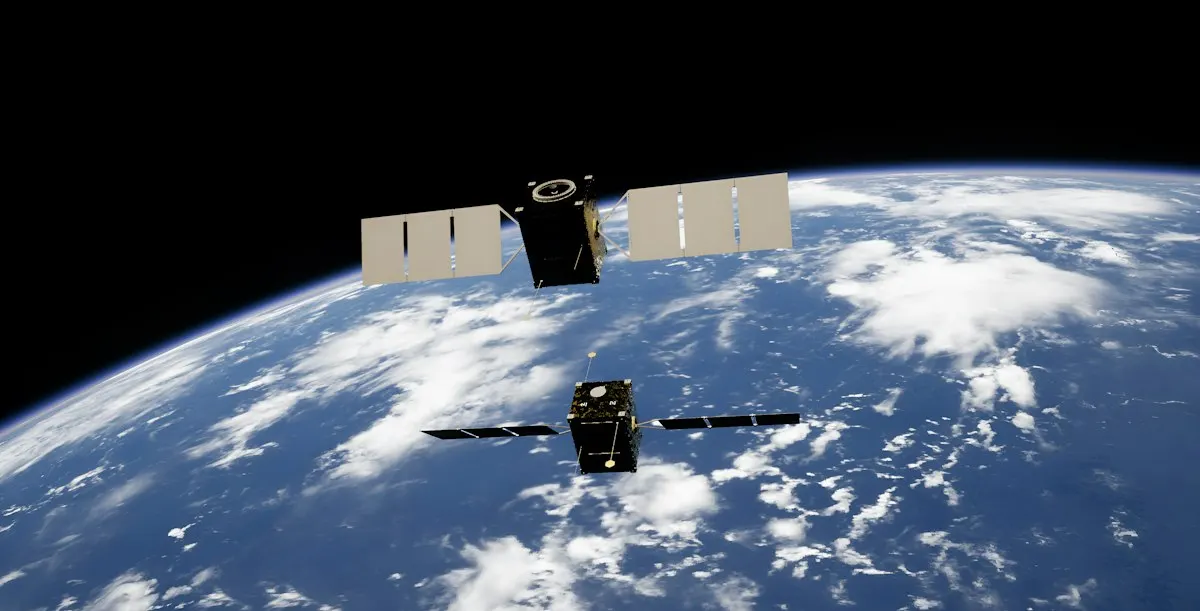
Space domain awareness refers to the ability to determine the location, orbit and behavior of space objects, including satellites and debris, and assess whether their activity poses a threat. Whiting described it as the foundation for space control and space superiority.
According to U.S. Space Command, China and Russia are developing a range of counterspace capabilities, including electronic warfare, satellite communications jamming, cyber operations, ground-launched anti-satellite weapons and on-orbit anti-satellite capabilities. That is driving demand for detection, analysis and response systems that operate in near real time rather than relying on monitoring alone.
Communications and Navigation Systems Needed for Cislunar Operations
Another priority for Space Command is developing the technological foundation needed to operate in cislunar space, the region between Earth and the Moon. Systems built primarily around low Earth orbit and geostationary orbit are not sufficient to monitor activity in lunar orbit and beyond.
Whiting said cislunar operations will require a scalable space domain awareness architecture. As spacecraft move farther from Earth, the gravitational environment, solar radiation and communications conditions change, limiting the effectiveness of simply expanding existing orbital-monitoring systems.
U.S. Space Command has also identified positioning, navigation and timing information, along with satellite communications, as areas requiring improvement in cislunar space. One challenge is the lack of standardized data formats for sharing the location and status of spacecraft operating in the region.
Real-Time Command and Control at the Core of U.S. Space Strategy
In a 2024 report submitted to the Senate Armed Services Committee, U.S. Space Command identified integrated space fires, improved battlespace awareness and rapid, resilient command and control as key investment priorities. The goal is to connect space, cyber and terrestrial systems and reduce the time between detection and response.
According to official testimony, the United States is expanding its sensor and data-processing capabilities to dynamically track objects in nontraditional orbits and beyond geostationary orbit. Space Command considers these capabilities necessary not only to protect space assets but also to disrupt hostile actors’ ability to coordinate operations.
Commercial space companies and allies are playing a growing role as well. U.S. Space Command has been working to share information with commercial satellite operators and use private-sector sensors and data within coalition operations to close gaps in space surveillance.
Expanding Allied and Commercial Cooperation as Space Competition Intensifies
As the military importance of space grows, the United States has concluded that it cannot address every threat with its own satellite systems alone. U.S. Space Command is strengthening cooperative arrangements with allies, partners and commercial space companies to share information and identify the behavior of space objects more quickly.
But expanding space domain awareness is not enough by itself. Detected information must be analyzed in real time and routed through a trusted command-and-control network to defensive or responsive capabilities before it can become a genuine operational advantage.
Ultimately, SPACECOM’s challenge is to extend surveillance from orbits around Earth into cislunar space and integrate communications, navigation and command and control into a single operational architecture. That is why analysts say U.S. space strategy is shifting from a focus on surveillance toward active space control and the pursuit of space superiority.
Frequently Asked Questions (FAQ)
Q. What is SPACECOM?
A. SPACECOM is one of the United States’ unified combatant commands. It oversees military operations and the employment of space forces in the space domain.
Q. What is space domain awareness?
A. It is the ability to determine the location, orbit and behavior of satellites, spacecraft and space debris, then analyze that information to identify potential threats.
Q. What does cislunar space refer to?
A. Cislunar space is the broad region between Earth and the Moon, including lunar orbit and the surrounding Earth-Moon system.
Q. Why does U.S. Space Command prioritize satellite communications?
A. Space operations depend on stable, resilient communications networks that connect sensors and command authorities with satellites and terrestrial forces.
Q. How do space adversaries threaten satellites?
A. Potential methods include satellite communications jamming, cyberattacks, electronic warfare, ground-launched anti-satellite weapons and approaches to or attacks on satellites in orbit.