- Out of the 12 divisions, 11 are affected, but the exact number is unknown.
- Why a launch-type unmanned system now?
- The significance of the statement “We produced the allocation in just 3 weeks.”
- The arrival of equipment does not equate to the arrival of combat power.
- Who will benefit, and who will receive the bill?
- Confirmed progress and outstanding issues.
- The next point to watch is not the last division.
- Frequently Asked Questions.
Out of the 12 divisions, 11 are affected, but the exact number is unknown.
The U.S. Army has already deployed launch-type unmanned systems to 11 out of a total of 12 division-level headquarters, but it has not disclosed which divisions have received the systems, nor the total number deployed. The numbers are almost complete, but the key information in the records remains blank.
As of November 9, 2026, the Army announced that it had supplied this system to 11 division-level headquarters and all Multi-Domain Task Forces (MDTF). There is still one division-level headquarters remaining, and the Army plans to supply this final unit starting in December 2026.
In my opinion, the key aspect of this news is not the “11” itself, but the fact that the U.S. Army is integrating the launch-type unmanned system not as a laboratory prototype, but as part of a division’s operations. However, the fact that it has been deployed does not necessarily mean that all soldiers are proficient in its operation. In the military, equipment and combat power often do not exist in the same place.
Why a launch-type unmanned system now?
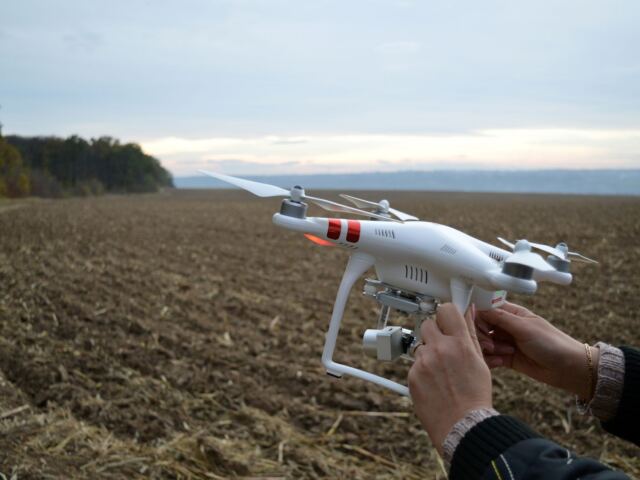
A launch-type unmanned system is not the name of a specific type of drone. It is a combination of an unmanned aircraft and a payload system designed to be launched from manned aircraft, ground vehicles, or maritime platforms, and to perform reconnaissance, surveillance, target acquisition, electronic warfare, and kinetic effects.
In simple terms, this system places unmanned platforms at the forefront, acting as the eyes and ears, and providing electronic warfare capabilities or strike effects when necessary, instead of having humans enter dangerous areas directly. This can be interpreted as a trend of shifting the risks of the battlefield from soldiers and manned platforms to unmanned systems.
This trend is not a sudden fad. The Army approved the initial requirements in 2020 and has been developing the program through flight tests, modular structure development, and soldier-involved evaluations. A memorandum from the Minister of National Defense on July 10, 2025, directed that all squads be equipped with low-cost, expendable drones by the end of 2026, which has further accelerated the movement to rapidly procure and mass-produce drones.
In March 2026, the Army selected AEVEX, Griffon, and Dragoon as initial suppliers for long-range unmanned systems. Subsequently, the Army emphasized a process that goes beyond traditional procurement procedures, incorporating soldier feedback at each testing stage and making design revisions at short intervals. The Army’s reasoning is that weapons are not finished products to be displayed in a museum, but rather items that must be maintained and improved in the field to remain effective.
The significance of the statement “We produced the allocation in just 3 weeks.”
The most notable aspect of this delivery is Gryphon Aerospace’s rapid production rate. According to a source within the Army, Gryphon confirmed the need for increased production and delivered the first allocation within approximately 3 weeks, and is now capable of supplying hundreds of units per month.
The Army did not disclose the total number of units delivered, but stated that the majority of the allocation consisted of long-range capabilities provided by Gryphon. Gryphon’s product line includes several systems, including the Outlaw. However, it has not yet been confirmed whether each system is intended for reconnaissance, electronic warfare, or attack, and the quantity of each system is also unknown.
Lieutenant Colonel C. Hunter Gray, Product Manager for the Army’s Launchable Unmanned Systems, explained that, based on priority, Gryphon was the company that was able to scale up production the most. At the same time, the Army stated that it does not acquire systems that are limited to a single platform.
This section highlights both the advantages and risks of rapid procurement. The ability to quickly increase the number of systems is a clear advantage on the battlefield. On the other hand, concentrating allocations on specific companies can limit alternative options when the supply chain is disrupted, and it is necessary to consider whether rapid production has compromised testing, safety, and cybersecurity verification. Speed is excellent, but it cannot replace quality assurance.
The arrival of equipment does not equate to the arrival of combat power.
Let’s return to the questions that readers are most likely to have. How far has the actual deployment progressed? The answer is clear: It has been deployed to 11 out of 12 division-level headquarters, and to all MDTF (Multi-Domain Task Force) units. The remaining division-level headquarters is scheduled to receive the system starting in December 2026.
However, this fact should not be interpreted as meaning that the entire Army possesses the same capabilities. The deployment of division-level headquarters indicates that the systems have been integrated into the command-and-control structure, but it does not necessarily mean that all frontline companies, platoons, and squads have been equipped with the same equipment. It has not been publicly disclosed which divisions received the equipment, the actual number delivered, or whether they have achieved full operational capability.
Furthermore, the situation is different for the small, single-use attack drones intended for individual squads. The Army official in charge of drone dominance stated that while there was enough inventory in September 2026 to equip all squads, they have not yet been distributed to all squads, and there is also a shortage of personnel trained to operate them.
Here is an important lesson to be learned. A drone is not something that becomes combat-ready the moment it is taken out of the box. It requires piloting, maintenance, communication, target identification, and tactical operation. The moment equipment distribution rates are misrepresented as fielding rates, the numbers increase, but actual combat capabilities become obscured. I believe this issue should be viewed from precisely that perspective.
Who will benefit, and who will receive the bill?
The Army can secure reconnaissance, electronic warfare, and strike capabilities from greater distances, while also reducing the risk of exposure for manned platforms and personnel. This provides soldiers and commanders with more options to assess the situation before entering potentially dangerous areas. Having more options in combat is generally a positive development.
A new market is opening for defense companies like Gryphon. The Army Drone Marketplace launched in March 2026 and, as of August 2026, has recorded sales exceeding 750,000,000 US dollars, according to the Army. Other Transaction Authority (OTA) and marketplaces like this provide a channel for commercial companies and non-traditional defense contractors to more quickly test and purchase prototypes and commercial systems.
However, the costs associated with rapid procurement can be passed on to taxpayers and soldiers. Without transparency regarding the total project cost, the unit price of each system, and long-term maintenance costs, it is difficult to demonstrate efficiency based solely on the slogan “buying cheap and in large quantities.” If there is a shortage of operating personnel, expensive equipment may only provide a temporary sense of relief while remaining in storage.
The impact of the proliferation of unmanned systems on civilian safety and the risk of escalation cannot be overlooked. The mass deployment of low-cost, expendable systems could lower the threshold for the use of weapons. The fact that technologies designed to increase the survival chances of soldiers can simultaneously make it easier to initiate wars – this duality will endure far longer than any marketing slogan.
Confirmed progress and outstanding issues.
The currently confirmed facts are clear. Launching unmanned systems have been deployed to 11 division-level headquarters and all MDTF (Multi-Domain Task Force) units, and the final unit is scheduled to receive them starting in December 2026. Griffin is responsible for the majority of the allocation, and is estimated to be able to supply hundreds of units per month.
On the other hand, there are also clear areas where information is lacking. The names of the 11 divisions, the total number of systems supplied, the quantity of Griffon systems supplied by type, the actual missions of each system, the operational and maintenance personnel, and the level of training have not been disclosed. It remains unconfirmed whether the final division deployment will be completed as planned, and whether the target for the number of single-use attack drones at the squad level will be achieved by the end of the 2026 fiscal year.
I do not view this lack of transparency as a mere flaw in publicity. While the deployment numbers indicate military progress, they cannot be used to calculate operational readiness. Especially for systems like launch-type unmanned platforms, which have multiple missions and platforms, the question of “how many” is less important than “what capabilities do they possess, and how many times can they be operated by whom.”
The next point to watch is not the last division.
On the surface, the next scheduled event is the final deployment of a division-level headquarters in December 2026. However, a more crucial test begins after the deployment. It is necessary to observe whether these systems are integrated into the actual unit’s reconnaissance, electronic warfare, and strike procedures, whether they can handle maintenance and training burdens during repeated operations, and whether multiple suppliers can maintain competition.
The rapid increase in production of the Griffin indicates that the U.S. defense industry can expand the allocation of unmanned systems through commercial production methods and swift contracts. At the same time, it is necessary to confirm whether the reliance on specific companies is increasing and whether rapid iterative improvements are accompanied by sufficient long-term reliability testing. The reason the Army stated that it would not rely on a single platform is related to this.
This deployment is not a declaration that the U.S. Army is shifting its focus to unmanned warfare, but rather an interim report showing how quickly it is advancing in the direction it has already turned toward. The front of the report states “11 divisions,” while the back leaves the questions: “Who, how many units, and how well are they being operated?” I believe the real competition will not be determined by the final deployment, but by the answers to those questions.
Frequently Asked Questions.
What is the current deployment status of the U.S. Army’s launch-type unmanned systems?
As of November 9, 2026, the system has been deployed to 11 out of 12 division-level headquarters and to all multi-domain task forces. The remaining division-level headquarters is scheduled to receive the system starting in December 2026.
Where are the 11 deployed divisions located?
The Army has not disclosed the specific names of the 11 divisions that are deployed.
What is the total number of launch-type unmanned systems?
The Army has not disclosed the total number of units it has received. Griffon stated that it can supply several hundred units per month.
Does the launch-type unmanned system refer to equipment such as squad-level attack drones?
No. The launchable unmanned systems deployed at the division-level headquarters and MDTF (Multi-Domain Task Force) are a system group that performs various missions, including reconnaissance, surveillance, target acquisition, electronic warfare, and kinetic effects. The deployment of small, single-use attack drones for squads is a separate initiative.
Is the Griffin system intended for reconnaissance, or for attack?
Griffon has supplied several systems, including the Outlaw, but the specific roles of each system in this deployment and the quantity of each system have not yet been confirmed.