UNITE–Brave NATO: First Large-Scale Drone Competition Officially Launched
Ukraine and the North Atlantic Treaty Organization (NATO) have launched the first call for proposals under the UNITE-Brave NATO program to jointly develop air defense and anti-drone technologies to counter the threat posed by Russian unmanned aerial vehicles. The total budget for the first call for proposals is 10,000,000 euros, and the program encourages joint participation by Ukrainian companies and companies from NATO member states.
According to a NATO announcement, UNITE-Brave is the first joint innovation program designed to expand defense technologies that have undergone prototype development and testing, and to enhance interoperability between the Ukrainian armed forces and NATO. Both sides announced the launch of the program on November 25, 2025, and subsequently released the details of the first call for proposals on March 25, 2026.
10,000,000 Euro joint investment and corporate collaboration structure
The initial budget of 10,000,000 euros is shared equally between NATO and Ukraine. Funding for companies in NATO member states is provided through the Ukraine Comprehensive Assistance Package (CAP), while Ukrainian companies receive support from the defense industry innovation cluster Brave1.
The project implementation involves the NATO Communications and Information Agency (NCIA). Applicant companies must form a joint team consisting of companies from Ukraine and NATO member states, and submit a single technical proposal.
The joint project may receive up to 1,000,000 euros in funding. However, the specific funding limits vary by field, and the maximum amount that each participating company can receive is set at either 250,000 euros or 500,000 euros.
- Support of up to 250,000 euros is available for projects in the following areas: FPV drones, active protection systems, signal intelligence, and autonomous guidance.
- Support of up to 500,000 euros per project: For projects related to countering Shahed drones, electromagnetic attacks, and high-altitude platforms.
The submissions should be solutions with a technology readiness level (TRL) of 6 or higher . The focus is on the testing, improvement, and expansion of technologies that have completed prototype development and have demonstrated performance in relevant environments, rather than simple conceptual proposals .
Six Key Technological Challenges in the Drone and Air Defense Sectors
The initial call for proposals outlined six technological areas to counter unmanned aerial vehicle threats, including FPV drones and loitering munitions of the Shahed series. The structure includes autonomous guidance systems designed for environments with radio navigation interference, in addition to the five areas mentioned in the initial draft.
1. Active protection system for countering FPV drones
This is an active protection technology that automatically detects and intercepts approaching FPV (First-Person View) drones while unarmored vehicles are in motion. The core objective is to enhance the survivability of transport vehicles and support vehicles operating in combat zones.
2. Low-Cost Shahed Drone Countermeasure System
Develop an economical and scalable system capable of detecting and neutralizing long-range attack drones of the Shahed series. This technology is needed to defend military facilities and critical infrastructure while reducing reliance on expensive anti-aircraft missiles.
3. Electromagnetic support technologies for signaling information
This technology automatically detects, classifies, and locates airborne and ground-based radio frequency sources across a wide frequency range. It is linked to signal intelligence capabilities that enable the rapid identification of activities related to enemy unmanned aerial vehicles and electronic warfare equipment.
4. Electromagnetic attack technology targeting FPV drones
The technology targets the electronic components of FPV drones, aiming to disrupt or disable their functions. It is necessary to develop new methods that can counter not only conventional radio-controlled drones but also advanced FPV drones, including fiber-optic guided and autonomous flight models, which are resistant to traditional radio jamming.
5. High-Altitude Long Endurance Platform
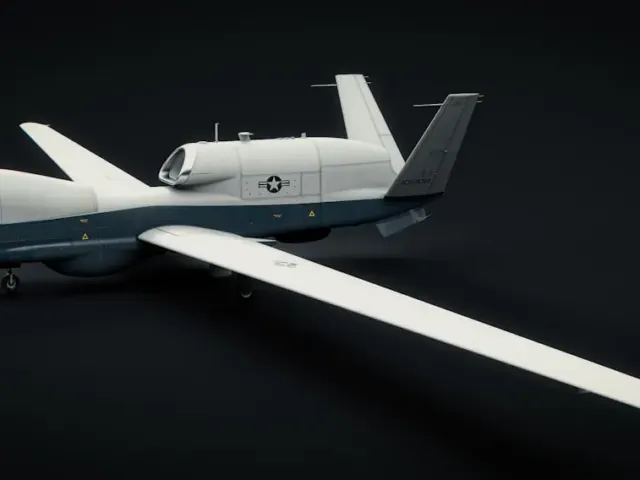
A high-altitude, long-endurance platform will be developed to perform continuous surveillance, early warning, and communication relay over a wide operational area. The purpose is to expand information and communication capabilities in environments where ground communication networks are limited or electronic warfare interference is strong.
6. Autonomous guidance system
This technology provides precise navigation and target acquisition capabilities even in environments where the Global Navigation Satellite System (GNSS) is unavailable or where strong radio interference occurs. It is a field that reduces the reliance of unmanned systems on external signals and enables them to continue their missions.
Combination of Ukrainian combat experience and NATO technology
The UNITE–Brave NATO program is distinguished by its design, which goes beyond simple research funding to enable Ukrainian and NATO member companies to jointly develop products. Ukrainian companies can provide operational experience and test data accumulated in the field, while NATO companies can contribute sensor, electronic warfare, communication, and system integration technologies.
The selected technologies can be validated through the Brave1 test system in Ukraine and in NATO testing facilities. The project will proceed through a joint evaluation and contract negotiation, technology implementation, testing, and a final report. Depending on the results, the possibility of subsequent adoption and expansion will also be explored.
NATO has also proposed a plan to potentially expand the total resources of UNITE-Brave NATO to a maximum of 50,000,000 euros if the pilot program is successfully implemented. Future challenges being discussed include countering fiber optic FPV drones, developing high-power lasers, electronic warfare capabilities, GPS-independent navigation systems, and long-range unmanned system communication.
Impact on large drone defense systems
This competition aims to connect detection, electronic warfare, direct interception, early warning, communication relay, and autonomous navigation into a single technological ecosystem. In particular, the development and mass production potential of low-cost countermeasures to address the cost issues that arise when intercepting low-cost unmanned aerial vehicles with expensive missiles will be highly valued.
Furthermore, this initiative is significant because it connects technologies proven in the Ukrainian battlefield with NATO standards and procurement systems. If the development results are translated into actual equipment, it could impact not only Ukraine’s air defense capabilities but also the anti-drone defense posture of NATO member states and the related industrial base.
Frequently Asked Questions (FAQ)
UNITE–Brave NATO: What is this program?
This is the first Ukraine-NATO joint innovation program, designed to support joint development, testing, and expansion of defense technologies by companies from Ukraine and NATO member states.
What is the budget for the first “Dadron” competition?
The total budget is 10,000,000 euros. NATO and Ukraine will each bear half of the cost, and up to 1,000,000 euros can be provided for joint projects, depending on the field.
What types of drone technologies are eligible for support?
The program targets six areas: FPV drone active defense, low-cost Shahed drone countermeasures, signal intelligence, electromagnetic attack, high-altitude long-endurance platforms, and autonomous guidance systems.
Can a Ukrainian company apply independently?
The first round of the competition involves Ukrainian companies and companies from NATO member countries forming joint teams to submit technical proposals. Participating companies must also go through a registration and eligibility verification process.
Are the selected technologies tested in actual combat situations?
The program provides opportunities for technical validation through the use of the “Test in Ukraine” program and NATO testing facilities. Additional testing within Ukraine may include performance evaluations in a battlefield environment.
Is there a possibility that the program budget will be expanded in the future?
NATO and Ukraine have proposed a plan to expand the program’s funding to a maximum of 50,000,000 euros, based on the results of the pilot program.