U.S. Acknowledges It Has ‘Space Control Weapons’ in Orbit
The United States has publicly acknowledged for the first time that it possesses “space control weapons” deployed in Earth orbit. U.S. Air Force Secretary Troy Meink made the disclosure in a keynote address on Sept. 14, 2026, at the Air, Space & Cyber Conference hosted by the Air & Space Forces Association in National Harbor, Maryland.
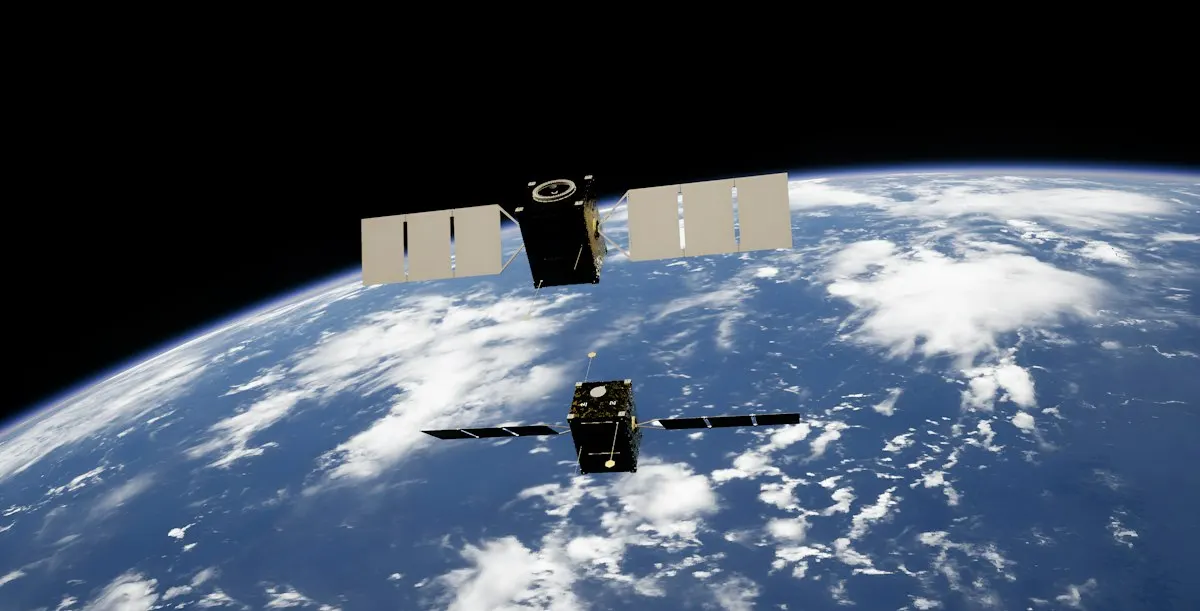
Meink said the United States has space control weapons in orbit that could respond to attacks by hostile forces and defend joint military forces. He did not disclose the types or number of weapons, the orbits in which they are deployed, or how they are operated.
What the U.S. Government Means by ‘Space Control Weapons’
According to Air & Space Forces Magazine, published by the Air & Space Forces Association, and reports by U.S. media, the remarks represent the most direct public acknowledgment to date by a senior U.S. government official of the existence of weapons systems in orbit.
The concept of “space control” used by the U.S. Space Force extends beyond the simple protection of satellites. The U.S. Space Force defines space control in its warfighting framework as a combination of offensive and defensive activities designed to counter an adversary’s space capabilities and ensure U.S. and allied space operations.
Under U.S. Space Force doctrine, related operations are broadly divided into orbital warfare, electromagnetic warfare and cyberwarfare. The term “space control weapons” could therefore encompass not only physical weapons designed to intercept satellites, but also communications jamming, signal interference, cyberattacks, and surveillance and command-and-control systems.
Specific Weapons and Their Use Remain Classified
Meink did not say whether the weapons were systems capable of physically destroying enemy satellites or systems designed to disable them through electromagnetic or cyber means. The U.S. Department of Defense and Space Force have likewise released no details on the names or scale of the weapons deployed.
The U.S. Space Force’s published concepts of operations include maneuvering and interception in orbit, disrupting space communications networks, electromagnetic attacks, cyberattacks against networks, and strikes launched from the ground. Defensive measures such as escorting satellites, issuing threat warnings, hardening communications networks, and distributing assets across multiple locations also fall within the scope of space control operations.
Experts have warned that kinetic weapons capable of causing physical collisions could generate large amounts of space debris, threatening friendly and civilian satellites alike. For that reason, some have suggested that operational systems may rely on non-kinetic methods aimed at temporary disruption or degradation rather than destruction.
Space Militarization and International Law
The announcement does not in itself constitute a violation of international law. The 1967 Outer Space Treaty prohibits placing nuclear weapons and other weapons of mass destruction in Earth orbit or outer space, but it does not impose a blanket ban on deploying all conventional or non-kinetic weapons in space.
However, actual attacks on satellites or space-based electromagnetic and cyber operations could raise questions under the U.N. Charter, international humanitarian law, and the principles governing responsibility for space activities. Actions affecting civilian communications, navigation, or weather satellites could in particular blur the distinction between military targets and civilian infrastructure.
As the United States, China, and Russia expand their capabilities to monitor, disrupt, and defend space assets, outer space has already become an arena of military competition. The disclosure is likely to have significant diplomatic and security implications because it marks the point at which the United States has formally acknowledged in official language the space-warfare capabilities that had previously been discussed largely in implicit terms.
How the Disclosure Could Affect the Space Arms Race
The U.S. announcement can be read both as a deterrent message to China and Russia and as a signal of the policy direction aimed at transforming the Space Force into a warfighting organization. In recent years, the U.S. Space Force has been developing a “counterspace” concept of operations that combines offensive and defensive capabilities to secure space superiority.
The central questions going forward will be what weapons systems the United States has operated and since when, and how quickly other countries will expand their own orbital offensive and defensive capabilities in response. The need for international rules of behavior to reduce the risks of space debris, miscalculation, and misidentification has also become more urgent.
Frequently Asked Questions (FAQ)
What weapons has the United States said it has deployed in space?
The United States has not disclosed the weapons’ names, numbers, deployment orbits, or operating methods. The term may encompass not only orbital warfare weapons but also electromagnetic and cyber capabilities.
Does the announcement mean the United States has deployed anti-satellite weapons?
That has not been confirmed. The “space control weapons” cited by the United States could include both systems that physically destroy satellites and non-kinetic systems that disrupt communications or interfere with signals.
Is deploying weapons in space a violation of international law?
The Outer Space Treaty prohibits placing nuclear weapons and weapons of mass destruction in orbit. It does not explicitly ban the deployment of every conventional or non-kinetic weapon in space, and the legal issues depend on how the systems are used.
What does the U.S. Space Force’s space control mission include?
Under U.S. Space Force doctrine, space control refers to ensuring U.S. activities in the space domain and limiting an adversary’s space capabilities through orbital warfare, electromagnetic warfare, and cyberwarfare.
What threats can space weapons pose to satellites?
They can disrupt satellite communications and signals or disable systems through cyberattacks. Physical attacks can also generate space debris, creating cascading threats to other satellites and space infrastructure.