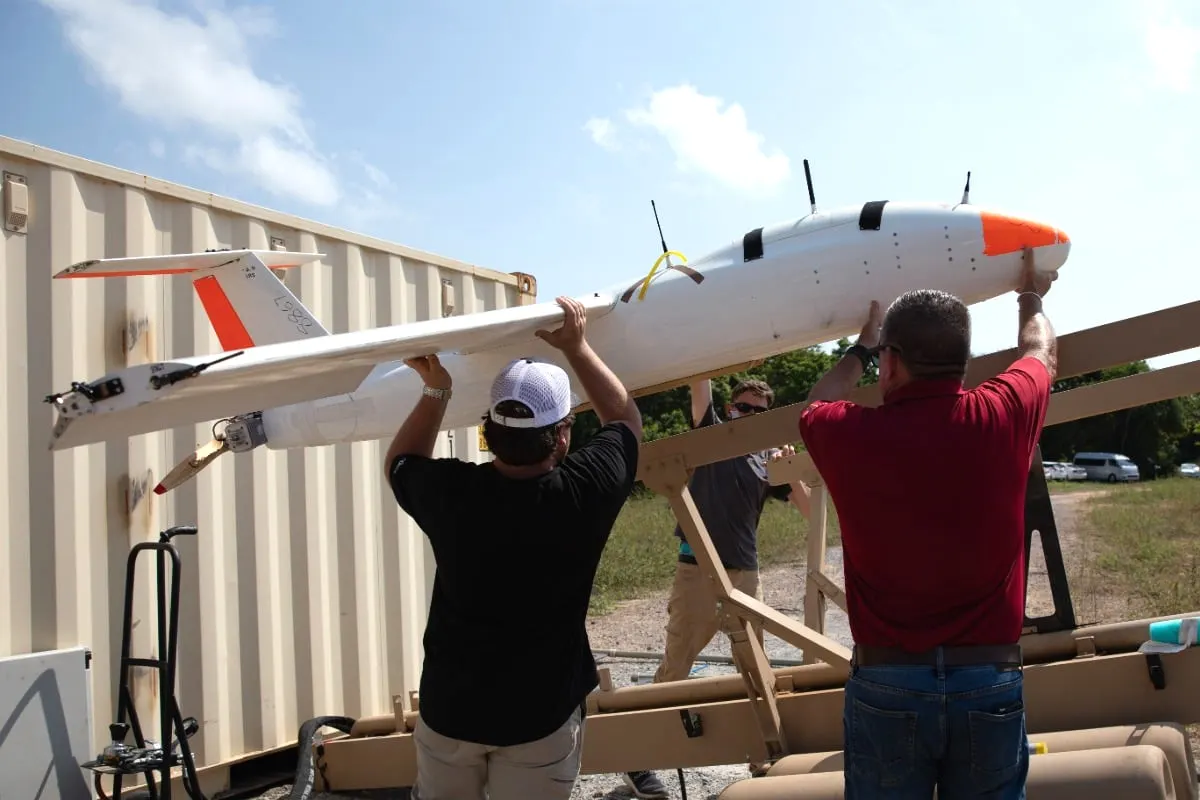
- What fell in the Hormuz region could be a target aircraft, or it could be a clue related to an operation.
- The name u0022Targeting Systemu0022 does not accurately describe the actual function of the device.
- The value of recovering an aircraft without damage is greater than the number of aircraft shot down.
- Iran’s objective is not a single aircraft, but the cost of U.S. military unmanned aerial vehicles.
- Here are three things to check in the upcoming public document:
- Frequently Asked Questions.
What fell in the Hormuz region could be a target aircraft, or it could be a clue related to an operation.
The “spoils” offered by Iran were not stealth reconnaissance aircraft or large attack aircraft, but rather a series of 150-pound aerial target drones used in U.S. military air defense training exercises to simulate enemy targets. The fact that these are small, expendable aircraft may offer some consolation to the United States. However, if the enemy has obtained them intact, the story goes beyond the aircraft’s price tag.
On October 29, the Islamic Revolutionary Guard Corps Navy (IRGCN) announced that it had detected a U.S.-made unmanned aerial vehicle west of the Strait of Hormuz. The IRGCN then used electronic warfare to seize control of the system, guiding and controlling the aircraft to land without damage. The aircraft in the released video appears to be largely consistent with the MQM-170C Outlaw G2 manufactured by Griffon Aerospace.
The U.S. Central Command (CENTCOM) refuted Iran’s explanation, calling it false. However, it neither confirmed nor denied whether it had recently lost an MQM-170 series aircraft. The key issue in this event is whether Iran’s claims of electronic warfare are true, and whether the aircraft was a target or a reconnaissance platform. Currently, neither of these has been independently verified.
The name u0022Targeting Systemu0022 does not accurately describe the actual function of the device.
On the surface, the answer seems simple. The Outlaw G2 is an aerial target used for air defense unit training, including detection, tracking, and engagement exercises, as well as for weapons testing. The easiest interpretation is that Iran exaggerated its capture of a reconnaissance drone, while the United States simply lost a training expendable.
However, the binary approach deviates from the design of the aircraft. Gryphon Aerospace also presents the Outlaw G2 as a payload development platform, explicitly mentioning the use of electro-optical/infrared (EO/IR) gimbal cameras and sensors for research and development. The maximum takeoff weight is 150 pounds for the target version and 225 pounds for the unmanned-aircraft version. Depending on the fuel configuration, a payload of 40 to 60 pounds can be carried. The maximum flight time is more than 8 hours.
Therefore, the flight’s purpose cannot be determined solely by identifying the aircraft type. It could have been a target flight, a test flight with sensors, or a mission involving intelligence, surveillance, and reconnaissance (ISR). The fuselage and nose aperture visible in the video alone cannot reveal the actual sensors, data storage devices, or mission plan. The appearance of a drone is like a business card, not a resume.
The U.S. military does not simply treat this platform as a target to be pulled out of storage and used. Contracts related to the Griffon made public in 2026 included a procurement worth $67,940,895, a Firm-Fixed-Price Indefinite-Delivery/Indefinite-Quantity contract (FFP IDIQ) with a ceiling of $132,978,776, and a $17,515,469 contract for communications subcomponents and training. The structure involves procuring not only the aircraft itself but also communications, support equipment, and field support personnel, thereby acquiring an operational ecosystem.
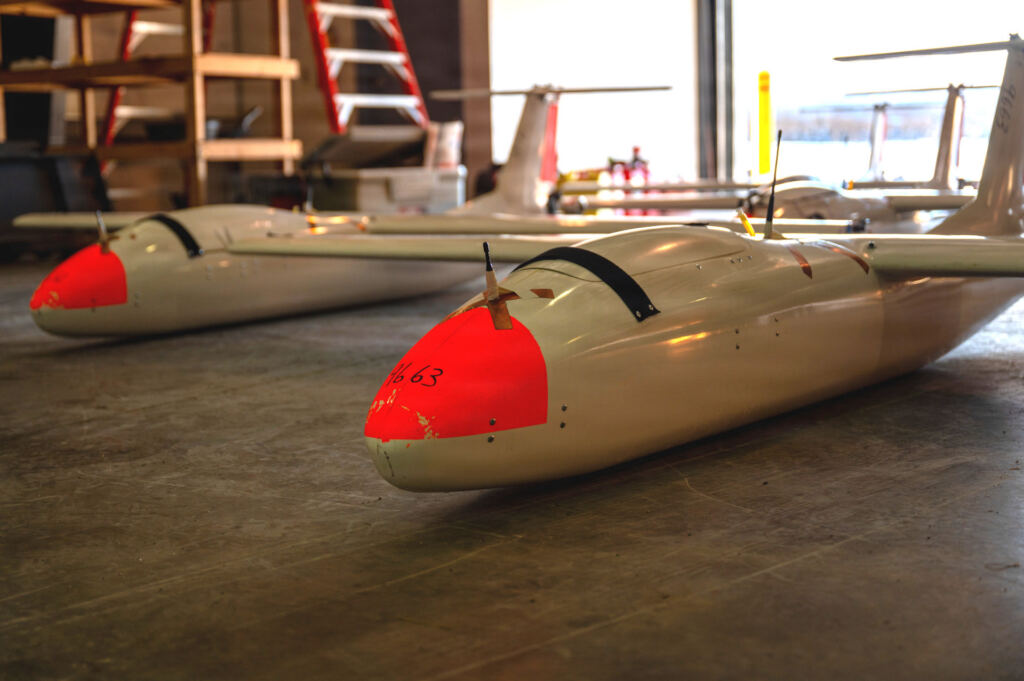
The value of recovering an aircraft without damage is greater than the number of aircraft shot down.
The scene that Iran’s announcement targeted was not a shootdown, but an intact landing. While an interception suggests that the air defense system was activated, a complete recovery implies the ability to examine the opponent’s hardware and operational traces. This resembles the narrative from 2011 in which Iran announced that it had secured an RQ-170 Sentinel in almost intact condition.
However, a complete image of the fuselage is not evidence of electronic warfare interception. It is also possible that the aircraft was forced to land and recovered after experiencing disruptions to satellite navigation, communication link failures, engine and navigation malfunctions, and loss of control. Iran has not disclosed the coordinates, precise time, electronic warfare methods, recovery location, or flight records, and has not provided proof of the country from which the aircraft took off.
The United States’ silence should not be interpreted as another form of approval. It may be that whether there was a loss and what the mission was may not be disclosed immediately because of operational security concerns. However, the fact that U.S. Central Command has not responded to the simplest question of whether there was an aircraft loss, while claiming that Iran’s entire explanation is false, leaves room for Iran to exploit vulnerabilities in the information war.
The direct impact on South Korea is not significant. South Korean military equipment and South Korean companies are not involved in this event. However, the indirect effects of the tension in the Strait of Hormuz on maritime security and energy transport discussions are separate matters. More technically, the key point is that low-cost target drones, reconnaissance aircraft, and decoys can share the same appearance and operational foundation. In the electronic warfare environment surrounding the Korean Peninsula, the primary factors to be classified are not the names of the drones, but rather the payload, the communication links, and the flight patterns.
Iran’s objective is not a single aircraft, but the cost of U.S. military unmanned aerial vehicles.
The author believes that the core objective of Iran in this public display is not the exhibition of a U.S. military aircraft, but rather to increase the cost of continuing unmanned surveillance and test flights in the Gulf region. Regardless of the truth of the narrative that it has seized control of guidance and control through electronic warfare, it raises the same questions for pilots, command, and the host country. The question is whether the next flight will be safe.
There are two reasons for this. First, Iran claimed to have acquired a US “Dive-LD” unmanned submersible in September, and just over a month later, it also claimed to have recovered an aerial unmanned system. This sequence of events is well-suited to create a narrative of Iran as a defender capturing US unmanned systems. Second, the “Outlaw” series of systems has a record of being used in the 2023 Saudi Arabian “Eagle Resolve” exercise in the role of a virtual enemy unmanned system. Furthermore, in September 2026, the US Navy announced a procurement notice for 19 MQM-170C unmanned systems for maritime operations. It is advantageous for the opponent to cause that attrition to recur, even though it knows that these aircraft are expendable assets.
In my view, the more difficult problem for the United States is the asymmetry in the response, rather than the losses themselves. The U.S. military must continue reconnaissance and training flights, but Iran can sell an impression of electronic-warfare capability with just one incident whose recovery status is unclear. Even if there is only one aircraft on display, suspicions over the flight route can implicate multiple aircraft.
If my judgment is wrong, it would be if Iran were to publicly release high-value mission payloads and flight records, along with reproducible evidence that it had actually seized and controlled the guidance and control links. In that case, the incident would center not on the cost of psychological warfare, but on the technical vulnerabilities of U.S. military unmanned systems.
Here are three things to check in the upcoming public document:
- It remains to be seen whether the U.S. Central Command or the U.S. Department of Defense will disclose the loss, ownership, and cause of the MQM-170 series within the next few days to weeks. Official confirmation would reduce Iran’s trophy narrative to a matter of fact.
- The key question is whether Iran will disclose additional information in the coming days, including serial numbers, engine details, payload information, flight records, and recovery coordinates. This information is crucial for distinguishing between electronic-warfare seizure and simple recovery efforts.
- Over the next few weeks, it is necessary to verify whether the U.S. military’s unmanned aerial vehicle operation patterns, escort procedures, and electronic warfare asset deployments in the Gulf region have changed. If there are any changes, it means that operational costs have been incurred, regardless of whether Iran’s claims are true or not.
Frequently Asked Questions.
Is the aircraft that Iran claims to have acquired a reconnaissance drone?
The aircraft in the publicly released video largely matches the appearance of the MQM-170C Outlaw G2. This aircraft is fundamentally an aerial target drone, but it can be equipped with EO/IR cameras and research and development sensors, and its actual mission has not been confirmed.
Has Iran’s claim of having seizure through electronic warfare been verified?
It has not been proven. The video showing the intact recovery of the aircraft is not sufficient to demonstrate the seizure of the guidance and control system. Other possibilities remain, such as communication failure, navigation malfunction, and forced landing.
Did the United States acknowledge the loss of aircraft?
The U.S. Central Command criticized Iran’s explanation as false, but it did not explicitly confirm or deny whether it had recently lost an MQM-170 series aircraft.
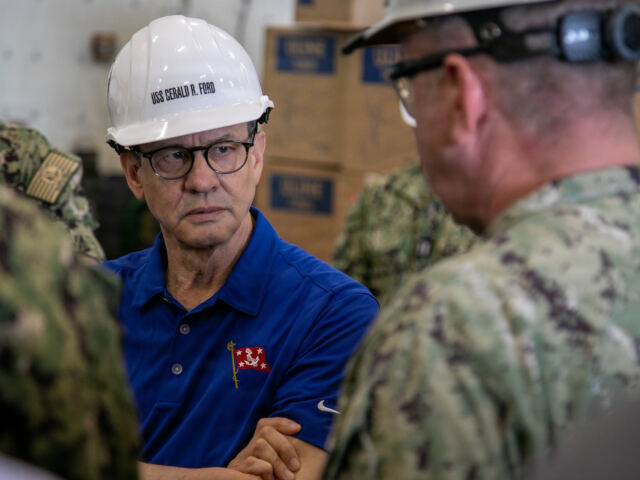
Representative photo — U.S. Navy · USN
Article photo — U.S. Air Force · USAF
This is a work of the U.S. federal government (public domain). The use of U.S. Department of Defense visual materials does not imply endorsement by the U.S. Department of Defense.