- Will the 39-inch interceptor change the calculations for drone defense?
- Why was the u0022one step at a timeu0022 approach problematic when it came to preventing the use of drones?
- The question of when Eclipse will be deployed still has the answer: u0022We need to wait a little longer.u0022
- What are the differences between reusable systems, modular payloads, and existing interceptor systems?
- Will the Kongsberg acquisition be a true integration, or just a change of signage?
- In the future, what matters is not the size of the model, but the records of the test.
- Frequently Asked Questions.
Will the 39-inch interceptor change the calculations for drone defense?
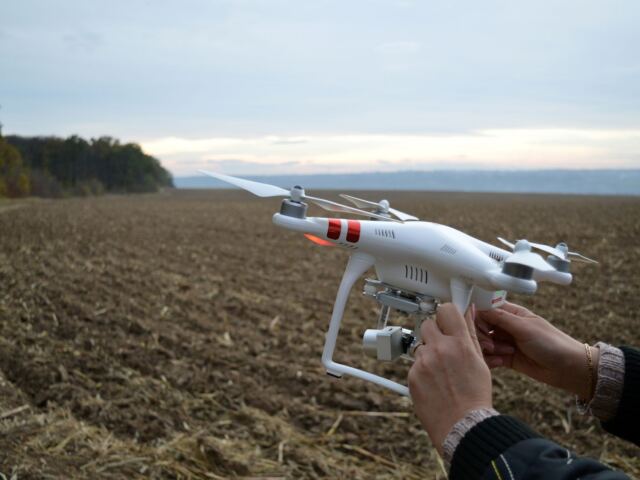
A model of an interceptor aircraft, measuring 39 inches in length and 32 inches in width, was displayed at the exhibition. However, the purpose of this small aircraft is significant. The American defense startup Zone 5 has introduced Eclipse not as a missile that is fired once and discarded, but as a reusable, high-speed drone interceptor.
The figures presented by the company indicate a top speed of over 200 knots and a range of over 30 miles. It is also stated that vertical takeoff and landing are possible. However, it is important to note the following. The Eclipse is still under development, and the actual deployment date, price, and operational performance have not been finalized.
In my opinion, the key to this weapon is not speed, but the calculation involved. If the current system, where one expensive interceptor missile is used to stop one cheap attack drone, continues, the ammunition stockpile and budget of the defending side will be depleted first.
Why was the u0022one step at a timeu0022 approach problematic when it came to preventing the use of drones?
As drone attacks increase, air defense systems face a dilemma. High-performance interceptors can respond to long distances and complex threats, but using such weapons against every drone is prohibitively expensive. Conversely, while inexpensive interceptors may be plentiful, their performance may be inadequate. Air defense is inherently a difficult task, and now it also requires careful cost management.
The U.S. Defense Innovation Unit’s Counter NEXT program also aims at this area. This program aims to develop deeper interceptor magazines to supplement existing advanced interceptors, as well as low-cost interceptors that can be mass-produced. Sixty-five commercial and dual-use technology companies applied, and Zone 5 and Anduril were selected as prototype development companies, completing the initial design, development, and basic flight tests.
The U.S. Air Force is also pursuing a course aimed at securing low-cost munitions that can be mass-produced through the Family of Affordable Mass Missiles, or FAMM. The Air Force said it will begin procuring FAMM in fiscal year 2026, and the 2027 fiscal year budget documents present the total related budget as 55.000.
It is difficult to withstand for a long time with only expensive shields.
Within this trend, Eclipse is positioned as a platform that targets the capability gap between existing small interceptors and higher-performance drones. The phrase “found a spot,” as stated by Zone 5 CEO Thomas Akers, ultimately refers to this market gap.
The question of when Eclipse will be deployed still has the answer: u0022We need to wait a little longer.u0022
The question that readers are most likely to ask is simple: when will the actual deployment to the unit take place? The current answer focuses not on the deployment schedule, but on the development schedule. Zone 5 estimated that it would take “roughly another six months” before the Eclipse could enter production.
This statement should not be interpreted as an immediate deployment to active service. There are several steps between the start of production and the military’s acquisition and operation of the system, including testing, procurement contracts, operator training, and the establishment of a maintenance system. It has not been confirmed that the U.S. government has finalized the purchase of the Eclipse.
Furthermore, the speed and range mentioned by the company are the target values stated in the company’s documents. It has not been confirmed that Eclipse has completed actual flight tests or live-fire interception tests in which it intercepted high-speed drones. I believe this point is particularly important. In the defense industry, numbers represent a starting point, not a graduation certificate.
Zone 5 also announced a production target of “hundreds of copies a month.” However, this is merely the company’s plan and does not constitute evidence of actual production capacity or secured supply chains, as there are no supporting contract documents. While the term “mass production” is appealing, it is accompanied by the realities of parts procurement and quality control from the moment the factory doors open.
Production goals and deployment dates are not the same thing.
What are the differences between reusable systems, modular payloads, and existing interceptor systems?
The distinguishing features of the Eclipse are its reusability, vertical takeoff and landing capabilities, and the option to choose its payload. Zone 5 stated that it can selectively mount high-power microwave equipment or kinetic energy warheads. The concept is to configure a single aircraft to address multiple threats.
High-power microwaves are a method of targeting electronic equipment, while kinetic energy warheads are understood as a system based on direct impact. However, these two types of payloads may have different operational concepts and costs. Therefore, it is difficult to compare the Eclipse as a weapon with a single price and performance level.
The same applies to reusability. There is a potential cost advantage compared to interceptors that are consumed each time they are launched. However, the time and infrastructure costs required for recovery, maintenance, and redeployment have not been disclosed. Simply seeing the word “reusable” can lead to an automatic calculation that it is cheap, which means that the advertising message is outpacing the actual costs.
Despite this, this design direction has a clear significance. In a situation where drone threats are repeatedly encountered, instead of continuously replenishing interceptors, if they can be recovered, maintained, and redeployed, the sustainability of the defense network can be significantly improved. However, the feasibility of this approach must be verified through actual operational tests to determine its real-world capabilities.
Will the Kongsberg acquisition be a true integration, or just a change of signage?
Zone 5 announced an acquisition agreement with Kongsberg in December 2025, and completed the transaction on June 10, 2026, after receiving approval from U.S. authorities. Kongsberg acquired a 90% stake in Zone 5, but Zone 5 will operate as an independent subsidiary, and the existing management team will continue to lead the company.
This transaction cannot be simply viewed as a change of ownership. Kongsberg aims to combine Zone 5’s mass production capabilities for weapons with its own international defense network. Akers stated, “Globally, we present one unified front under the Kongsberg brand.” The goal is to combine the production plans of the American startup with the supply chain and market accessibility of the Norwegian company.
Who benefits? Zone 5 can gain opportunities for expanding its funding and supply chains, and for accessing overseas markets. Kongsberg can strengthen its portfolio of low-cost, mass-produced products. For the United States and its allies, there is a possibility of having more options for countering drones.
Conversely, many aspects remain unconfirmed. It is yet to be determined how the acquisition will actually affect Eclipse’s production speed or price. There is also a possibility that U.S. arms export regulations and the approval processes of various countries may restrict overseas sales. While 90% ownership is a significant figure, it does not guarantee supply contracts or operational deployment.
The acquisition may provide the engine, but it cannot substitute for test flights.
In the future, what matters is not the size of the model, but the records of the test.
Eclipse has relatively clear hurdles to overcome in the future. First, it must be verified whether the speed, distance, and vertical takeoff and landing capabilities that the company has presented can be reproduced in actual flights. Subsequently, interception tests against high-speed drones, the performance of optional payloads, and the recovery and maintenance time for reuse must be validated.
Procurement is a separate hurdle. There is no guarantee that Eclipse will be selected as the final mass-produced model for Counter NEXT. The possibility of being linked with FAMM currently only indicates overlapping areas of interest, and does not mean that a specific contract has been finalized. Technology, budget, and production capacity must all align.
If this project is successful, the United States and its allies can secure more intercept capabilities with the same defense budget. In a reality where drones threaten military facilities and civilian infrastructure, this directly relates to defensive resilience. Ultimately, for the public, the issue is not the grand names of weapons, but how effectively a defense system purchased with tax money can actually counter real threats.
However, for now, the model is only on display at the exhibition. Eclipse will transition from a “possibility” to an “operational capability” only when Zone 5 begins production, passes testing, and secures actual contracts. I will judge the next stage based on records, not just numbers. The number of units produced is less important than the number of flights and the number of missions completed, as the latter provides a more accurate assessment.
Frequently Asked Questions.
When will Eclipse actually be deployed?
The actual deployment date has not yet been confirmed. While Zone 5 estimated that it would take “roughly another six months” for production to begin, the start of production and the deployment to the military are separate processes.
What is the price of Eclipse?
The expected price has not been disclosed. The price difference between the models equipped with high-power microwaves and the models equipped with kinetic energy systems has also not been confirmed.
What is the difference between the Eclipse and existing interceptor missiles?
The differences were presented as follows: the system is designed for reuse, is capable of vertical takeoff and landing, and can selectively carry high-power microwave equipment or kinetic energy warheads.
Did the Eclipse system actually pass the intercept test?
While the initial design, development, and basic flight tests have been completed, it has not been confirmed that flight tests involving the actual interception of high-speed drones or live-fire interception tests have been completed.
Has the United States government decided to purchase the Eclipse?
The fact that the U.S. government has confirmed the purchase is unconfirmed. Zone 5 was selected as a developer of the Counter NEXT prototype, but final selection for mass production or a supply contract is not guaranteed.
Does the acquisition by Kongsberg immediately increase production volume?
Kongsberg has acquired a 90% stake in Zone 5 and is working to expand its supply chain and overseas markets. However, it has not yet been confirmed what specific changes the acquisition will bring to Eclipse’s production speed and pricing.